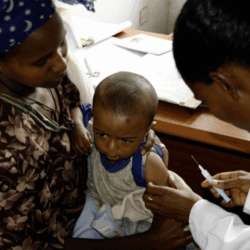

A reduction in U.S. foreign aid under the “America First” policy of President Donald Trump, who took office in 2025, has significantly impacted global health. As the world’s largest provider of foreign aid, the U.S. has frozen development aid to evaluate its alignment with national interests. This has led to the termination of numerous international health programs, including those addressing malaria, HIV, tuberculosis, and polio, and has caused funding shortages for non-profit and international organizations like GAVI and the World Bank. Projections indicate dire consequences.
According to USAID, a potential 18 million additional malaria cases and 166,000 deaths could occur annually. Paralytic polio cases are expected to increase by 200,000 per year, and new tuberculosis cases could rise by 10.7 million by 2030. Recent studies estimate that new HIV infections and between 770,000 and 2.93 million HIV-related deaths from 2025 to 2030. This crisis presents an opportunity for the global community to rethink its approach to aid. Other forms of financing, such as private sector investment, CSR activities, and innovative mechanisms like the Global Fund, could fill the gap left by reduced ODA.
This is an excerpt. Read the original post here