Somewhere in Berkeley, California, Ramazzini fellow, Martyn T Smith, is looking out of his window dreaming of methods to find new ways of linking cancers with targeted consumer products … ones that will generate new publications, new litigation consulting contracts with his Predatort friends, new reasons to travel to Lyon and new confreres in Bologna. If only there were a more efficient way to create more convincing correlations with cancers. His friends in Ramazzini and IARC would be willing to support him and apply his new, more efficient methodology to achieve their shared objectives.
Following two workshops in IARC, Smith published a paper with his IARC / Ramazzini network highlighting what he called the “10 Key Characteristics” of carcinogenicity, creating a sort of automated checklist to identify cancer hazards. Hazard-based assessments, remember, do not consider exposure levels, so if a substance can be associated in any way with a cancer, at any level of exposure, that is enough for IARC to attribute its carcinogen conclusion. The 10 Key Characteristics makes that IARC attribution much easier (it can be automated).
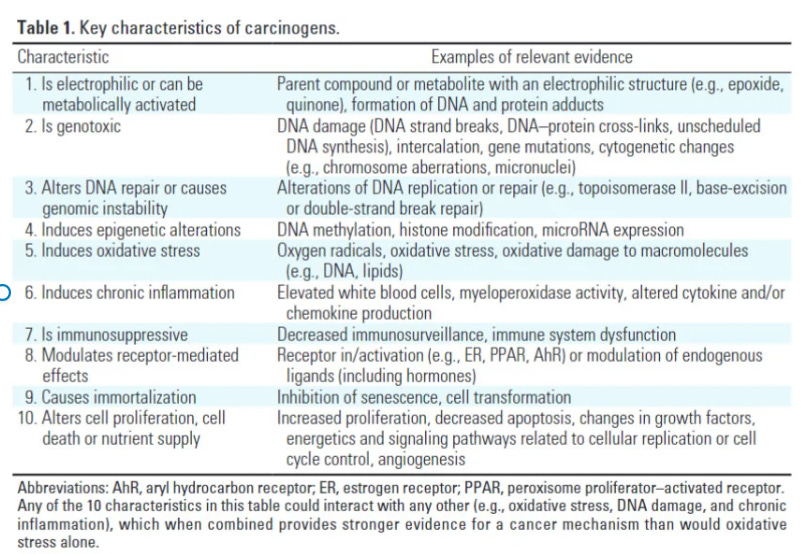
What Smith has done is assemble ten characteristics associated with carcinogenicity (as well as many other things). See image above from Smith’s paper. The logic is that the more of these characteristics a substance shares, the more carcinogenic it is.
But some of these characteristics, like inflammation or genotoxicity, on their own, “do not a cancer make”. The authors of this characterisation will claim that it better defines the cancer association but perhaps we should ask the inverse: Is there any substance considered through the application of the 10 Key Characteristics that would not be associated with cancer? Probably not. So when these Ramazzini activists say that there is new evidence justifying another IARC monograph, what they are actually saying is that they have a new tool to make the “carcinogenic label” stick.
Hazard assessments are not about reality and have little value in the scientific world (except perhaps as a message to researchers to consider the relative safety of their exposure levels, ie, risk assessments). But hazard assessments are very valuable for the US litigation industry and NGOs where any correlation between a substance and cancer is a fear-imbibed money-spinner. And the IARC-Ramazzini-exposome community play to this crowd in their cancer correlations playing down the fact that they are devoid of reality.
Associating any substance with the Big C is a precautionary death sentence. I am always surprised that people like RFK Jr don’t associate vaccines with cancer. Taking the 10 Key Characteristics approach, all vaccines would be carcinogenic, even vaccines designed to prevent certain cancers. These scientists have created a world where pronouncing the word “cancer” is enough – the proof is in the checklist.
How is their behaviour scientific?
Predatortiary Pretense
At the same time, Ramazzini scientists have been demanding a new methodology to make IARC monographs more convincing. If benzene can tick seven of the 10 Key Characteristics, who would be able to argue against IARC’s conclusions? Certainly not American corporate defence attorneys.
Did someone mention PFAS?
Smith’s 10 Key Characteristics reflect an erroneous mindset that every cancer has a distinct cause. These same Ramazzini scientists are still livid about the argument that two thirds of cancers are attributed to bad luck. They have been trained to think of cancers as the result of some health justice equation – a consequence of bad lifestyle choices like tobacco and alcohol or negligence by a careless chemical industry. This prejudice of course is not scientific, but when you belong to an organization like Ramazzini, with its cult rituals and secret handshakes, it is easy to forget about scientific methodology (or research integrity).
This checklist strategy fits well within the exposome approach where health justice vigilantes are evaluating human exposures to thousands of (synthetic) chemicals combined with a multitude of genetic, social and economic variables. These exposomers refuse to accept that a majority of cancers are caused by bad luck, so they need some generalist checklist to justify their correlations.
How is this behaviour in any way scientific?
Checklist Science
The 10 Key Characteristics for carcinogenicity is a checklist (the architects of this strategy probably started with eight characteristics and rounded it up). On the surface, they are using scientific concepts, but the methodology is extremely weak. To say something causes inflammation and is therefore a carcinogen is not only vague, it will include many substances and activities that could not be realistically tied to cancers (like eggplants, peppers, tomatoes and jogging) but are indeed inflammatory. As an osteoarthritis sufferer, how often then will I now need to get my prostate checked? Aspartame, for example, has been considered as inflammatory, but if I add it to my coffee, that should offset the effects (although, mind you, coffee is also carcinogenic according to the 10 Key Characteristics).

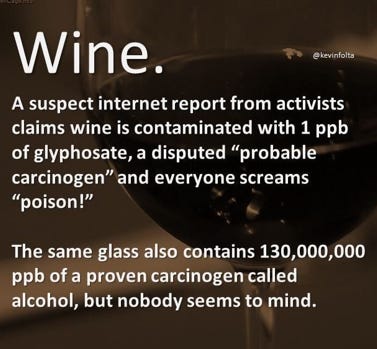
The 10 Key Characteristic checklist approach ignores a basic law of toxicology: the Paracelsus Principle (the dose makes the poison). If glyphosate may be genotoxic, we need to consider at what level of exposure and for how long of a period. Ignoring Paracelsus is not just bad science, it reinforces scientific illiteracy and chemophobia among the general public.
Meaningless IARC hazard-based pronouncements have been capitalized on by activist opportunists, NGOs and US tort lawyers to create fear and outrage against consumer products and the companies that provide them. It is a lucrative business, always in need of scientists with flexible integrity standards.
These activist scientists pulling IARC’s strings don’t care how the opportunists will exploit their findings. IARC knows how the Ramazzini fellows are using IARC panel involvement to enrich themselves as litigation consultants and this does not seem to concern them. IARC is Ramazzini and Ramazzini is IARC.
The architects of the 10 Key Characteristics are part of the Ramazzini-IARC Good Old Boys network. Many have made millions as litigation consultants, testifying in US lawsuits based on their experience as IARC monograph panel members. As IARC’s monograph program has lost the respect of the scientific community, there is a need to strengthen its conclusions.
Bad Science
What does the mainstream scientific community think of this Ramazzini effort to rig the IARC process?
A paper published by Becker et al found the 10 Key Characteristics to be so open as to not be able to competently discriminate between a carcinogen and a non-carcinogen.
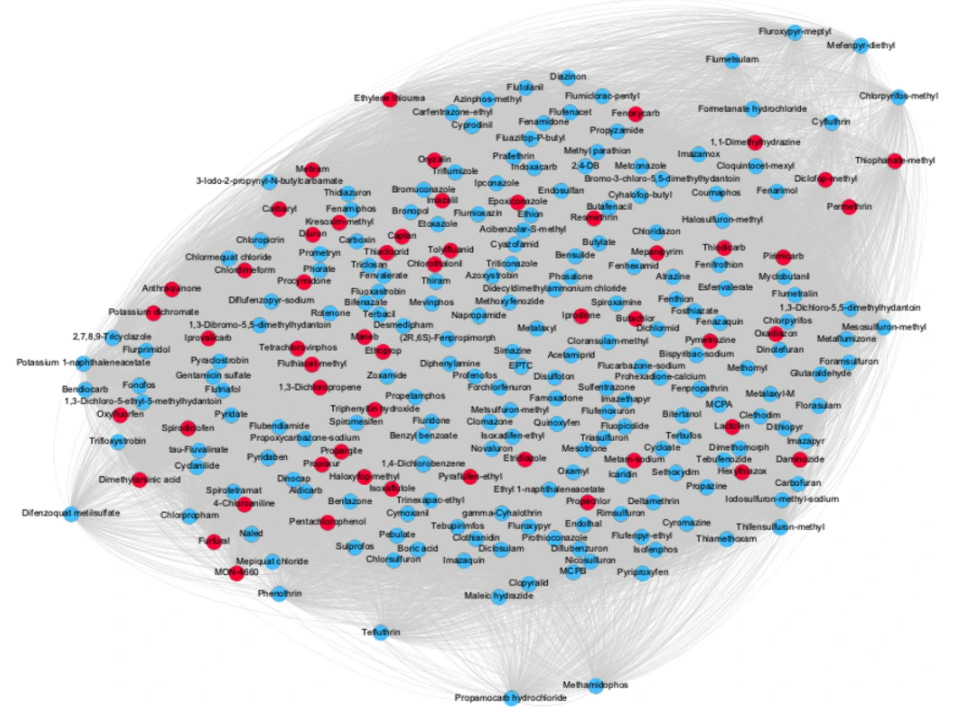
In the image above, 54 substances (in red) are identified as carcinogens and 194 (in blue) are not. The 10 Key Characteristics were unable to distinguish the non-carcinogens. The Becker et al study concludes that the Key Characteristics are no better at detecting causes of cancer than mere chance. I would conclude that had always been the intention of these activist scientists.
Anything that had been previously determined by regulatory risk assessments to be non-carcinogenic (like glyphosate, gasoline or aspartame), could now, under this new Ramazzini standard, be concluded to be a carcinogen. This fits the political ideology of the Collegium Ramazzini which is on a constant hunt for synthetic, industry-based substances they can label as carcinogens and then use them in their political campaigns.
The Becker et al article made a curious observation. As there is no clear consensus among scientists and research organizations on how data is used to determine whether a substance is a potential cancer hazard, Martyn T Smith is using the perceived authority of IARC to impose his 10 Key Characteristics. The problem is that these Key Characteristics are ineffective as a hazard identification tool, leaving its use open to abuse. Are we capable of trusting that someone like Martyn T Smith would not then abuse this tool at IARC monograph working group meetings? I would not be CERTain about that.
Given the lack of research integrity exhibited by certain Ramazzini research fellows and their use of IARC to push their agenda, the ineffectiveness of the 10 Key Characteristics should be seen, like everything else in the exposome, more as opportunism than science.
David Zaruk is a Belgian-based environmental-health risk policy analyst specializing in the role of science in policy and societal issues. He blogs under the pseudonym: The Risk-Monger. Follow him on X at @zaruk
A version of this article was originally posted at Firebreak and has been reposted here with permission. Any reposting should credit the original author and provide links to both the GLP and the original article. Find Firebreak on X @The_Firebreak