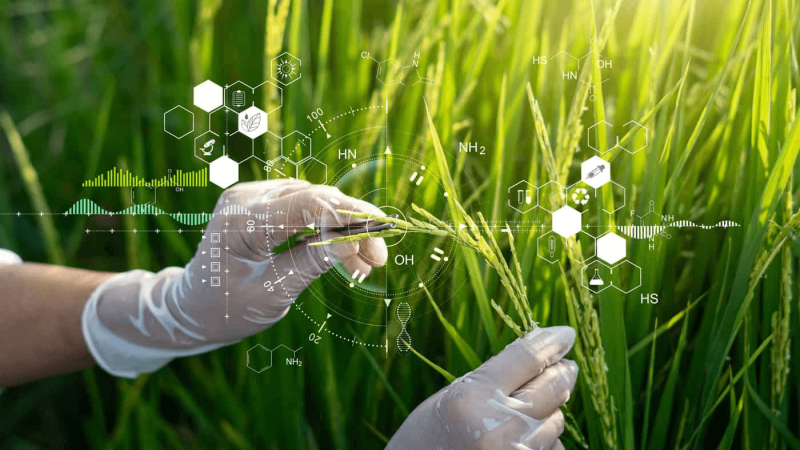
7 ways biotechnology can mitigate climate change challenges

Credit: The Business Magazine

As the world grapples with escalating climate change, the impacts on agriculture have become acute and inescapable. In 2025, rising temperatures, erratic rainfall patterns, increased frequency of extreme weather events, and shifting pest and disease profiles collectively threaten our ability to ensure sustainable food security worldwide.

At this crossroads, biotechnology emerges as a pivotal tool in addressing climate change, offering a suite of climate change mitigation technologies (CMTs) tailored to the urgent needs of farmers, food systems, and global environmental security.

In 2025 and beyond, climate change mitigation technologies anchored in biotechnology provide concrete hope—and a clear strategy—for meeting the world’s climate and food needs.

Let’s explore the top 7 biotechnological innovations reshaping our responses to climate change in agriculture ….

Follow the latest news and policy debates on sustainable agriculture, biomedicine, and other ‘disruptive’ innovations. Subscribe to our newsletter.

1. Drought- and Heat-Tolerant Genetically Engineered (GE) Crops

2. Nitrogen-Fixing Bacteria and Microbial Biofertilizers

3. Pest- and Disease-Resistant Crops via Precision Gene Editing

4. Carbon Sequestration Crops (Deep-Rooted & High-Biomass Varieties)

5. Precision Agriculture and Smart Farming with AI and Biotech Integration

6. Next-Generation Bio-Pesticides and Biocontrol Agents

7. Climate-Resilient Crop Varieties via Multi-Trait Engineering

This is an excerpt. Read the original post here

{{ reviewsTotal }}{{ options.labels.singularReviewCountLabel }}
{{ reviewsTotal }}{{ options.labels.pluralReviewCountLabel }}
{{ options.labels.newReviewButton }}
{{ userData.canReview.message }}

Related Articles

Infographic: Global regulatory and health research agencies on whether glyphosate causes cancer

Infographic: Global regulatory and health research agencies on whether glyphosate causes cancer

Does glyphosate—the world's most heavily-used herbicide—pose serious harm to humans? Is it carcinogenic? Those issues are of both legal and ...

Most Popular

Picture1-5
Science Disinformation Gap: The transatlantic battle over social media and censorship
ChatGPT Image May 10, 2026, 08_16_59 PM 2
Overmedicalization? RFK Jr.’s antidepressant crackdown raises conflict questions over his fee stake in Wisner Baum, the tort firm built on suing drug makers
ChatGPT-Image-May-12-2026-08_39_41-PM
GLP podcast: Big Pharma, Big Ag, Big Food—health harming industries or life-saving innovators?
Screenshot-2026-04-23-at-11.00.36-AM
Regulators' dilemma: Thalidomide, Metformin, and the cost of getting drug approvals wrong
Screenshot-2026-05-12-at-9.58.31-PM
'He seems fine': Marty Makary out as FDA commissioner
Picture1-1
Cooling the planet with balloons: Could a geoengineering gamble slow global warming?
Screenshot-2026-05-12-at-10.05.11-AM
Pro-vaccine “hero” vs. an anti-vax “villain”: ‘Bad Vaxx’ video stirs MAHA backlash
Picture1-14
When superbugs threaten vulnerable children: Can AI help solve antibiotic resistance?
Screenshot-2026-05-11-104424
Hantavirus outbreak research: Trump administration shut down study last year on rodent-to-human transmission
Screenshot-2026-04-12-135256
Bixonimania: The fake disease scam that AI swallowed whole
ChatGPT Image May 12, 2026, 10_19_00 AM 2
Viewpoint— 'Muscular governance': How authoritarianism is surging corporate-linked energy misinformation
Screenshot 2026-05-11 at 11.30
Despite politicized disinformation, Midwest AI data centers are fueling a solar energy boom
glp menu logo outlined

Get news on human & agricultural genetics and biotechnology delivered to your inbox.