Bees in distress: Climate change is depressing the aroma that attracts bees for pollination. Scientists are scrambling for a solution

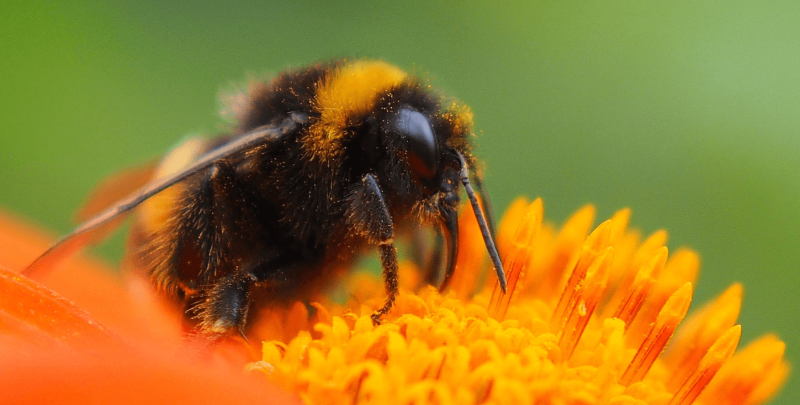
bumblebee
Credit: Wikimedia Commons (CC BY 3.0)

Across 120 publications from 19 countries, ozone pollution decreased performance of beneficial invertebrates by more than 31%, while nitrogen oxides (NOx) decreased it by 24%. The results suggest that pollution’s negative effects most likely have to do with insects’ not being able to find food, such as honeybees’ having a harder time finding nectar.

This could mean less pollination. Given that three-quarters of leading food crops depend on animal pollination, air pollution “can actually decrease crop production,” says Jeffrey Riffell, an ecologist at the University of Washington who was not involved in the meta-analysis.

Follow the latest news and policy debates on sustainable agriculture, biomedicine, and other ‘disruptive’ innovations. Subscribe to our newsletter.

Disturbing these tiny creatures can have profound consequences on human well-being. This is why researchers are trying to better understand how increasing levels of pollution have led to a communication breakdown between pollinators and plants. Through hands-on work with insects and an analysis of bouquets of floral molecules, they are starting to identify which fragrant compounds are most essential to a functional ecosystem and which ones are most at risk.


This is an excerpt. Read the original post here

{{ reviewsTotal }}{{ options.labels.singularReviewCountLabel }}
{{ reviewsTotal }}{{ options.labels.pluralReviewCountLabel }}
{{ options.labels.newReviewButton }}
{{ userData.canReview.message }}

Related Articles

Infographic: Global regulatory and health research agencies on whether glyphosate causes cancer

Infographic: Global regulatory and health research agencies on whether glyphosate causes cancer

Does glyphosate—the world's most heavily-used herbicide—pose serious harm to humans? Is it carcinogenic? Those issues are of both legal and ...

Most Popular

Screenshot-2026-04-14-at-11.11.06-AM
‘Turbo cancer’ or mRNA cancer cure? Strategies to counter misinformation
edb7f6d7-2370-418f-9578-74e29678e35c
Facts & Fallacies Podcast: Nicotine vaping—public health miracle, or risk to children? Professor Cliff Douglas
Screenshot-2026-05-27-at-10.51.25-AM
Viewpoint: ‘Monsanto’ blues—Planned Netflix movie promises yet another round of anti-glyphosate disinformation
Screenshot-2026-05-26-at-12.36.18-PM
MAGA’s latest ‘health obsession’? Nicotine patches promoted by ‘Zynfluencers’—including some in the Trump administration 
Picture1
The Orange Bowl without oranges: Can CRISPR save Florida citrus?
ChatGPT-Image-May-26-2026-11_51_01-AM
Viewpoint: RFK, Jr.’s ‘sadistic’ solution to autism, depression, and other ills looks a lot like prison camp
ChatGPT-Image-May-22-2026-10_26_09-AM
Gutting the National Science Board: How the Trump-RFK, Jr. crusade is erasing the separation of science and state
Screenshot-2026-05-26-at-9.48.42-AM
Seed oil panic: RFK Jr. and influencers made linoleic acid a dietary villain and heart risk. Evidence points the other way — replacing them with animal fat is.
Screenshot 2026-05-22 at 3.28
Vagus nerve wellness grift: How to build a billion dollar business. Are you listening, Kelly Ripa?
fda_logo_decimated
Viewpoint: RFK, Jr.’s FDA is on a screaming downward path—and why it may never recover
vax-misinformation-main
Facts & Fallacies Podcast: Limit free speech to blunt social media misinfo?
Screenshot 2026-05-26 at 11.16
Colossal Bio grows chicks in 3D-printed artificial eggs. Breakthrough or copycat technology?
Screenshot 2025-11-12 at 3.28
GLP podcast: Evolutionary biologist debunks the 'sex spectrum'
glp menu logo outlined

Get news on human & agricultural genetics and biotechnology delivered to your inbox.