


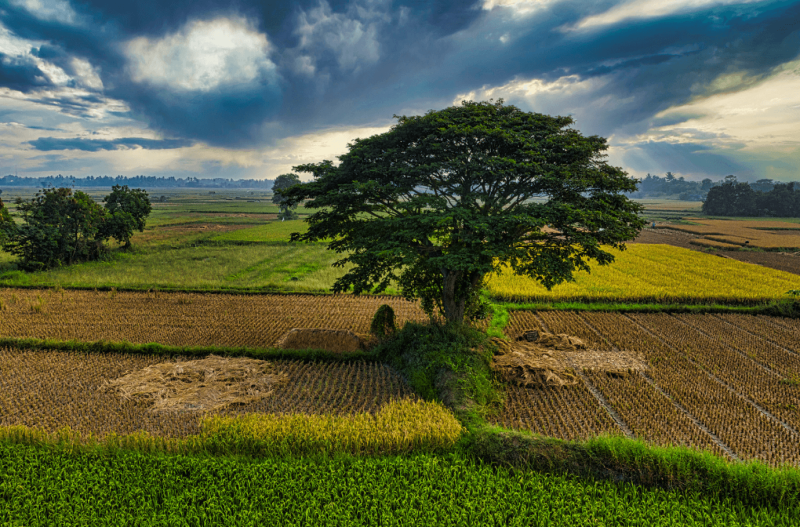
For farmers, every planting decision carries risks, and many of those risks are increasing with climate change. One of the most consequential is weather, which can damage crop yields and livelihoods. A delayed monsoon, for example, can force a rice farmer in South Asia to replant or switch crops altogether, losing both time and income.
Access to reliable, timely weather forecasts can help farmers prepare for the weeks ahead, find the best time to plant or determine how much fertilizer will be needed, resulting in better crop yields and lower costs.
Yet, in many low- and middle-income countries, accurate weather forecasts remain out of reach, limited by the high technology costs and infrastructure demands of traditional forecasting models.
A new wave of AI-powered weather forecasting models has the potential to change that.
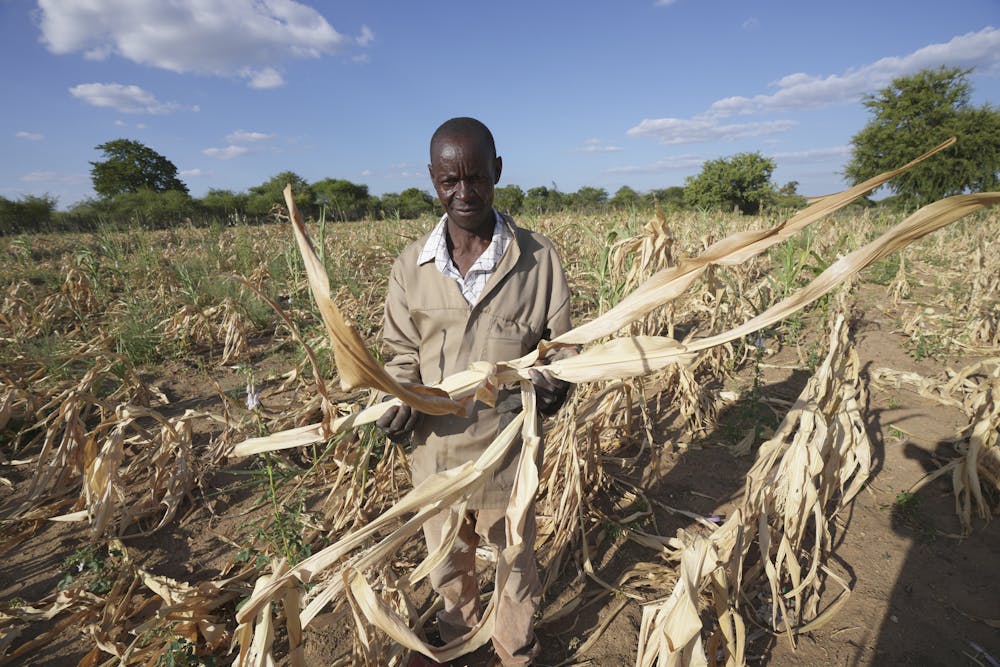
By using artificial intelligence, these models can deliver accurate, localized predictions at a fraction of the computational cost of conventional physics-based models. This makes it possible for national meteorological agencies in developing countries to provide farmers with the timely, localized information about changing rainfall patterns that the farmers need.
The challenge is getting this technology where it’s needed.
Why AI forecasting matters now
The physics-based weather prediction models used by major meteorological centers around the world are powerful but costly. They simulate atmospheric physics to forecast weather conditions ahead, but they require expensive computing infrastructure. The cost puts them out of reach for most developing countries.
Moreover, these models have mainly been developed by and optimized for northern countries. They tend to focus on temperate, high-income regions and pay less attention to the tropics, where many low- and middle-income countries are located.
A major shift in weather models began in 2022 as industry and university researchers developed deep learning models that could generate accurate short- and medium-range forecasts for locations around the globe up to two weeks ahead.
These models worked at speeds several orders of magnitude faster than physics-based models, and they could run on laptops instead of supercomputers. Newer models, such as Pangu-Weather and GraphCast, have matched or even outperformed leading physics-based systems for some predictions, such as temperature.
AI-driven models require dramatically less computing power than the traditional systems.
While physics-based systems may need thousands of CPU hours to run a single forecast cycle, modern AI models can do so using a single GPU in minutes once the model has been trained. This is because the intensive part of the AI model training, which learns relationships in the climate from data, can use those learned relationships to produce a forecast without further extensive computation – that’s a major shortcut. In contrast, the physics-based models need to calculate the physics for each variable in each place and time for every forecast produced.
While training these models from physics-based model data does require significant upfront investment, once the AI is trained, the model can generate large ensemble forecasts — sets of multiple forecast runs — at a fraction of the computational cost of physics-based models.
Even the expensive step of training an AI weather model shows considerable computational savings. One study found the early model FourCastNet could be trained in about an hour on a supercomputer. That made its time to presenting a forecast thousands of times faster than state-of-the-art, physics-based models.





The result of all these advances: high-resolution forecasts globally within seconds on a single laptop or desktop computer.
Research is also rapidly advancing to expand the use of AI for forecasts weeks to months ahead, which helps farmers in making planting choices. AI models are already being tested for improving extreme weather prediction, such as for extratropical cyclones and abnormal rainfall.
Tailoring forecasts for real-world decisions
While AI weather models offer impressive technical capabilities, they are not plug-and-play solutions. Their impact depends on how well they are calibrated to local weather, benchmarked against real-world agricultural conditions, and aligned with the actual decisions farmers need to make, such as what and when to plant, or when drought is likely.
To unlock its full potential, AI forecasting must be connected to the people whose decisions it’s meant to guide.
That’s why groups such as AIM for Scale, a collaboration we work with as researchers in public policy and sustainability, are helping governments to develop AI tools that meet real-world needs, including training users and tailoring forecasts to farmers’ needs. International development institutions and the World Meteorological Organization are also working to expand access to AI forecasting models in low- and middle-income countries.
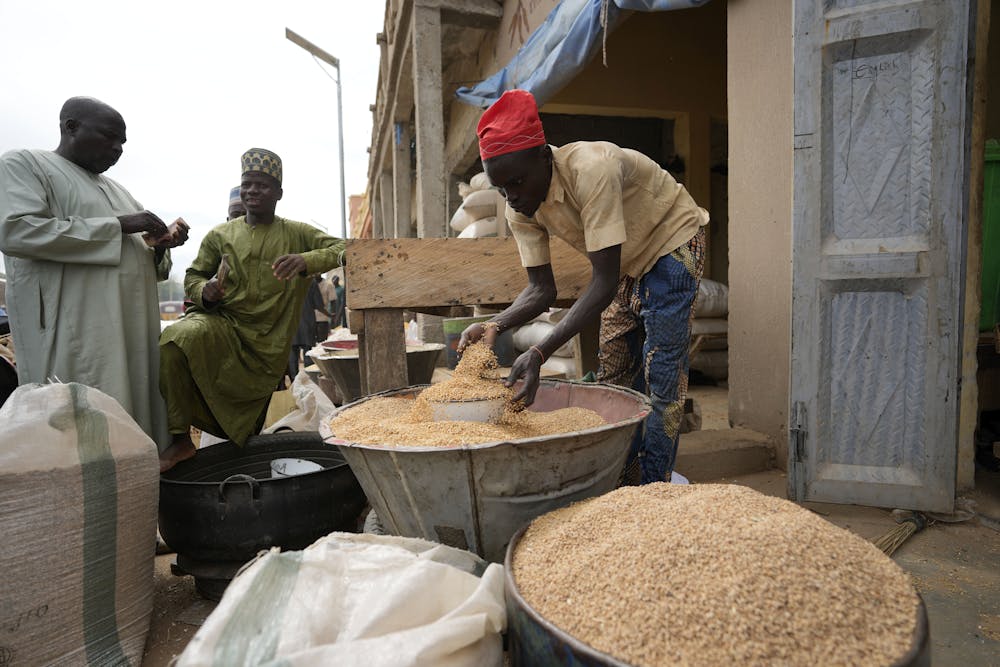
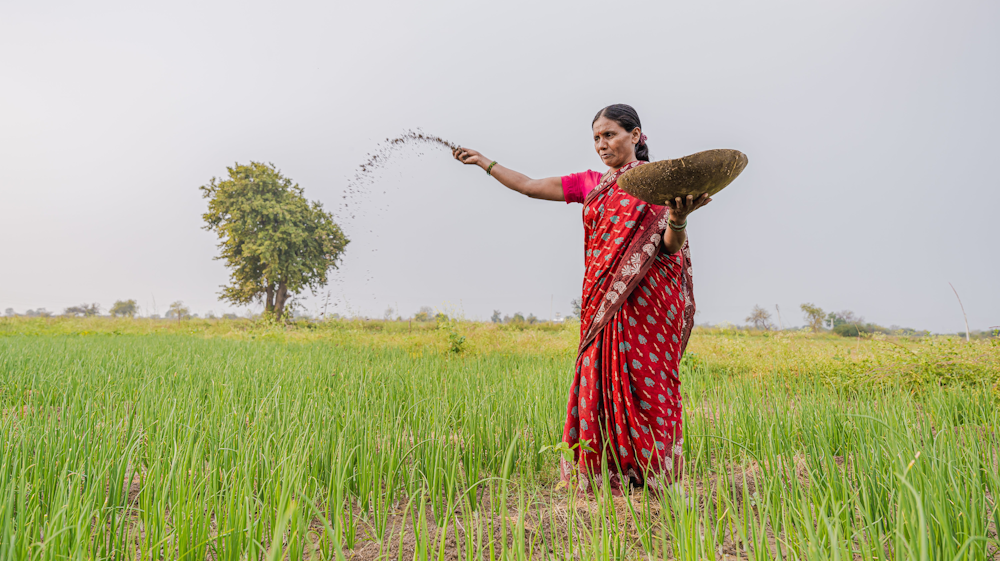
AI forecasts can be tailored to context-specific agricultural needs, such as identifying optimal planting windows, predicting dry spells or planning pest management. Disseminating those forecasts through text messages, radio, extension agents or mobile apps can then help reach farmers who can benefit. This is especially true when the messages themselves are constantly tested and improved to ensure they meet the farmers’ needs.
A recent study in India found that when farmers there received more accurate monsoon forecasts, they made more informed decisions about what and how much to plant – or whether to plant at all – resulting in better investment outcomes and reduced risk.
A new era in climate adaptation
AI weather forecasting has reached a pivotal moment. Tools that were experimental just five years ago are now being integrated into government weather forecasting systems. But technology alone won’t change lives.
With support, low- and middle-income countries can build the capacity to generate, evaluate and act on their own forecasts, providing valuable information to farmers that has long been missing in weather services.
Paul Winters is a Professor of Sustainable Development at the University of Notre Dame. Find Paul on LinkedIn
Amir Jina is an Assistant Professor of Public Policy at the University of Chicago. Find Amir on X @amirjina
A version of this article was originally posted at Conversation and has been reposted here with permission. Any reposting should credit the original author and provide links to both the GLP and the original article. Find Conversation on X @ConversationUS





























