A new therapy has been developed that promoters claim can remove microplastics from the body. Is it safe? Does it work?

Credit: Public Domain

There is mounting evidence that microplastics and “forever chemicals” are infiltrating human bodies and endangering people’s health.

Interventions to remove those plastics run the gamut, including ones with little published evidence that they are effective in people. Colorado-based Winnow is selling a probiotic for $50 that the company says can “stick” to microplastics ….

Elora Therapeutics … is building an injectable drug containing enzymes that can break down plastic polymers and microplastics in the body.

Follow the latest news and policy debates on sustainable agriculture, biomedicine, and other ‘disruptive’ innovations. Subscribe to our newsletter.

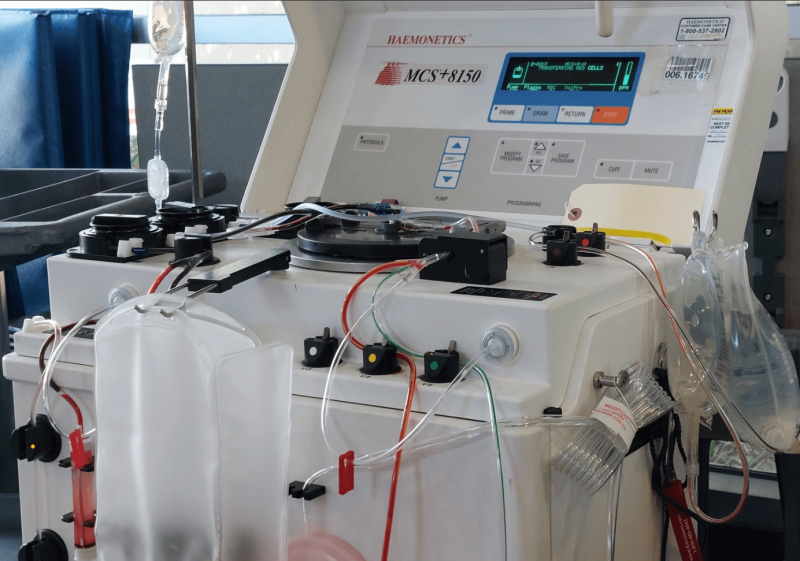
Perhaps no approach has stirred more buzz than a costly treatment known as apheresis, which involves using machines to remove tiny particles and chemicals from plasma.

A machine draws blood from patients and spins it in a centrifuge to separate red blood cells from the plasma. The plasma is run through a column to filter out microplastics and absorb other toxins, then reinjected into the patient. The entire process takes about two to three hours and costs around $13,000 ….

Some scientists … are enthusiastic about apheresis for increasing longevity or treating chronic illnesses. But they question how effective the treatment is for microplastics.


This is an excerpt. Read the original post here

{{ reviewsTotal }}{{ options.labels.singularReviewCountLabel }}
{{ reviewsTotal }}{{ options.labels.pluralReviewCountLabel }}
{{ options.labels.newReviewButton }}
{{ userData.canReview.message }}

Related Articles

Infographic: Global regulatory and health research agencies on whether glyphosate causes cancer

Infographic: Global regulatory and health research agencies on whether glyphosate causes cancer

Does glyphosate—the world's most heavily-used herbicide—pose serious harm to humans? Is it carcinogenic? Those issues are of both legal and ...

Most Popular

ChatGPT-Image-Jun-16-2026-10_29_11-AM
What’s behind Anthropic’s warning about the accelerating development of AI
ChatGPT-Image-Jun-16-2026-10_01_45-AM-2
Viewpoint—Recursive self-improvement: AI leader Anthropic calls for AI slowdown
Screenshot-2026-06-16-at-10.02.22-PM
Viewpoint: ‘Industrial food’ primer—Challenging the dangerous delusions of the alternative food movement
Screenshot-2026-06-17-at-11.57.12-AM
Viewpoint: Raw milk and the myth of safety—ProPublica exposes the growing anti-homogenization movement
ChatGPT-Image-Jun-9-2026-01_11_37-PM
Turmeric supplements: More risks than benefits
ChatGPT-Image-Jun-15-2026-02_31_28-PM-2
Trump-appointed cancer panel head backed by supplement and anti-vaccine companies promotes discredited support for ivermectin as a potential cure
newborn infant baby mother
Facts & Fallacies Podcast: The truth about vitamin K shots
ChatGPT-Image-Jun-4-2026-03_07_27-PM
AAP v. Kennedy: While a court challenge grinds on, RFK Jr. quietly advances his anti-vaccine conspiracy agenda
ChatGPT-Image-Mar-10-2026-01_39_01-PM
Viewpoint—“Miracle molecule” debunked: Why acemannan supplements don’t work
Screenshot-2026-06-16-at-11.23.32-AM
In a rebuke to RFK, Jr.’s anti-vax crusade, journal retracts study claiming hepatitis B vaccine–autism link
ChatGPT Image Jun 16, 2026, 12_03_37 PM
Kennedy accused of trying to ‘bully’ science journal that retracted study linking vaccines to infant deaths
Screenshot-2026-06-05-at-2.12.30-PM
Some plants can poison you. So how did humans figure out what is safe to eat?
Screenshot 2025-07-30 at 10.48
Can gene editing eliminate Down syndrome? Scientists have done it in lab-grown cells
glp menu logo outlined

Get news on human & agricultural genetics and biotechnology delivered to your inbox.