
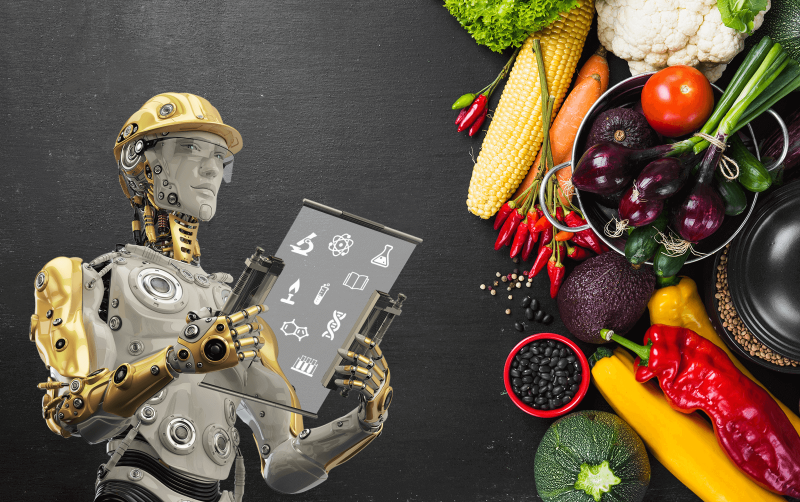
How AI can improve food safety and nutrition

ai in food safety (1)

Artificial intelligence (AI) is transforming food safety and nutrition practices by offering scalable, real-time, and personalized solutions. In food safety, AI enables predictive risk modeling, rapid contaminant detection, smart surveillance systems, and blockchain-based traceability. In nutrition, AI facilitates personalized diet recommendations, automated dietary tracking, and virtual nutrition coaching through data integration across genomics, microbiome, and behavioral inputs.

As global food systems become more complex and interconnected, ensuring their safety and nutritional adequacy presents new challenges that require innovative approaches. … From agriculture and logistics to medicine and education, AI is reshaping traditional practices. Its integration into food safety and nutrition science is therefore both likely and potentially transformative 

…

In contrast to the past, AI enables predictive modeling based on real-time data streams, including environmental sensors, supply chain analytics, microbial genomics, and consumer behavior tracking. These tools allow authorities and producers to detect and prevent hazards before they escalate.

Similarly, nutritional interventions have historically been based on generalized dietary guidelines designed for population-wide applicability. However, with the emergence of personalized nutrition and precision health, the limitations of this approach have become apparent. AI now supports individualized dietary recommendations that integrate genetic, metabolic, microbiome, and lifestyle data, thereby improving both efficacy and user engagement

Mis- and disinformation are distorting science and public policy. Subscribe to our Daily and Weekly Digests for incisive coverage of ‘disruptive’ innovations in AI, agricultural biotechnology, food, chemicals, nuclear energy, vaccines, and other disruptive innovations.

From contaminant detection to personalized diet planning, AI technologies provide tools for improving efficiency, responsiveness, and scalability. When developed responsibly, these innovations can strengthen food system resilience and contribute to better public health outcomes.

…

As food and nutrition sciences evolve alongside technological progress, responsibility rests with researchers, developers, policymakers, and practitioners to ensure that AI is applied not only due to its capabilities but also its appropriateness, safety, and fairness.


This is an excerpt. Read the original post here

Related Articles

Infographic: Global regulatory and health research agencies on whether glyphosate causes cancer

Infographic: Global regulatory and health research agencies on whether glyphosate causes cancer

Does glyphosate—the world's most heavily-used herbicide—pose serious harm to humans? Is it carcinogenic? Those issues are of both legal and ...

Most Popular

ChatGPT-Image-Mar-10-2026-01_39_01-PM
Viewpoint—“Miracle molecule” debunked: Why acemannan supplements don’t work
newborn baby spit up gerd
Vaccine-preventable congenital infections are a leading driver of autism
Screenshot-2026-10-14-at-11.45.36-AM
Viewpoint: RFK Jr.’s stacked FDA advisory council endorses multicancer screening test from ethically- questionable company that would increase false positives and waste billions of dollars
Screenshot-2026-10-15-at-12.13.33-PM
Ahead of the midterms, Meta has paid at least 29 anti-LGBTQ accounts for their posts
Misinformation-Shatters-the-Clockwork-Mind
Viewpoint: The price Americans pay for science denialism
Crossed-Out-Calendar-with-Milk-Carton
Viewpoint: The shocking consequences after a year of Robert F. Kennedy Jr.'s distortions, deceptions, and flat-out falsehoods
Pride and Patriotism in the Breeze
Retreat from identity labels: Does the sharply declining number of young teens identifying as gay and bisexual reflect an ideological shift?
Screenshot-2026-10-14-at-12.47.21-PM
Viewpoint: Are these Trump-conservative GOP doctor-politicians violating their medical oath?
Screenshot-2026-10-08-at-10.41.33-AM
Viewpoint: Wellness patches: Most vitamin supplements are useless and sometimes even dangerous, but this craze is even worse
Screenshot-2026-10-07-at-1.03.15-PM
Anti-vaxxers’ double whammy: Exaggerated vaccine fears have fueled measles outbreaks and preventable deaths—and left survivors more vulnerable to other infections for years
Prescription Capsules Scattered on Twenty-Dollar Bills
Facts & Fallacies podcast: America's health care system is broken. A doctor explains how to fix it, Part 2
Cross and Syringe Standoff
Viewpoint: Hijacking Jesus: How anti-vaccine fanatics are exploiting religious exemptions and killing children
glp menu logo outlined

Get news on human & agricultural genetics and biotechnology delivered to your inbox.




















