Swine-origin flu remains a deadly threat. Here is a gene-edited way to protect pigs – and us

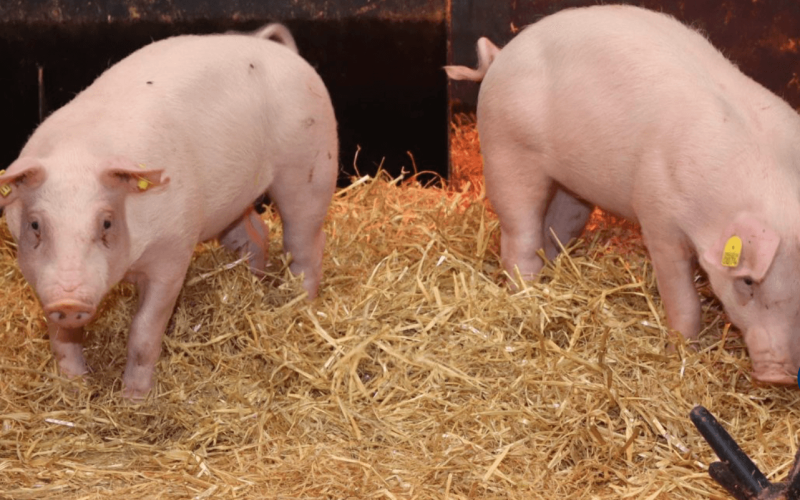
Credit: Dr Simon Lillico, Roslin Institute

In a breakthrough for animal health and biosecurity, scientists at the Roslin Institute have successfully developed pigs resistant to classical swine fever (CSF) using cutting-edge gene-editing technology.

The highly contagious virus, which was last detected in the UK in 2000, continues to cause devastating outbreaks across Europe, Asia and Latin America, costing the global pig industry millions of pounds each year.

Researchers at the world-renowned Edinburgh institute modified a protein that the virus relies on to replicate inside pig cells. In controlled trials, the gene-edited pigs remained completely healthy when exposed to CSF, while unedited pigs developed the disease

Follow the latest news and policy debates on sustainable agriculture, biomedicine, and other ‘disruptive’ innovations. Subscribe to our newsletter.

“Our research highlights the growing potential of gene editing in livestock to improve animal health and support sustainable agriculture,” said [Dr Simon Lillico, core scientist at the Roslin Institute].

However, gene-edited animals remain subject to strict regulation and public scrutiny in the UK and Europe, meaning any commercial rollout would still require extensive review and approval.


This is an excerpt. Read the original post here

{{ reviewsTotal }}{{ options.labels.singularReviewCountLabel }}
{{ reviewsTotal }}{{ options.labels.pluralReviewCountLabel }}
{{ options.labels.newReviewButton }}
{{ userData.canReview.message }}

Related Articles

Infographic: Global regulatory and health research agencies on whether glyphosate causes cancer

Infographic: Global regulatory and health research agencies on whether glyphosate causes cancer

Does glyphosate—the world's most heavily-used herbicide—pose serious harm to humans? Is it carcinogenic? Those issues are of both legal and ...

Most Popular

Screenshot-2026-04-14-at-11.11.06-AM
‘Turbo cancer’ or mRNA cancer cure? Strategies to counter misinformation
Picture1
The Orange Bowl without oranges: Can CRISPR save Florida citrus?
ChatGPT-Image-May-22-2026-10_26_09-AM
Gutting the National Science Board: How the Trump-RFK, Jr. crusade is erasing the separation of science and state
Screenshot 2025-11-12 at 3.28
GLP podcast: Evolutionary biologist debunks the 'sex spectrum'
Screenshot-2026-04-22-at-12.21.32-PM
Viewpoint: Why the retracted Monsanto glyphosate study doesn’t change the science—the world’s most popular herbicide is safe 
Screenshot 2026-05-22 at 3.28
Vagus nerve wellness grift: How to build a billion dollar business. Are you listening, Kelly Ripa?
ChatGPT-Image-May-26-2026-09_19_32-AM
Viewpoint— “A safe space to chat, flirt, and be intimate without sex”: Are new AI companies exploiting vulnerable asexuals?
ChatGPT-Image-Mar-10-2026-01_39_01-PM
Viewpoint—“Miracle molecule” debunked: Why acemannan supplements don’t work
ChatGPT-Image-Apr-16-2026-02_56_53-PM
Financial incentives, over diagnosis, and weak oversight: Autism claims are driving up Medicare costs
ChatGPT-Image-May-1-2026-11_42_59-AM-2
Viewpoint: NAD is the wellness grifters latest evidence-lite longevity fad. At least the mice are impressed.
ChatGPT Image May 26, 2026, 12_06_53 PM
Fake Ebola cure promoters already cashing in as disinformation videos flood social media
glp menu logo outlined

Get news on human & agricultural genetics and biotechnology delivered to your inbox.