
Who would have thought the Trump administration would be championing “regenerative” farming — an approach long associated with progressive food politics and organic agriculture? Yet the USDA is now touting a $700 million conservation initiative to pay farmers to adopt what it says is a “farmer first, outcomes-based approach to conservation” meant to “help people help the land.” (It’s a good thing talk is cheap.)
Farmers began applying in January following a December rollout announced by Agriculture Secretary Brooke Rollins, flanked by Health Secretary Robert F. Kennedy, Jr. and Mehmet Oz, who oversees Medicare and Medicaid.
They cast the program as a bold initiative. It isn’t. It’s not even original. Despite the hoopla of a Trump Administration-style news conference, the initiative is a repackaging of a 2023 Biden administration initiative championed originally by liberal food and environmental groups, now rebranded with MAHA trappings.
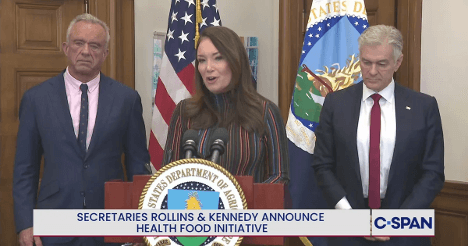
The event served mostly as an opportunity for Kennedy, who has no grounding in agriculture, to push his ideological agenda. He used the rollout to link soil policy to his version of healthy living, promoting what he called an “off-ramp” from chemical fertilizer inputs that is “critical to addressing the chronic disease crisis nationwide.” This MAHA-speak is less about conservation and soil stewardship than about putting mainstream farming in the dock — casting conventional inputs as suspect and “regenerative” as some sort of moral redemption.
Even farmers who welcome new funding after years of policy whiplash say the “new initiative” has raised eyebrows. The question is whether the program will function as practical conservation or becomes a Kennedy-driven vehicle pushing farm policy toward an ideological template that stigmatizes highly productive conventional agriculture and the tools it relies on.
Examining the ‘promise’ of regenerative agriculture
“Regenerative” agriculture sounds concrete, but it isn’t. There is no accepted definition, no uniform standard, and no accepted checklist that separates “regenerative” from plain old conservation farming — the broad set of mainstream soil-and-water stewardship practices designed to reduce erosion and runoff, protect soil structure, and keep fields productive over time.
In practice, regenerative farming is an umbrella that can cover everything from reduced tillage and cover crops to rotational grazing, compost applications, and broader crop diversity — often mixed and matched depending on local conditions and the farmer’s goals and preferences.
Supporters describe it as farming that does more than “sustain” the land: It aims to restore soil structure and biology over time, rebuilding organic matter, improving water retention, and reducing erosion. The pitch is that healthier soils produce healthier crops and more resilient farms — and, in some versions, can reduce reliance on purchased inputs over time.
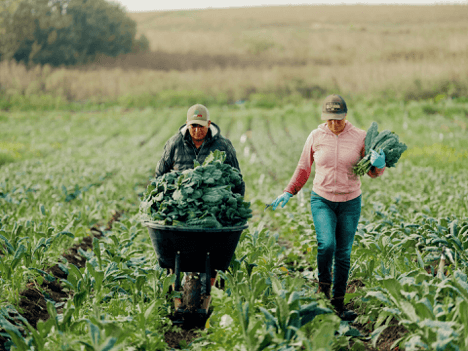
However, that luminous vision is often more compelling than the science. Many regenerative practices can be beneficial, but outcomes are highly dependent on local conditions, crop systems, weather, and management. The label also tends to devolve into virtue signaling: a marketing and political identity that implies conventional farms are inherently harmful and that “natural” or “organic” inputs are inherently safer.
And because it’s so elastic, “regenerative” can become a way to claim credit for doing what many farmers already do — or to repackage old ideological fights through new terminology. The term is rarely tied to consistent, independently verified outcome metrics, making it hard to distinguish measurable results from branding.
That’s where Kennedy — with his long record of attacking scientific institutions and consensus views — enters the frame.
Kennedy’s war on “chemical” agriculture
Kennedy is new to hyping agriculture, but it fits his ideological agenda. The concept and much of its cultural energy grew out of decades of organic and anti-chemical activism, largely anchored in progressive food politics and environmental advocacy long before he became a government official. But Kennedy has embraced the movement’s most combative — and dubious — storyline: that industrial agriculture is poisoning the public, and that the solution is to push farming away from synthetic inputs and the technologies associated with modern “Big Ag.”
This is not a subtle shift in emphasis. Kennedy has spent years attacking widely used farm chemicals and presenting the modern food system as a driver of chronic disease. He talks about “off-ramps” from chemical-intensive agriculture and portrays the status quo as a kind of national health emergency caused by bad farming practices and regulatory capture.
That approach matters, because a cabinet-level secretary carries authority that shapes public trust — even when speaking way outside his areas of expertise and responsibility. When Kennedy uses the language of health crisis to describe mainstream farming, he isn’t simply joining a policy conversation; he is stigmatizing the tools and practices most farmers rely on, and inviting regulators, activists, and litigators to treat farming inputs as public enemies. Supporters say he is spotlighting real externalities, while critics argue he blurs a few legitimate concerns into a sweeping, ill-informed indictment. The critics are right.




The administration’s regenerative agriculture program itself does not directly assault molecular genetic engineering in agriculture, the production of what are popularly known as “GMOs,” or genetically engineered crops. It doesn’t explicitly ban GE seeds or require organic practices. It is routed through USDA conservation channels and framed as outcomes-based planning.
But Kennedy’s history makes the collision inevitable. He has repeatedly cast GMOs as fundamentally unnatural and suspect and has treated agricultural biotechnology as a corporate plot rather than an extension of plant breeding that regulators assess trait by trait. That puts him at odds with the mainstream scientific consensus, which holds: that genetic modification is a seamless continuum from ancient times (selection and breeding) to the modern molecular techniques; that the newer techniques are a refinement, or extension, of those that preceded them; that currently commercialized genetically engineered crops are not inherently riskier to eat than conventionally bred crops; and that risk assessment should focus on the characteristics of a specific product, not the method used to develop it.
The practical contradiction is hard to miss. Many of the practices commonly marketed as regenerative — especially reduced tillage — were scaled up in part because farmers had new, reliable weed control tools. Modern crop protection chemistry, and the weed-management systems that grew up around it, made it easier for farmers to disturb soil less. When Kennedy takes aim at herbicides as emblematic of a poisoned food system, he is attacking elements of the “regenerative” toolkit that made large-scale farming workable in the first place. This creates a policy message that praises low-till systems while demonizing the tools that often make them workable.
And while regenerative ag marketing often suggests that synthetic inputs are the enemy, agronomists warn that nature doesn’t magically supply everything in optimal ways and amounts. Compost and manure are not infinite resources; nitrogen still must come from somewhere; and many farms, especially those not integrated with livestock, cannot simply swap away industrial inputs without serious tradeoffs. The danger is that the politics of regenerative agriculture sells a moral narrative — nature good, chemistry bad — while the agronomy is messier.
A program built on incentives, not evidence
What makes the current moment different is not that USDA is paying for conservation practices — they have done that for decades — but that the initiative is being yoked to a high-profile health crusade led by a cabinet official with a track record of treating scientific institutions and evidence as adversaries.
That’s the deeper concern among Kennedy’s critics: He brings a recognizable style — grand claims, identified villains, and a preference for argument by insinuation and, often, outright mendacity — into policy spaces that typically demand careful evidence and analysis of tradeoffs. In his hands, “soil health” becomes more than a conservation objective; it becomes a rhetorical weapon against conventional farming, biotechnology, and “corporate” agriculture.
Even some people sympathetic to soil-focused farming worry that Kennedy’s involvement will polarize an area where incremental progress is the norm. Regenerative practices can be valuable, they argue, but attaching them to a figure infamous for dishonest and often bizarre attacks on scientific consensus risks turning a pragmatic set of tools into a tribal identity: the “healthy” farms versus the “chemical” farms.
The bigger problem with “regenerative” as a governing idea: ambiguity. Regenerative agriculture’s biggest political strength — its broad appeal — is also its biggest policy weakness. Because it can mean almost anything, it can be used to justify almost anything: real improvements, symbolic gestures, expensive paperwork, or a new set of litmus tests about what counts as “good” farming. That’s not a way to build an innovative and enduring food and agricultural policy.
Critics warn that this is how ideology slips into federal programs. First comes a feel-good label. Then come the unwritten expectations: fewer “chemicals,” more “natural” inputs, skepticism of biotech, suspicion of mainstream agronomy. After that, the pressure campaigns, procurement standards, and marketing requirements appear. Over time, “regenerative” can become a soft regulatory regime by other means — without the transparency and accountability that would normally accompany a major policy shift.
With Kennedy at the helm, that risk intensifies — because his public stance isn’t just “let’s improve soil”; it’s “conventional agriculture is harming you.” That isn’t conservation policy; it’s a moral indictment grounded in misrepresentations.
What happens next?
As contracts begin to roll out, the immediate question is mundane but decisive: Will USDA treat regenerative agriculture as a flexible conservation framework that can coexist with the advances of modern farming — including molecular genetic engineering and mainstream crop protection — or will Kennedy’s anti-chemical worldview creep into implementation through guidance, messaging, and political pressure?
For farmers, the question is even simpler: Is this a practical program that will help to cover the costs of proven soil practices, or the first step toward a federally blessed ideology that paints them as villains if they use the tools that keep their operations viable?
Either way, Kennedy has already succeeded in one respect: He has pulled a contested, emotionally charged vision of farming into the center of national health politics. And once farming becomes a proxy battle for purity — chemical versus natural, corporate versus wholesome — science could become optional and outcomes secondary to dogma.
Henry I. Miller, a physician and molecular biologist, is the Glenn Swogger Distinguished Scholar at the Science Literacy Project. An official at the FDA for 15 years, he was the founding director of its Office of Biotechnology. Find him on his website: henrymillermd.org