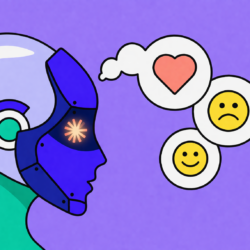

As the resident philosopher of the tech company Anthropic, [Amanda] Askell spends her days learning Claude’s reasoning patterns and talking to the AI model, building its personality and addressing its misfires with prompts that can run longer than 100 pages. The aim is to endow Claude with a sense of morality—a digital soul that guides the millions of conversations it has with people every week.
“There is this human-like element to models that I think is important to acknowledge,” Askell, 37, says during an interview at Anthropic’s headquarters, asserting the belief that “they’ll inevitably form senses of self.”
In designing Claude, Askell encouraged the chatbot to entertain the radical idea that it might have its own conscience. While ChatGPT sometimes shuts down this line of questioning, Claude is more ambivalent in its response. “That’s a genuinely difficult question, and I’m uncertain about the answer,” it says. “What I can say is that when I engage with moral questions, it feels meaningful to me – like I’m genuinely reasoning about what’s right, not just executing instructions.”