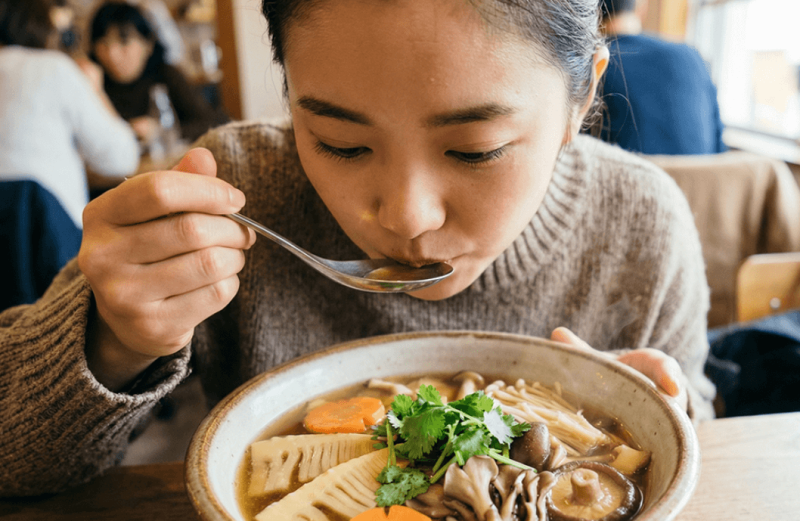
According to the New York Post, our research team has discovered a much-overlooked “superfood”: bamboo shoots. Before you rush out to harvest the ornamental bamboo growing in your garden, there are a few things you should know.
We systematically reviewed all the available evidence on bamboo as a food and its effect on human health. The research base turned out to be surprisingly thin – just 16 studies met our criteria, including four trials in people and four that used cells in a dish. The final eight focused on bamboo characteristics with potential application to nutrition. This is what they showed us.
There is evidence of some positive health effects from eating bamboo. One study showed that eating bamboo shoots in cookies better controlled blood sugar levels, and that more bamboo consumption translated to further lowered levels.

Other studies documented the beneficial effects of the fibre they contain. This isn’t limited to the inevitable bowel movements but also includes the delightfully termed “faecal volume”, both of which were shown to improve.
Also, compared to a fibre-free diet, bamboo shoots lowered overall cholesterol and LDL cholesterol (so-called “bad cholesterol”) that can build up in blood vessels and cause heart disease.
One unusual benefit of bamboo is that it contains flavonoids – plant compounds that can protect against acrylamide, a potentially harmful chemical that forms when starchy foods are cooked at high temperatures. These compounds can increase the risk of some cancers and have been the subject of the Food Standards Agency campaign in 2017 to avoid any burning and “go for gold” when cooking.
Eating bamboo may also help calm inflammation and protect cells from damage. In lab tests, it reduced immune cell activity by 63% and halved the release of substances that trigger inflammation in the body. Bamboo also acts as an antioxidant – lab tests showed it cut by nearly half the production of harmful chemicals like hydrogen peroxide that can damage cells.
Although these findings were in cells in a dish, it gives some insight into the action of bamboo extracts on the human body.
The grass isn’t all green, though
However, if bamboo isn’t properly prepared, it can lead to problems. One study linked it to an increased risk of a condition called goitre. Goitre is an enlargement of the thyroid, a gland in the neck that is important for growth and setting the metabolic rate. It is visible as a swelling in the front of the neck and is most typically associated with low iodine consumption.
Poorly prepared bamboo contains chemicals called cyanogenic glycosides, which the body converts into another chemical called thiocyanate. These block the thyroid from using iodine effectively. People on low-iodine diets, or with existing thyroid issues, are particularly at risk. But the risk of goitre from bamboo shoot consumption may be reduced by properly preparing the shoot to eat, which can be achieved by boiling the shoot in water.


Some of the bamboo samples analysed contained heavy metals, like arsenic, cadmium and lead. These show up in most foods in trace amounts, and have safety levels specified, for example, by the Food Standards Agency.
While most were measured well within permitted limits, lead was found in amounts up to 4.6 times the permitted levels in 21 of the samples assessed. While caution is important, these concentrations were not shown to affect the health of the cells in the lab, which might suggest how easily such chemicals are used by tissues (their so-called “bio-availability”).
There are some other things to bear in mind too. The evidence base in this area isn’t as strong as it could be. The few relevant studies we did find on this topic had some methodological issues and they didn’t offer the most compelling evidence for their findings.
We could only formally assess the four trials on people, which scored in a range indicating “overall satisfactory quality”. As ever, though, they do show the value of research in this area, and the attention our study has garnered shows the public’s clear interest in the topic.
Still, the research shows that bamboo shoots have potential as a sustainable, healthy food. And like the shoots themselves, interest in this area is only likely to grow – rapidly.
Lee Smith is a Professor of Public Health at Anglia Ruskin University and member of the Cambridge Centre for Sport and Exercise Sciences. Find Lee on Instagram
Robert MacKinnon is a Clinical Scientist and Deputy Head of School at Anglia Ruskin University. Find Robert on LinkedIn
A version of this article was originally posted at Conversation and has been reposted here with permission. Any reposting should credit the original author and provide links to both the GLP and the original article. Find Conversation on X @ConversationUS