Iranians have long fought disinformation by using the internet. Access is now at 1%

Screenshot 2026-03-09 at 5.12.33 PM
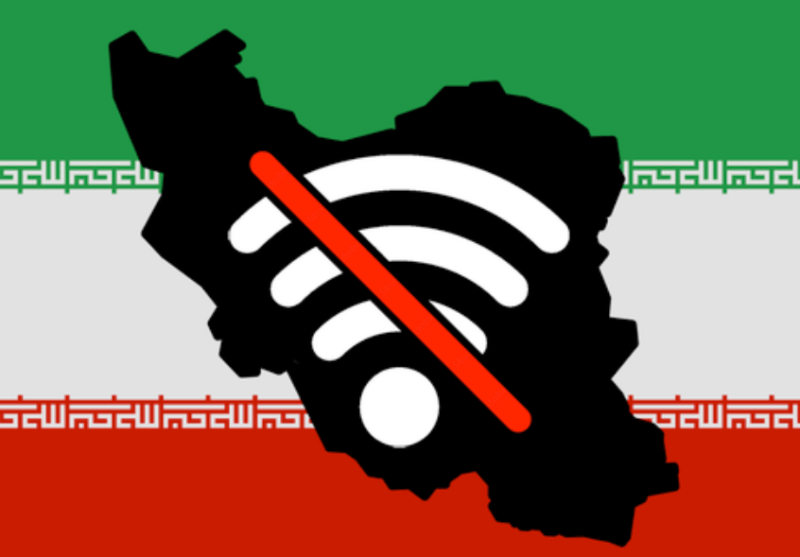
[A]s the US and Israel’s war on Iran intensifies, the conflict is adding a new dimension to what would otherwise be a damaging but not unprecedented internet blackout.

In these situations, and by the regime’s design, the populace still has access to the country’s homegrown intranet and suite of applications, known as the National Information Network or NIN, so daily life can continue.

Iranians were plunged into internet darkness almost immediately after US and Israeli missiles hit the country on February 28, killing the country’s supreme leader, Ali Khamenei. Since then, says Doug Madory, director of internet analysis at monitoring firm Kentik, there has been “minimal traffic” leaving the country, with all networks seeing around 99 percent drops in traffic.

Follow the latest news and policy debates on sustainable agriculture, biomedicine, and other ‘disruptive’ innovations. Subscribe to our newsletter.

After spending most of 2026 mostly offline already, Iranians are now living under full-scale kinetic attack. It is currently unclear how Iranian leadership and governance will evolve as a result of the conflict—leaving the future of the NIN and the country’s access to the external internet in an even more uncertain state than ever.

This is an excerpt. Read the original post here



{{ reviewsTotal }}{{ options.labels.singularReviewCountLabel }}
{{ reviewsTotal }}{{ options.labels.pluralReviewCountLabel }}
{{ options.labels.newReviewButton }}
{{ userData.canReview.message }}

Related Articles

Infographic: Global regulatory and health research agencies on whether glyphosate causes cancer

Infographic: Global regulatory and health research agencies on whether glyphosate causes cancer

Does glyphosate—the world's most heavily-used herbicide—pose serious harm to humans? Is it carcinogenic? Those issues are of both legal and ...

Most Popular

Screenshot 2026-05-06 at 2.56
Singularity crisis ahead? Can super babies save us from rogue AI geniuses?
Screenshot-2026-03-13-at-12.14.04-PM
The FDA wants to make many popular prescription drugs OTC—a great idea. Here’s why it’s unlikely to happen
Screenshot-2026-04-20-at-2.26.27-PM
Viewpoint — Food-fear world: The latest activist scientists campaign: Cancer-causing additives
Screenshot-2026-05-01-at-11.56.24-AM
‘Science moves forward when people are willing to think differently’: Memories of DNA maverick Craig Venter
images
The never-ending GMO debate: Pros and cons
Screenshot-PM-24
Viewpoint: The herbicide glyphosate isn’t perfect. Banning it would be far worse.
Screenshot-2026-04-03-at-11.15.51-AM
Paraben panic: How a flawed study, media hype, and chemophobia convinced the public of the danger of one of the safest classes of preservatives
Screenshot-2026-04-30-at-2.19.37-PM
5 myths about summer dehydration that could damage your health — or even kill you
Screenshot-2026-05-01-at-1.29.41-PM
Viewpoint: What happens when whole grains meet modern food manufacturing? Labels don’t tell the whole story.
Screenshot-2026-05-06-at-2.07.43-PM
Manufacturing a conspiracy: The timeline of how  the White House embraced the fringe claim that scientists are being mysteriously murdered
glp menu logo outlined

Get news on human & agricultural genetics and biotechnology delivered to your inbox.