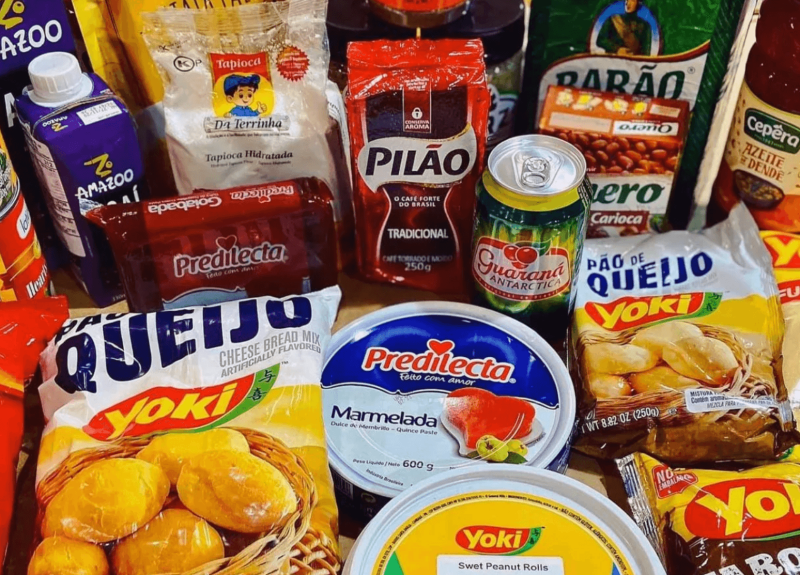
Ultra-processed foods now make up more than 50% of the American diet.
They are also less expensive and better tasting than unprocessed alternatives. It is not surprising that, when offered a choice, people eat more—calorie consumption in the US has increased from 1800 calories per day in 1978 to 3800 calories today. There may be other causes as well, like eating out more and reduced nicotine consumption.
But the focus today is on ultra-processed foods (UPFs).
The story of UPFs began in Brazil in 2009, a country that had been struggling with poverty and where “malnutrition was widespread, with outright starvation.”
As part of the Real Stabilization Plan in 1994, state enterprises in Brazil were privatized, and barriers to multinational investment were eliminated. The result was Brazilian crop production reached an all-time high of 108 million tons in 2005. By 2006, Brazilian corporations were the world’s number one exporter for sugar, beef, poultry, coffee, and orange juice.
But “almost all the important sectors of Brazil’s economy were dominated, if not outright owned, by foreign corporations.” Foreign corporate profits in Brazil were higher than in the US, and most of the profits were taken out of the country, rather than re-invested there—a dynamic that critics said “made the imperialists richer.”
Nevertheless, by 2009, daily food insecurity had been reduced by 30 percent, and the number of people living in poverty decreased by 20 million. Beyond increasing food production, the government had instituted Fome Zero (Zero Hunger), although 12 million people were still experiencing severe food insecurity or hunger.
Despite gains in food production, blame for hunger was placed on “slick agribusiness multinationals” who were seen to be too powerful.
In this atmosphere, in 2009, Carlos Monteiro, a Brazilian nutrition and public health professor, “discovered” the concept of ultra-processed foods—industrial formulations with artificial ingredients and processing to make them unrecognizable as original foods.
Monteiro created the Nova system of categorizing foods: category 1, e.g., raisins); category 2, e.g., processed culinary ingredients like lard and flour; category 3, e.g., foods that have been pickled, preserved, fermented, or salted like canned tomatoes, smoked fish, and pickles; and category 4, ultra-processed foods (UPFs)— foods not covered in the first three.
Monteiro started by observing poor people in rural Brazilian villages who had tooth decay and were obese, particularly children. They were eating foods from packaged cakes to chocolate breakfast cereal not even featured in standard food pyramids with whole foods. From this observation, he created his classification system.

In an interview, Monteiro said, “I was always concerned with social injustice, and nutrition was a way to combine this interest in medicine with attempting to reduce social inequalities.” His goal was to remove the main public health obstacles to prevent chronic disease “by reducing consumption of UPFs (that are produced by) very powerful transnational corporations.” He was concerned with “how to reduce the power of these companies and how to regulate them.” He believed “regulation is key.”
There has been pushback by scientists on this system. “Classifying foods according to their assumed ‘purpose,’ including their design to be, for example, ‘highly profitable’, ‘intensely appealing’ or ‘convenient’ is subjective and has been suggested to reflect an ideological bias against modern food production systems. “There is no evidence that foods which are unprofitable, unpalatable, expensive, or inconvenient are linked to better health outcomes.”
But evidence has started to trickle in, although the category of foods is so large and contains so many types of foods, it’s not clear how helpful it is. In one test, an NIH researcher led a team that confined 10 men and 10 women to a clinic in a randomized control trial. Half ate UPFS, and half ate unprocessed foods, with both diets matched for calories, sugar, protein, fiber, and fat. Again, unsurprisingly, the group fed UPFs ate an extra 500 calories per day of the better-tasting foods.
For the longest time, the problem in Brazil was hunger and even starvation, particularly in the northern sectors where poverty was most prevalent. Over time, foreign investment was allowed to increase, and, although not gone, hunger was reduced. But there was bitterness over corporations taking huge profits out of the country.
In this environment, as hunger and starvation were replaced with obesity and tooth decay, the cause was identified as foods that were ultra-processed by rapacious corporations. However, many foods classified as ultra-processed in Monteiro’s NOVA system are healthy, and people are eating more of both healthy and unhealthy UPFs.
Ultra-processed foods were identified as a political problem rather than a scientific one. Hopefully, we will identify particular foods that might be problematic through science—and not destroy the system that is alleviating hunger and starvation.
Richard Williams is a Senior Affiliated Scholar, the former Director of the Regulatory Studies Program, and the former Vice President of Policy Research at the Mercatus Center at George Mason University. He is also the author of Fixing Food: An FDA Insider Unravels the Myths and the Solutions. Follow Richard on Substack
A version of this article was originally posted at the Public Health Without Politics Blog and has been reposted here with permission. Any reposting should credit the original author and provide links to both the GLP and the original article.