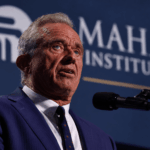
By now you’ve probably seen the clips. On the morning [of August 2, 2026], Secretary Kennedy went on CNN’s State of the Union and spent twenty minutes going back and forth with Dana Bash. I’ve been chatting with friends about it, and the word we keep landing on is vitriol. The mask had fallen.
The misinformation was an obvious problem, and we’ll walk through some of it below. But it was hard to watch for other reasons, too. When Bash pressed him on how his messaging feeds vaccine hesitancy, he told her she was “repeating it like a parrot,” that all she knows how to do is repeat what she’s been told and say to trust the experts. I know that one well because it shows up screamed verbatim in our comments all the time; that we’re all just parrots repeating each other, with no independent thoughts anywhere among us. And to put salt in the wound, every time he said the word experts, it came with air quotes.
People far more politically savvy than I are saying the segment was a deliberate play, and I don’t know whether that’s right. What I do know is that hearing this again, and again, and again, while we’re getting hit with outbreak after outbreak (measles, foodborne parasites, you name it), reminds me of an old seawall that’s taken a repeat battering during a hurricane. Let’s discuss…
On air quotes
The air quotes are about who qualifies as an expert. Immunology, vaccinology, clinical medicine, epidemiology, decades of training in any one of them, and apparently none of that training clears the bar on its own anymore.
I know the counterargument, because I see it in my inbox regularly: sure, that’s expertise, but the whole field has been “captured,” so you need people from outside the bubble who will push back. Consensus among these experts (note the purposeful lack of quotation marks) isn’t a club agreeing with itself. It exists because the highest-quality evidence continues to point in the same direction, study after study, country after country, for decades. As a reminder, these are the same folks who are constantly reviewing the evidence and willing to change or update the consensus when new, high-quality evidence arises.
Last June, we already saw what “outside the bubble” looks like in practice, when Kennedy removed all seventeen members of the CDC’s vaccine advisory committee (we wrote about that at the time with several colleagues). A federal judge later found many of the replacements were unlawfully appointed, and HHS has since issued a new charter with fewer requirements for members’ expertise. The meetings themselves have been painful to sit through, because what gets platformed there is a kind of skepticism built on misreadings of weak data, presented with the authority of a federal advisory committee.
Setting the record straight
We’ll be brief, because there are only so many times you can say the same thing. And rather than repeat his claims, we’ll just state what’s true.
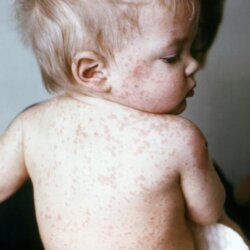
- Measles is not confined to religious communities that don’t vaccinate. The CDC has confirmed 2,371 cases this year, 93% of them in people who were unvaccinated or whose status was unknown, and which is the most annual cases in the U.S. since 1991. While the West Texas outbreak did begin in a Mennonite community, it spread well beyond it, growing to more than 750 cases. This year, South Carolina has been hit hardest, and outbreaks are running right now in Ohio, Utah, Virginia, and Pennsylvania, where more cases were reported in a single week than at any point in the past decade.
- RSV did not come out of gain-of-function research. First of all, gain-of-function research means deliberately changing a pathogen in the lab so that it gains some new ability, like spreading more easily or infecting a species it couldn’t infect before. Why would they possibly do this? Usually to study how it might evolve on its own and prepare for that. (That’s simplifying an enormous range of ordinary lab work, and only a narrow slice of it is what anyone actually fights about.) RSV was identified in the late 1950s, decades before the molecular techniques associated with modern gain-of-function research existed. It’s also not the biggest killer of kids in this country, though it is the leading cause of infant hospitalization.
- The U.S. never had the world’s highest mortality rate of COVID-19. Johns Hopkins’ final tracking data put the U.S. case fatality rate at about 1.1%. Peru’s was 4.9%. If we describe the deaths per 100,000 people instead, the U.S. still wasn’t close to the top, trailing Peru and a dozen or so other countries.
- COVID-19 vaccines did protect children. One study in CDC’s own MMWR found vaccination cut emergency and urgent care visits by 76% in kids nine months through four years, and by 56% in kids five through 17.
- Pandemic disruptions are part of the story, but not the main part. In conversations with my friend and colleague Dr. David Higgins, he noted that kindergarten MMR coverage fell meaningfully between the 2019-2020 and 2020-2021 school years, driven both by changes in health-seeking behavior and by school closures, since kids who don’t come back to school don’t have the built-in cues to get their school-required vaccines. There’s good data on that effect worldwide, and in plenty of countries, the vaccine itself is administered while at school. So the seed is real. It just doesn’t explain why we have this many measles cases now.
- It’s not true that the vaccines given during a baby’s first six months have never been studied for a link to autism. This claim points to the Institute of Medicine’s 2012 vaccine safety review, which examined 158 possible vaccine-and-adverse-event combinations across eight routinely used vaccines, drawing on more than 12,000 peer-reviewed studies. For many of those combinations, the committee concluded the evidence was inadequate to accept or reject a causal relationship. I understand why that wording sounds alarming, but it describes the strength of the available evidence, not a signal someone found and couldn’t explain. The committee anticipated exactly this misreading: “inadequate to accept or reject means just that.” On autism specifically, it evaluated the MMR vaccine and concluded the evidence favors rejection of a causal relationship. It also looked at DTaP and autism and found the evidence inadequate, because the one study available came from the Geiers, the same father-and-son pair I wrote about in the Times, and relied on passive surveillance reports with no unvaccinated comparison group. The following year, the IOM reviewed the childhood immunization schedule as a whole and found no evidence it was associated with major safety concerns.
Kennedy also told Bash that the measles vaccine works, that it stops measles in about 97% of cases, and that parents should vaccinate their children. I’m glad he said it. But in the words of JoJo, it’s a little too little, too late. He didn’t say it, and he certainly didn’t shout it, when three people died of measles last year, the first U.S. measles deaths since 2015, two of them young girls in West Texas. What he offered then was vitamin A, which is neither a preventive nor a cure (it’s a supportive treatment, in specific circumstances).
And death is nowhere near the only bad measles outcome. Roughly 1 in 1,000 children who get measles develops encephalitis (brain swelling), and about one in five of those dies. A smaller number develop SSPE, a fatal brain disease that can surface seven to ten years after everyone thought the infection was over. And measles causes immune amnesia: it destroys the memory cells your immune system spent years building against everything else it had encountered, leaving children vulnerable to infections they were already protected from. That can last for years. We’ll be paying for these outbreaks long after the case counts stabilize.
Both my kids go back to school in a few weeks (not that I’m counting down or anything), and measles is exactly the disease that finds an under-vaccinated classroom, since the virus can linger in the air for up to two hours after an infected person has left the room. By November, we’ll know whether the U.S. has crossed the twelve-month threshold of continuous transmission that would cost it the measles elimination status it has held since 2000. That’s a strange prospect to be facing while Kennedy tells CNN we’re handling measles better than any country in the world.


One thing from the CNN interview that’s new
Kennedy told Bash the President asked him to study whether vaccines cause autism. A year ago this month (wow, time flies!), I published a piece in the New York Times walking through some 70 studies on vaccines and autism and showing how the handful claiming a link were built. Here we are.
Last week, a study published in the Pediatric Infectious Disease Journal followed more than 2.5 million U.S. children through age eight and found no association between a first MMR dose received before 24 months and a subsequent autism diagnosis. It looked at childhood autism specifically rather than the full spectrum. The findings sit alongside more than 40 high-quality studies across seven countries and 5.6 million children. CIDRAP has a write-up if you want more.
Every dollar spent relitigating this is a dollar taken from research that could actually help autistic people and their families thrive.
Jess Steier is a public health scientist dedicated to bridging the gap between complex scientific evidence and public understanding. Jess is the Founder of Unbiased Science, CEO of Vital Statistics Consulting, and Executive Director of The Science Literacy Lab (a 501c3 non-profit organization).
Izzy Brandstetter Figueroa is an epidemiologist, educator, and statistics consultant for Unbiased Science. Find Izzy on LinkedIn
A version of this article was originally posted at Unbiased Science and has been reposted here with permission. Any reposting should credit the original author and provide links to both the GLP and the original article. Find Unbiased Science on X @unbiasedscipod