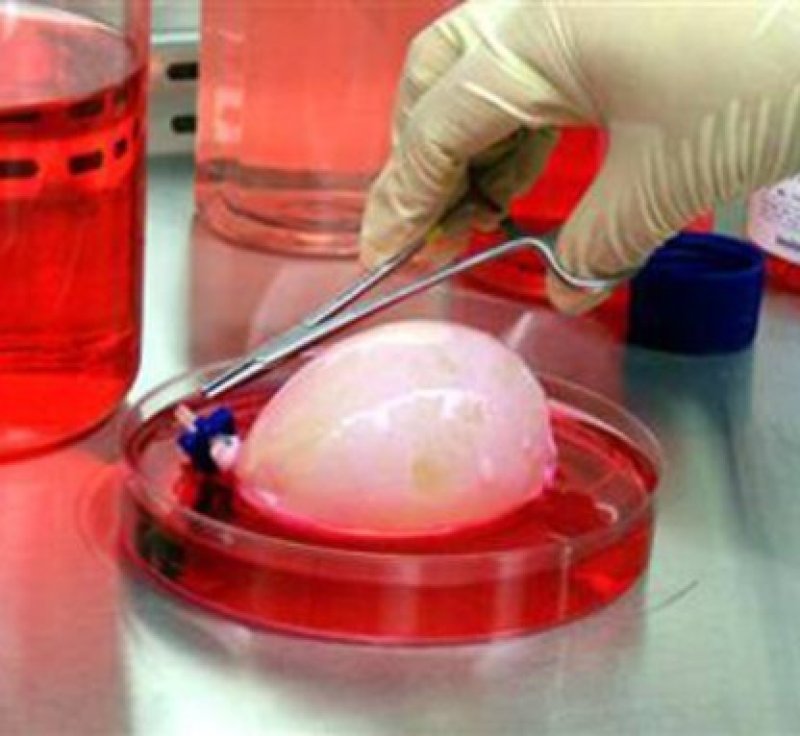
Organs from stem cells: Are we getting close?

a c d c a b dd d c ac d

The concept behind tissue engineering is simple: grow the patient’s stem cells in the laboratory, add them to a scaffold material, and you have a laboratory-grown organ. But few patients have benefited from this technology so far. Could change be on the horizon?

To address [various complications], a research team from the Wake Forest Institute for Regenerative Medicine in Winston Salem, NC, has been developing new therapies for both anal sphincter injuries and short bowel syndrome.

But what is the likelihood of these new therapies ever reaching the patients, many of whom are in desperate need of better treatment options?

Dr. Bitar’s, Khalil N. Bitar, Ph.D., a professor of regenerative medicine team has spent years developing a precise method that allows [him and his team] to grow muscle cells that are precisely aligned in one direction, and connect with nerve cells when they are added to the cell culture a few days later.

Their latest study…demonstrates the feasibility of using an engineered anal sphincter in a large animal model to restore fecal continence…

In fact, most areas of tissue engineering suffer from the problem of scaling. Even though therapies may work very well on the scale of small rodents, making much larger constructs – such as stretches of small intestine for humans – is much more challenging.

The GLP aggregated and excerpted this blog/article to reflect the diversity of news, opinion, and analysis. Read full, original post: Are engineered organs finally becoming reality in medicine?

{{ reviewsTotal }}{{ options.labels.singularReviewCountLabel }}
{{ reviewsTotal }}{{ options.labels.pluralReviewCountLabel }}
{{ options.labels.newReviewButton }}
{{ userData.canReview.message }}

Related Articles

Infographic: Global regulatory and health research agencies on whether glyphosate causes cancer

Infographic: Global regulatory and health research agencies on whether glyphosate causes cancer

Does glyphosate—the world's most heavily-used herbicide—pose serious harm to humans? Is it carcinogenic? Those issues are of both legal and ...

Most Popular

Screen Shot at AM
Facts & Fallacies Podcast: Right-wing politics bad for your health? Separating speculation from science
ChatGPT-Image-Jun-13-2026-11_51_39-AM
Viewpoint: COVID lab leak? Misguided backers of the lab leak theory refuse to give up
ChatGPT Image Jun 3, 2026, 03_54_37 PM
Viewpoint: “Turn on, tune in, drop out”—Kennedy embraces the Timothy Leary psychedelic revolution
drug look like ozempic
Six key health insights from taking weight-loss drugs
ChatGPT-Image-Jun-14-2026-09_41_44-AM-2
Viewpoint—‘The gleeful efficiency of an arsonist’: Administration’s health and science research cuts are ‘sabotaging’ America’s future
Screenshot-2026-06-14-at-9.14.26-AM
‘Humanitarian catastrophe’: Trump’s USAID shutdown could help drive nearly 23 million deaths — including 5.4 million children — by 2030, Lancet study warns
ChatGPT-Image-Jun-11-2026-01_15_03-PM
Selective Pressure, Selective Silence
ChatGPT-Image-Jun-15-2026-11_00_13-AM-2
Glucosamine alert: Alzheimer’s progresses faster among those taking the popular supplement
ChatGPT-Image-Mar-10-2026-01_39_01-PM
Viewpoint—“Miracle molecule” debunked: Why acemannan supplements don’t work
ChatGPT Image Jun 3, 2026, 03_14_43 PM
Viewpoint: How Earthjustice became the poster child for the abuse of special interest activist funding
ChatGPT Image Jun 12, 2026, 02_32_14 PM
‘Have you asked your doctor?’: AMA launches campaign to counter health misinformation
Screenshot-2026-06-14-at-9.53.54-AM
Is the World Cup a perfect storm for the spread of infectious diseases?
Screenshot-2026-06-05-at-2.12.30-PM
Some plants can poison you. So how did humans figure out what is safe to eat?
Screenshot-2026-06-11-at-3.40.06-PM
'Toxin' detox: A gastroenterologist weighs in on $71 billion health trend
glp menu logo outlined

Get news on human & agricultural genetics and biotechnology delivered to your inbox.