Ignorance takes a heavy toll on those afflicted with fatal genetic disorders like Huntington’s. However, it is not ignorance of having the disease that causes harm; it’s knowing you have the disease but not knowing enough—about genetics, about medicine, about human biology—to make informed decisions about their own care that can lead to tragedy.
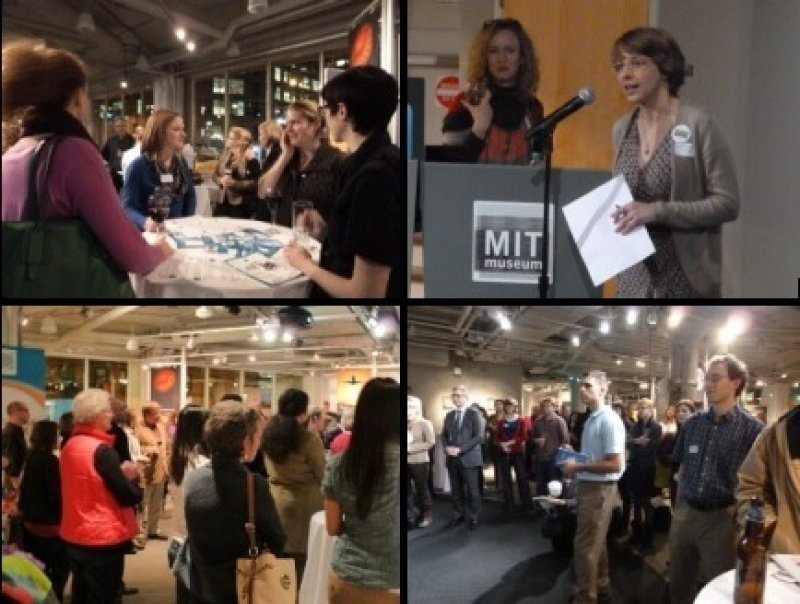
Morgan Thompson, Harvard-trained geneticist and Project Manager of the Science and Social Justice Program, has seen these consequences. One evening, she took the podium at the MIT Museum in Cambridge, Mass., to address a mixed crowd of students, laypeople, journalists and scientists at the U.S. launch of the “Ask for Evidence” campaign, under the auspices of Sense About Science, a UK-based charitable trust.
The campaign is an effort on the part of VoYS (Voice of Young Science) USA to bring young researchers from all fields and specialties together to work with the public to question the claims they find in newspapers, televisions, and policy statements.
“Anyone,” Thompson said, “can ask for evidence, and this … is a very empowering message.” It may be easy to dismiss appeals to scientific literacy as high-minded, idealistic and impractical; but Thompson believes otherwise. She did her graduate research on Huntington’s disease at Harvard. It was “a community so desperate for any information” that “some patients lost their lives” to pseudoscience and false cures, she said.
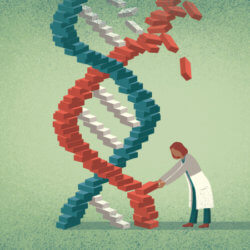
Huntington’s disease is a neurodegenerative genetic disorder, caused by the mutation of a single gene, which is always fatal. It usually manifests in early middle age, and symptoms range from hallucinations to trouble with motor skills to loss of judgment and memory. As one report in The Toronto Star described it, “[I]t’s like having Alzheimer’s disease, schizophrenia and ALS all at once.”
“It can be so hard for patients to receive any information,” said Thompson during a follow-up interview that “we [researchers] proceed with caution when it comes to providing specific examples of false cures. But anyone who takes a moment to visit any online forum [about Huntington’s] has a sense of the diversity of opinion out there—and a lot of it is opinion.”



In her years of working in the Huntington’s community, Thompson saw something remarkable. Because Huntington’s is comparatively rare (about 1 in 10,000 incidence rate), funding for research did not—could not—come from traditional channels. Instead, said Thompson, “patients and families lobbied the government for research … and [the community] built up around them with lots of opportunities [for researchers] to interact with patients and the medical community.” Since 2008, when Thompson first began her graduate work, there has been a marked increase in awareness, and “the community has responded to the misinformation.” Now, she said, it’s become harder to find false-cure stuff.
She credits this turnaround to the work of groups like HOPES, the Huntington’s Outreach Project for Education at Stanford, for which she’s served as a consultant. It’s a student-run outreach project which works with the disease community to make the latest information about Huntington’s available to the public. “Think,” said Thompson, “if every disease community had something like HOPES—vetted by science but created by the community.”
Which brings us back to the Ask for Evidence-U.S. campaign launch, which was not solely about genetic disease or even simply genetics. (Although genetics was a theme of the event, other issues and questions were considered; for example: “Should I giving my children GM-free food?”) It’s an effort to bring all discussions to the evidence-based table and to help young scientists like Thomspon—who is only 27—emerge as leaders and liaisons.
Kenrick Vezina is a writer and editor for the Genetic Literacy Project.
Additional Resources:
- When what we know outstrips what we can do, Santa Clara University
- Genetic disclosure and Huntington’s, Scitable
- To disclose or not to disclose?, National Institutes of Health