Why electrical brain stimulation to enhance memory or relieve depression may not work

IMG ac
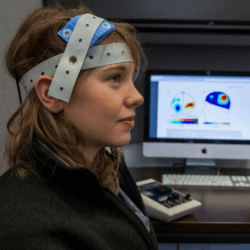
[S]cientists and hobbyists alike look for ways to change the activity of neurons without cutting into the brain and implanting electrodes. One popular set of techniques, called transcranial electrical stimulation (TES), delivers electrical current via electrodes stuck to the scalp, typically above the target brain area. In recent years a number of studies have attributed wide-ranging benefits to TES including enhancing memory, improving math skills, alleviating depression and even speeding recovery from stroke.

…

But little is known about how TES actually interacts with the brain, and some studies have raised serious doubts about the effectiveness of these techniques. A study published on February 2 in Nature Communications ups the ante, reporting that conventional TES techniques do not deliver enough current to activate brain circuits or modulate brain rhythms.

…

In fact, in both rats and human cadavers, [researcher György] Buzsáki’s team found about 75 percent of currents applied to the scalp never reach the brain, but instead are taken up by the skull, scalp and other external tissues.

…

“Most TES approaches apply stimulation for tens of minutes,” notes Marom Bikson, a biomedical engineer at The City College of New York who was not involved with the study. Bikson suggests current TES practices could still exert subtle effects on neurons that accumulate over time to modulate brain function.

Read full, original post: Brain Stimulation Is All the Rage–but It May Not Stimulate the Brain

Related Articles

Infographic: Global regulatory and health research agencies on whether glyphosate causes cancer

Infographic: Global regulatory and health research agencies on whether glyphosate causes cancer

Does glyphosate—the world's most heavily-used herbicide—pose serious harm to humans? Is it carcinogenic? Those issues are of both legal and ...

Most Popular

Screenshot-2026-10-19-at-11.09.17-AM
Vaccines, religious freedom, and protecting children’s health: New York Amish appeal to Supreme Court after $118,000 in vaccine fines for blocking shots
Screenshot 2026-10-16 at 11.17
Viewpoint: Latest attack on renewable energy and farmers, new USDA rules could put solar grants out of reach for small producers
ChatGPT-Image-Mar-10-2026-01_39_01-PM
Viewpoint—“Miracle molecule” debunked: Why acemannan supplements don’t work
png_cheese_Raw_milk
100% raw milk, 100% misguided: As MAHA-fueled demand for unpasteurized milk soars, American Academy of Pediatrics renews call for a ban on its sale and distribution
Serene Mature Woman in Abstract Waves
Testosterone’s growing appeal to women: It anecdotally mildly improves sex life, but are there any other potential benefits—or red flags?
Mifeprex Boxes and Woman Drinking Water
RFK Jr.’s EPA capitulates to anti-abortionists, authorizes study of safe abortion pills which activists falsely claim are “poisoning” our water supply
ChatGPT-Image-May-28-2026-12_56_54-PM
Viewpoint: Vaccines' non-specific effects? The ‘shoddy’ Danish couple whose 'research’ inspires RFK, Jr.’s health delusion
Golden-GM-Emblem-with-EU-Stars
As Europe inches forward in its embrace of gene-edited crops, hopes abound that opposition to GMOs might fade
Screenshot 2026-10-16 at 5.38
PFAS in Agriculture: Science, Uncertainty, and Risk Communication
Screenshot 2026-10-19 at 11.19
How the “wellness” movement has turned into a rigid cultural belief system
sorghum farmers in kenya FARMERS TREND
Here are all the ways CRISPR gene editing is transforming Africa’s staple crops—and there’s a lot more innovation to come
Screenshot-2026-10-20-at-10.53.36-AM
World Health Organization calls Kennedy- and CDC-backed Guinea-Bissau hepatitis B vaccine study designed to ‘prove’ the danger of vaccines “unethical”
psychedelics ptsd neurosciencnews public
Chaos or at peace with the world: The complex ways psychedelics transform the brain
glp menu logo outlined

Get news on human & agricultural genetics and biotechnology delivered to your inbox.