World’s largest family tree could help explain why we stopped marrying our cousins

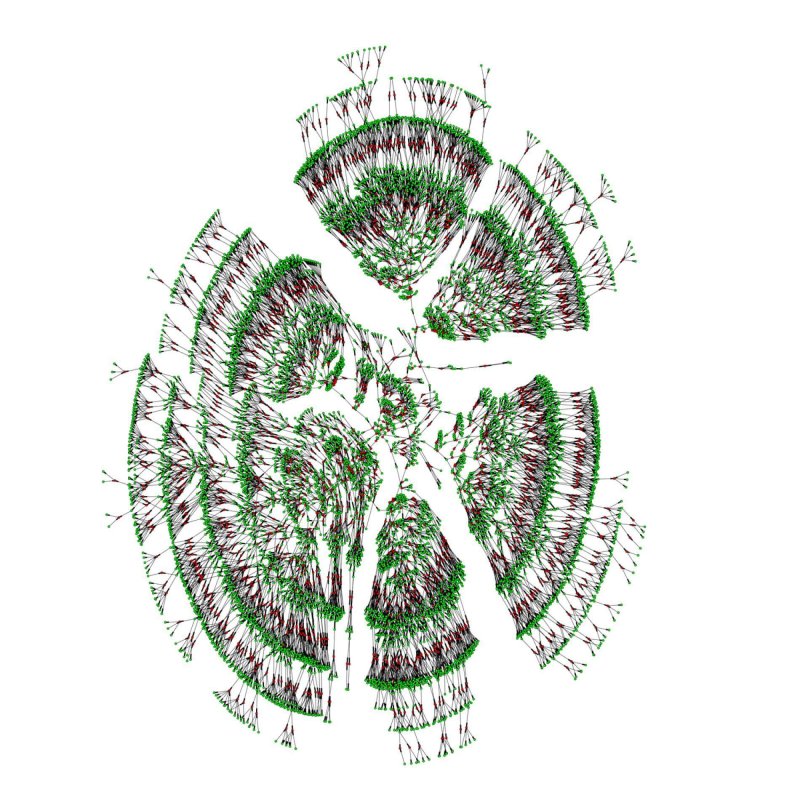
family tree kaplanis HR ngsversion adapt

Before the Industrial Revolution in the United States, Canada and Europe, you might have ended up married to a fourth cousin…Then, in the late 19th century, something changed, and people stopped marrying their cousins.

[S]hifts in social norms [might have] played a bigger role than geographic mobility in getting people to wed outside their bloodline. It’s also just one example of the insights that can be gleaned from the world’s largest, scientifically-vetted family tree, presented in a study published on [March 1] in Science.

Compiling and validating 86 million public profiles from Geni.com, a genealogy-driven social media site, the authors generated 5 million family trees. The largest tree consisted of 13 million people.

The researchers then used this data set to test several genetic and historical hypotheses, showing “you can harness the hard work of so many people around the globe just documenting their own family history, and learn something about humanity,” said Yaniv Erlich, the chief science officer of MyHeritage, the parent company of Geni.com, and senior author of the paper.

Biomedical research that marries family trees with genetic and health information could lead to new discoveries about heritable disease risk. In social sciences, genealogies merged with census and tax records could yield findings on things like inequality.

Read full, original post: When Did Americans Stop Marrying Their Cousins? Ask the World’s Largest Family Tree

{{ reviewsTotal }}{{ options.labels.singularReviewCountLabel }}
{{ reviewsTotal }}{{ options.labels.pluralReviewCountLabel }}
{{ options.labels.newReviewButton }}
{{ userData.canReview.message }}

Related Articles

Infographic: Global regulatory and health research agencies on whether glyphosate causes cancer

Infographic: Global regulatory and health research agencies on whether glyphosate causes cancer

Does glyphosate—the world's most heavily-used herbicide—pose serious harm to humans? Is it carcinogenic? Those issues are of both legal and ...

Most Popular

ChatGPT-Image-Mar-10-2026-01_39_01-PM
Viewpoint—“Miracle molecule” debunked: Why acemannan supplements don’t work
d a ca e c c beb x
Facts & Fallacies podcast: The 'woke' crusade against anthropology? Dr. Elizabeth Weiss
DtAieAIkCZy-uchn-oqg
Viewpoint: In the science misinformed grifter game plan, the organic-food-is-healthier myth might be the worst.
ChatGPT-Image-Jun-15-2026-03_00_23-PM
World’s first AI-designed vaccine explained
ChatGPT-Image-Jun-15-2026-01_04_14-PM
Viewpoint: How politicized science became a political religion 
Screenshot-2026-07-07-at-10.48.33-AM
700,000-person study reaffirms that getting a flu and Covid shot on the same day is safe
ChatGPT-Image-Jun-25-2026-12_23_17-PM
No, Bill Gates did not secretly engineer ticks to promote veganism
ChatGPT-Image-Jul-7-2026-03_07_17-PM
Kennedy blocks preventive health care panel that reviews treatments for HIV, diabetes, and cancer from meeting — for fourth time
GMOprotest
Viewpoint: CRISPR-hating activists air their grievances about gene editing farming innovation
eu-farming-policy
EU bureaucrats are finally catching up to the gene editing revolution in food and agriculture
Picture1
Viewpoint: The Lackland flu outbreak is fading but Hegseth’s military anti-vaccine fiasco is not
Screenshot-2026-07-06-at-11.30.08-AM
AI is making even its founders uneasy: ‘We find evidence of introspection, joy, satisfaction, fear, grief and unease.’
Screenshot-2026-07-06-at-12.58.18-PM
Viewpoint: Oxygen chambers? Pulsed electromagnetic field therapy? The only thing biohacking improves is the bottom line of preventative medicine hucksters
glp menu logo outlined

Get news on human & agricultural genetics and biotechnology delivered to your inbox.