‘All of Us’: NIH biobank set to collect genomes of 1 million people to address chronic diseases

biobank

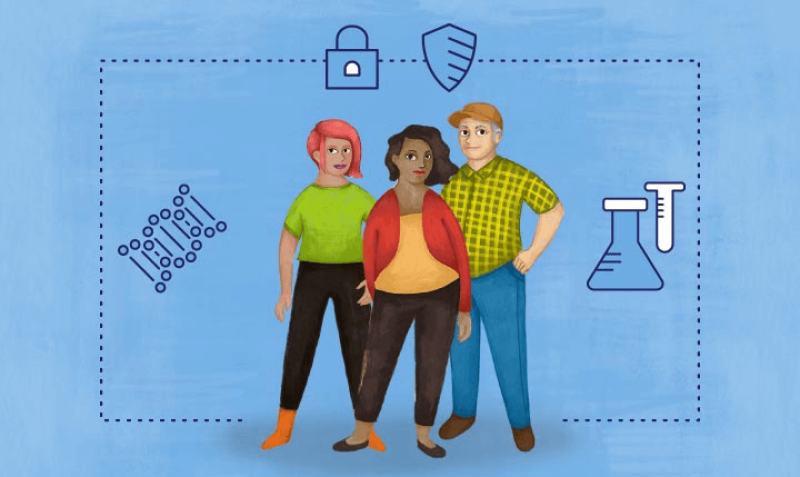
This spring, the National Institutes of Health will start recruiting participants for one of the most ambitious medical projects ever envisioned. The goal is to find one million people in the United States, from all walks of life and all racial and ethnic groups, who are willing to have their genomes sequenced, and to provide their medical records and regular blood samples.

If all goes well, experts say, the result will be a trove of health information like nothing the world has seen. The project, called the All of Us Research Program, should provide new insights into who gets sick and why, and how to prevent and treat chronic diseases.

While supporters say the results will be well worth the money and effort, others have begun to question whether All of Us is just too ambitious, too loaded with cumbersome bureaucracy — and too duplicative of smaller programs that are moving much more quickly.

Given the substantial obstacles, will the N.I.H. project, which has not even really begun, be worth the immense expense and effort? Dr. [Rory] Collins, an adviser to All of Us, thinks it will. Huge amounts of data will be needed to really understand interactions between genetics, environment and lifestyle.

Read full, original post: The Struggle to Build a Massive ‘Biobank’ of Patient Data

{{ reviewsTotal }}{{ options.labels.singularReviewCountLabel }}
{{ reviewsTotal }}{{ options.labels.pluralReviewCountLabel }}
{{ options.labels.newReviewButton }}
{{ userData.canReview.message }}

Related Articles

Infographic: Global regulatory and health research agencies on whether glyphosate causes cancer

Infographic: Global regulatory and health research agencies on whether glyphosate causes cancer

Does glyphosate—the world's most heavily-used herbicide—pose serious harm to humans? Is it carcinogenic? Those issues are of both legal and ...

Most Popular

Screenshot-2026-06-17-at-12.31.01-PM
Viewpoint: The dangerous influence of ‘woke’ post-modernism in science
marijuana-pot-in-hand-nveri-st-xpm-t-abq-fkifeos-s-rws-cmpx-
Facts & Fallacies podcast: Legalized weed drives drug addiction, psychosis?
ChatGPT-Image-Mar-10-2026-01_39_01-PM
Viewpoint—“Miracle molecule” debunked: Why acemannan supplements don’t work
ChatGPT-Image-Mar-4-2026-09_39_03-AM
Transgender female athletes and Title IX: Separating ‘policy’ from ‘legality’
ChatGPT-Image-Jun-25-2026-12_23_17-PM
No, Bill Gates did not secretly engineer ticks to promote veganism
Sampling_a_strawberry_32206461974
Viewpoint: Which is worse: Trace PFAS ‘forever chemicals’ on strawberries or the fear that scares people away from eating them?
photodune farming tractor s
Viewpoint: Glyphosate may be hazardous, but it is not dangerous as used by farmers. Critics of the Supreme Court’s Roundup ruling garble hazard with risk
ChatGPT-Image-Jun-25-2026-01_14_50-PM
Viewpoint: Disinformation grift: The wellness industry is a lucrative and mostly worthless marketplace of ‘balms, brews, and baloney’
ChatGPT-Image-Jun-30-2026-11_55_58-AM
Viewpoint—Junk science: How predatory mass tort lawyers twist facts, scare the public about phantom chemical risks, and cash in on billion-dollar settlements
covid-vaccine
Blocked by Kennedy’s CDC, validated by peer-reviewed scientists: Suppressed COVID vaccine study published in JAMA finds 50% risk cut
NYPICHPDPICT000011561063
Viewpoint: From magnetizing your head to taking useless supplements, the wellness craze has morphed into an obsession of the affluent
ChatGPT-Image-Jun-19-2026-04_11_20-PM
Daubert for Dummies—Scientific Reliability in U.S. Courts: Daubert, Rule 702, and Made-for-Litigation Evidence
Trans-flag
Explaining the Supreme Court ruling empowering states to ban transgender female athletes from competing in women’s sports
glp menu logo outlined

Get news on human & agricultural genetics and biotechnology delivered to your inbox.