Up to 270 of 450,000 British women who missed breast cancer screens because of computer error died…or maybe not

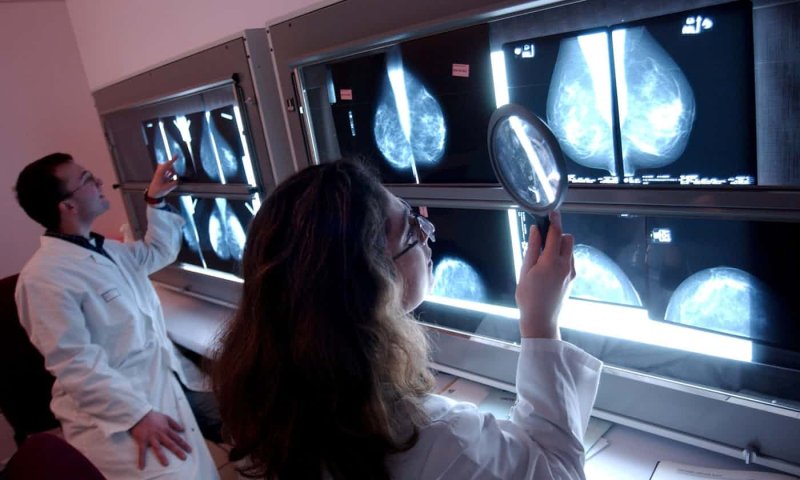
Medics screen scans for breast cancer. Image: Garo/Phanie/Rex/Shutterstock

It was announced…that, between 2009 and 2018, a computer error meant that 450,000 women aged around 70 in the UK were not sent their final breast screening appointment letter. These women were mistakenly not offered screening that may have picked up a cancer that had developed since their last check three years before. Secretary of State for Health Jeremy Hunt announced in Parliament that “there may be between 135 and 270 women who had their lives shortened”. This has been reported as “up to 270 women died”.

There are three reasons why this claim is misleading.

First, Hunt said this was the number of women who “had” their lives shortened. But this is not strictly accurate  -  few of these women will have actually died of their breast cancer yet.

Second, even a claim of reduced life expectancy would be questionable, as Hunt made clear in his announcement but which remained unreported. There is only weak evidence that screening helps prolong life.

But the third issue is that, contrary to popular belief, screening also does harm . The current NHS leaflet states that, for every 200 women attending screening between the ages of 50 and 70, we would expect one to have her early death from breast cancer prevented, but three to be unnecessarily treated for a harmless cancer that would not have troubled them.

Read full, original post: Why breast screening error stories are getting death stats wrong

Related Articles

Infographic: Global regulatory and health research agencies on whether glyphosate causes cancer

Infographic: Global regulatory and health research agencies on whether glyphosate causes cancer

Does glyphosate—the world's most heavily-used herbicide—pose serious harm to humans? Is it carcinogenic? Those issues are of both legal and ...

Most Popular

ChatGPT-Image-Sep-17-2026-12_28_43-PM
Vitamin D, omega-3 fish oil and glucosamine supplements could cause brain damage 
ChatGPT-Image-Mar-10-2026-01_39_01-PM
Viewpoint—“Miracle molecule” debunked: Why acemannan supplements don’t work
ChatGPT-Image-Sep-17-2026-10_17_15-AM
Viewpoint: Why are the less intelligent more likely to be conservative—and smarter people more socially liberal?
Screenshot-2026-08-12-at-11.31.46-AM
AI is helping develop new vaccines
Screenshot-2026-09-10-at-12.20.19-PM
'Jet fuel didn't melt the steel': 9/11 conspiracy theories debunked
Screenshot-2026-09-16-at-12.07.47-PM
The heated debate over trans athletes in the WNBA
Screenshot-2026-09-17-at-10.24.54-AM
Viewpoint: Dubious environmental fears: Why the AI buildout is critical to America’s ecological future
ChatGPT-Image-Sep-9-2026-02_48_24-PM
Viewpoint: Trump-RFK Jr. report on “Gender Ideology & Left-wing Ideology’ targets LGBTQ community—and science
Screenshot-2026-09-10-at-11.50.46-AM
Did COVID vaccines kill 2,500 service members? RFK Jr. hires an investigator who compares vaccine promoters to Nazi doctors
Screenshot 2026-09-11 at 12.39
Child-monitoring apps: When the cure is worse than the harm—and how the technology could be tweaked
glp menu logo outlined

Get news on human & agricultural genetics and biotechnology delivered to your inbox.