Our bodies churn out trillions of mutations each day—why aren’t we ‘walking bags of cancer’?

mutations

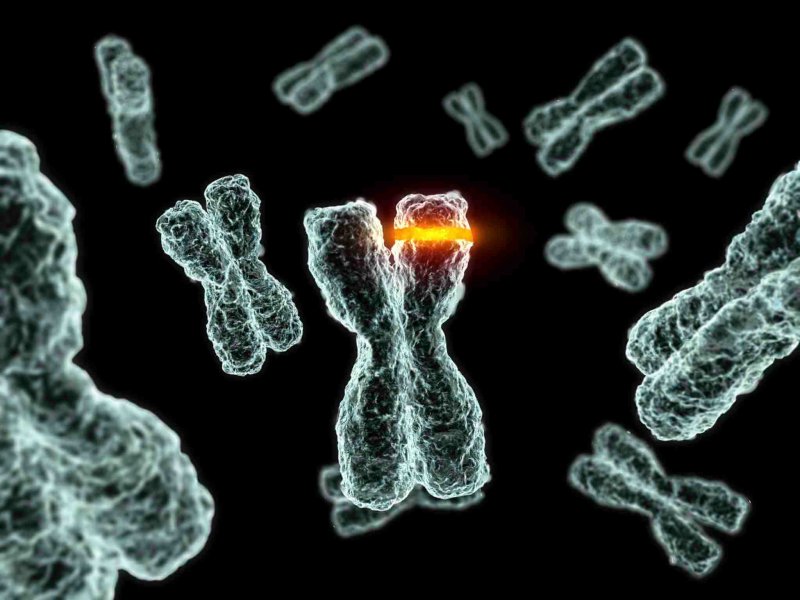
As you read this article, the cells in your body are dividing and the DNA in them is being copied, letter by letter. So long is the human genome—more than 3 billion letters—that even an astonishingly low error rate of one in many million letters could amount to 10 new mutations every time a cell divides.

In a typical day, scientists estimate, the 37 trillion cells in your body will accumulate trillions of new mutations. Are you horrified yet?

Good, me too.

But somehow we are not all walking bags of cancer. Somehow we accumulate bajillions of mutations and are, mostly, okay. How?

A small number of those mutations could strike in a cancer gene, making individual cells better at dividing and growing. But one mutation isn’t usually enough to make the cell cancerous.

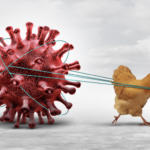
For example, a cancer cell needs to override the natural limit on how many times a cell can divide. It needs to escape “apoptosis,” or the cell’s tendency to self-destruct when something goes wrong. And it needs to evade an immune system that is constantly on the lookout for aberrant cells. A single cell must accumulate all these mutations to be become successfully cancerous.

Cancer is more common in the elderly because they have simply had more time to accumulate the right—or rather, wrong—set of mutations.

Read full, original post: Your Body Acquires Trillions of New Mutations Every Day

{{ reviewsTotal }}{{ options.labels.singularReviewCountLabel }}
{{ reviewsTotal }}{{ options.labels.pluralReviewCountLabel }}
{{ options.labels.newReviewButton }}
{{ userData.canReview.message }}

Related Articles

Infographic: Global regulatory and health research agencies on whether glyphosate causes cancer

Infographic: Global regulatory and health research agencies on whether glyphosate causes cancer

Does glyphosate—the world's most heavily-used herbicide—pose serious harm to humans? Is it carcinogenic? Those issues are of both legal and ...

Most Popular

Screenshot-2026-04-14-at-11.11.06-AM
‘Turbo cancer’ or mRNA cancer cure? Strategies to counter misinformation
ChatGPT Image May 28, 2026, 08_16_38 PM
Viewpoint: Why the EPA mismeasures cancer risk of chemicals and what should be done to fix it
ChatGPT-Image-May-22-2026-10_56_42-AM-2
‘It’s not super useful’: As wariness about AI grows, Trump proposes rollback of healthcare safeguards
fda_logo_decimated
Viewpoint: RFK, Jr.’s FDA is on a screaming downward path—and why it may never recover
ChatGPT-Image-Mar-10-2026-01_39_01-PM
Viewpoint—“Miracle molecule” debunked: Why acemannan supplements don’t work
Screenshot-2026-04-22-at-12.21.32-PM
Viewpoint: Why the retracted Monsanto glyphosate study doesn’t change the science—the world’s most popular herbicide is safe 
Screenshot 2025-07-30 at 10.48
Can gene editing eliminate Down syndrome? Scientists have done it in lab-grown cells
Screenshot 2025-11-12 at 12.00
‘Biotech Barbie' Manhattan Project: Will CRISPR babies escape the shadow of He Jiankui?
Screenshot-2026-05-27-at-10.51.25-AM
Viewpoint: ‘Monsanto’ blues—Planned Netflix movie promises yet another round of anti-glyphosate disinformation
ChatGPT-Image-May-28-2026-11_31_47-AM-2
Relying on your doctor or AI miracle cure, death and debilitation? Neurologist makes the wrong choice
ChatGPT-Image-May-22-2026-10_26_09-AM
Gutting the National Science Board: How the Trump-RFK, Jr. crusade is erasing the separation of science and state

Sorry. No data so far.

glp menu logo outlined

Get news on human & agricultural genetics and biotechnology delivered to your inbox.