Viewpoint: Pesticide regulations should assess societal context, not just safety

weedkiller superJumbo
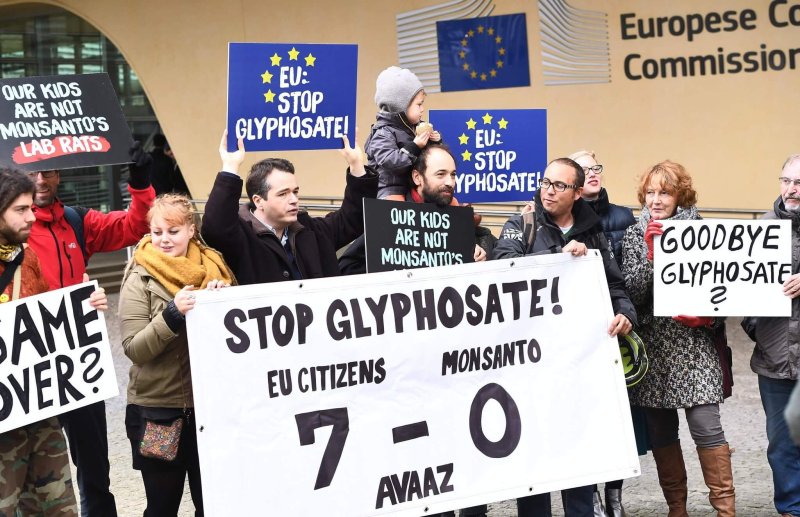
Image credit: Emmanuel Dunand/AFP

Apart from the inherent scientific complexity, the glyphosate case illustrates a fundamental societal issue. The mere fact that the European Citizens’ Initiative attracted so many adherents is indicative of a wide societal aversion to the massive increase in the production of chemicals and their use in pesticide-based agricultural mass production. Public concern is not only limited to glyphosate but also covers other chemicals such as neonicotinoids, endocrine-disrupting compounds, and food additives.

Presently there is no societal assessment in pesticide registration. Recently, a promising framework for the combination of cost-benefit analyses with factors such as risk perception, uncertainty, and trust in regulatory decision-making on toxic substances in food, including pesticides, has been proposed. We argue that including such a framework in pesticide authorization would be an appropriate way to take factors such as citizens’ initiatives, societal attitudes toward agricultural chemicals, and economic benefits of chemical pest and weed control into account.

It is time for a new scheme for pesticide evaluation in which regulatory decision-making takes into account not only the technical evidence on safety but also the societal context in which decisions are made.

Read full, original post: Decision-making in a storm of discontent

{{ reviewsTotal }}{{ options.labels.singularReviewCountLabel }}
{{ reviewsTotal }}{{ options.labels.pluralReviewCountLabel }}
{{ options.labels.newReviewButton }}
{{ userData.canReview.message }}

Related Articles

Infographic: Global regulatory and health research agencies on whether glyphosate causes cancer

Infographic: Global regulatory and health research agencies on whether glyphosate causes cancer

Does glyphosate—the world's most heavily-used herbicide—pose serious harm to humans? Is it carcinogenic? Those issues are of both legal and ...

Most Popular

Screenshot 2025-08-25 203032
Mazzenga’s 20-year old muscles: How a still-going-strong 92-year old sprinter wins every race she enters
global warming
‘Implausible’: Top climate scientists reject worst-case scenario—soaring temperatures and fast-rising sea levels
Screenshot-2026-06-05-at-1.44.09-PM
Viewpoint: Scientists have scrapped the worst-case climate scenario. Is that proof that climate change is a hoax, as Trump claims?
Screenshot 2026-05-26 at 10.15
Viewpoint: Double standard—Why does the wellness industry get a free pass while Big Healthcare is treated as morally suspect?
Screenshot-2026-06-03-at-3.33.44-PM
Viewpoint: Vaccine deniers are attacking a life-saving Vitamin K shot for newborns that isn’t even a vaccine
Screenshot-2026-06-08-at-1.35.30-PM
Viewpoint: Social media and fake natural health propaganda fuel surge in use of mostly useless supplements
px extra strength tylenol and tylenol pm
Why ‘null-findings’ on Tylenol’s safety for pregnant women barely move the needle on countering misinformation

Screenshot-2026-06-08-at-10.19.30-AM
‘Natural’ wellness supplements linked to liver injury
ChatGPT-Image-May-28-2026-12_56_54-PM
Viewpoint: Vaccines' non-specific effects? The ‘shoddy’ Danish couple whose 'research’ inspires RFK, Jr.’s health delusion
Screen Shot at AM
Facts & Fallacies Podcast: Right-wing politics bad for your health? Separating speculation from science
ChatGPT-Image-Jun-10-2026-12_57_24-PM
Viewpoint: Why gene-editing babies is moral and certain to happen
Credit: ACSH
Viewpoint: Who and what’s to blame for the surge in vaccine-preventable diseases?
ChatGPT-Image-Mar-10-2026-01_39_01-PM
Viewpoint—“Miracle molecule” debunked: Why acemannan supplements don’t work
Screenshot-2026-06-05-at-2.12.30-PM
Some plants can poison you. So how did humans figure out what is safe to eat?
glp menu logo outlined

Get news on human & agricultural genetics and biotechnology delivered to your inbox.