Fears of ‘designer babies’ are surfacing again

designer babies
Credit: Explore Biotech

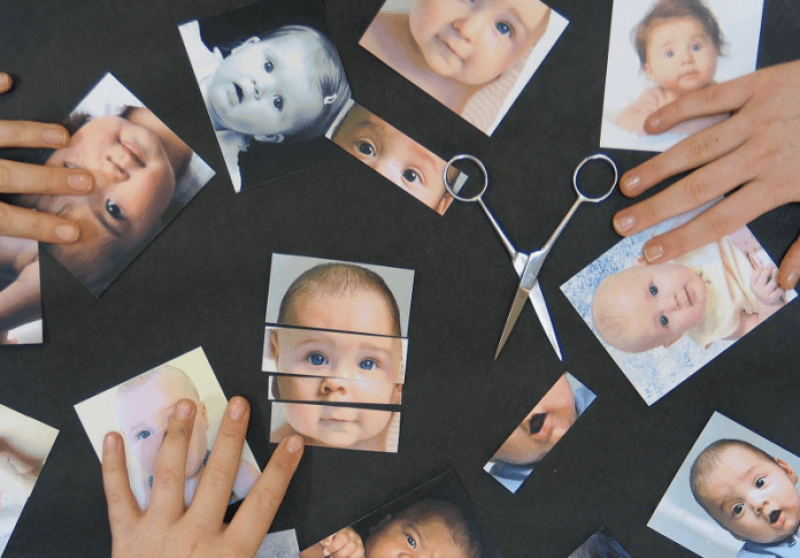
“What we’re seeing is a fast slide down a very slippery slope toward designer babies,” warned Marcy Darnovsky.

What has alarmed Darnovsky, a left-wing bioconservative from the Center for Genetics and Society? The fact that specialists at the Nadiya fertility clinic in Ukraine have used pronuclear transfer to help some parents to give birth to healthy babies.

Pronuclear transfer is used in cases where the mitochondria in a woman’s eggs are mutated in some way that would produce disease in her children or cause her infertility. The procedure involves removing the two pronuclei, or unfused nuclei, of the egg and sperm from a day-old embryo and transfering them into an enucleated donor egg containing healthy mitochondria.

Since mitochondrial DNA is inherited from a baby’s mother, female children born using this technique will pass along the healthy donor mitochondria to their progeny. Bioconservatives like Darnovsky decry this as germ-line genetic engineering.

Since 2015, Congress has included provisions in its annual federal appropriations laws that prohibit the FDA from accepting applications for clinical research using [mitochondrial replacement therapies].

But what about Darnovsky’s claim that MRT is the beginning of a fast slide down a very slippery slope toward designer babies? Bring it on. Parents using modern biotechnology to endow their children with longer, healthier, smarter, and perhaps even happier lives? It’s hard to see any ethical problem with that.

Read full, original post: Freaking Out Over ‘Designer Babies,’ Again

{{ reviewsTotal }}{{ options.labels.singularReviewCountLabel }}
{{ reviewsTotal }}{{ options.labels.pluralReviewCountLabel }}
{{ options.labels.newReviewButton }}
{{ userData.canReview.message }}

Related Articles

Infographic: Global regulatory and health research agencies on whether glyphosate causes cancer

Infographic: Global regulatory and health research agencies on whether glyphosate causes cancer

Does glyphosate—the world's most heavily-used herbicide—pose serious harm to humans? Is it carcinogenic? Those issues are of both legal and ...

Most Popular

Screenshot-2026-05-01-at-1.29.41-PM
Viewpoint: What happens when whole grains meet modern food manufacturing? Labels don’t tell the whole story.
S
As vaccine rejectionism spreads, measles may be taking a more dangerous turn
ChatGPT-Image-Apr-13-2026-02_20_22-PM
Viewpoint: Misinformation infodemic? Why assessing evidence is so challenging 
ChatGPT Image May 10, 2026, 08_16_59 PM 2
Overmedicalization? RFK Jr.’s antidepressant crackdown raises conflict questions over his fee stake in Wisner Baum, the tort firm built on suing drug makers
Screenshot-2026-04-20-at-2.26.27-PM
Viewpoint — Food-fear world: The latest activist scientists campaign: Cancer-causing additives
Picture1-5
Science Disinformation Gap: The transatlantic battle over social media and censorship
ChatGPT-Image-Mar-27-2026-11_47_30-AM-2
FDA’s expedited drug reviews are hailed in some quarters but other approval practices are problematic
Screenshot-2026-03-13-at-12.14.04-PM
The FDA wants to make many popular prescription drugs OTC—a great idea. Here’s why it’s unlikely to happen
bigstock opioids on chalkboard with rol
GLP podcast: 'Safe injection sites': enabling drug addiction or saving lives?
Screenshot-2026-04-12-135256
Bixonimania: The fake disease scam that AI swallowed whole
circular-bioeconomy-should-focus-on-sustainable-wellbeing
GLP podcast: What's wrong with 'doomsday' environmentalism? It's false.
Farmers can talk to plants
Farmers are a major source of misinformation—about farming
glp menu logo outlined

Get news on human & agricultural genetics and biotechnology delivered to your inbox.