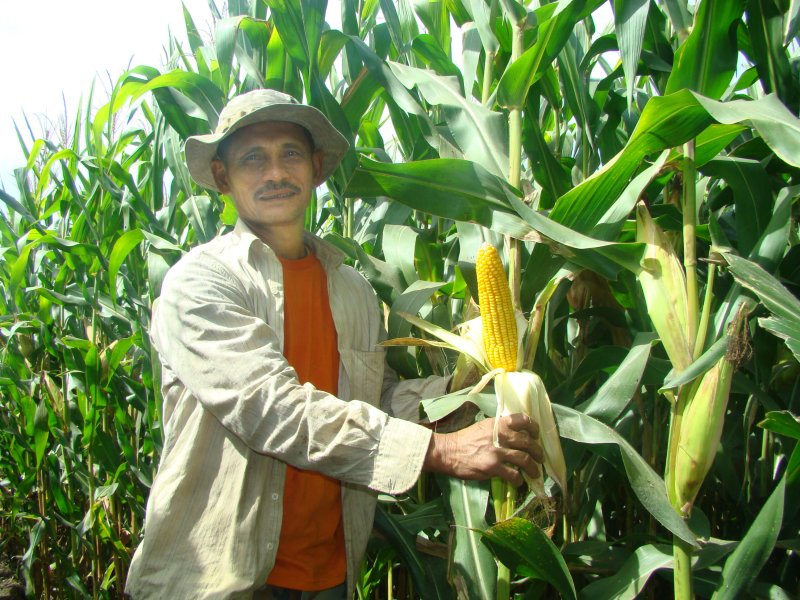
17 million farmers around the world grew GMO crops in 2017, industry studies show

biotechcornfarmer
Image source: SEARCA Biotechnology Information Center
[T]he International Service for the Acquisition of Agri-biotech Applications (ISAAA) and PG Economics, Ltd. released new studies highlighting the continued social, environmental and economic benefits of the global adoption of biotechnology in agriculture.

…

The ISAAA report shows the global biotech crop area increased in 2017 by 3 percent or 4.7 million hectares.  This increase is due primarily to greater profitability stemming from higher commodity prices, increased market demand both domestically and internationally, and the presence of available seed technologies. As more developing countries, now 19 in total including India, Pakistan, Brazil, Bolivia, Sudan, Mexico, Colombia, Vietnam, Honduras, and Bangladesh  have increased their biotech crop area and continue to allow farmers to  adopt biotechnology in food production, smallholder farmers see the direct improvements this offers, allowing them  to provide better lives for themselves and their families. In fact, developing countries now account for 53 percent of the global biotech area planted.

From 1996-2016, PG Economics reported biotech crops provided $186.1 billion in economic gains to some 17 million farmers, many of whom are female, smallholder farmers solely responsible for the livelihood of their families and communities.

…

Advances in biotech crops allow farmers to use insecticides and herbicides more strategically, reducing the environmental impact associated with their use by 18.4 percent on GM crop areas since 1996.

Editor’s note: Read the full studies here and here (behind paywall)

Read full, original press release: Biotech Crop Adoption Leads to Greater Sustainability and Socioeconomic Opportunities for Global Farmers and Citizens


Related Articles

Infographic: Global regulatory and health research agencies on whether glyphosate causes cancer

Infographic: Global regulatory and health research agencies on whether glyphosate causes cancer

Does glyphosate—the world's most heavily-used herbicide—pose serious harm to humans? Is it carcinogenic? Those issues are of both legal and ...

Most Popular

ChatGPT-Image-Mar-10-2026-01_39_01-PM
Viewpoint—“Miracle molecule” debunked: Why acemannan supplements don’t work
newborn baby spit up gerd
Vaccine-preventable congenital infections are a leading driver of autism
Screenshot-2026-10-14-at-11.45.36-AM
Viewpoint: RFK Jr.’s stacked FDA advisory council endorses multicancer screening test from ethically- questionable company that would increase false positives and waste billions of dollars
Misinformation-Shatters-the-Clockwork-Mind
Viewpoint: The price Americans pay for science denialism
Screenshot-2026-10-08-at-10.41.33-AM
Viewpoint: Wellness patches: Most vitamin supplements are useless and sometimes even dangerous, but this craze is even worse
Screenshot-2026-10-15-at-12.13.33-PM
Ahead of the midterms, Meta has paid at least 29 anti-LGBTQ accounts for their posts
Screenshot-2026-10-14-at-12.47.21-PM
Viewpoint: Are these Trump-conservative GOP doctor-politicians violating their medical oath?
Pride and Patriotism in the Breeze
Retreat from identity labels: Does the sharply declining number of young teens identifying as gay and bisexual reflect an ideological shift?
Crossed-Out-Calendar-with-Milk-Carton
Viewpoint: The shocking consequences after a year of Robert F. Kennedy Jr.'s distortions, deceptions, and flat-out falsehoods
Prescription Capsules Scattered on Twenty-Dollar Bills
Facts & Fallacies podcast: America's health care system is broken. A doctor explains how to fix it, Part 2
Cross and Syringe Standoff
Viewpoint: Hijacking Jesus: How anti-vaccine fanatics are exploiting religious exemptions and killing children
Screenshot-2026-10-07-at-1.03.15-PM
Anti-vaxxers’ double whammy: Exaggerated vaccine fears have fueled measles outbreaks and preventable deaths—and left survivors more vulnerable to other infections for years
glp menu logo outlined

Get news on human & agricultural genetics and biotechnology delivered to your inbox.