Why organic apple farmers spray their trees with insecticides 32 times on average during each growing season

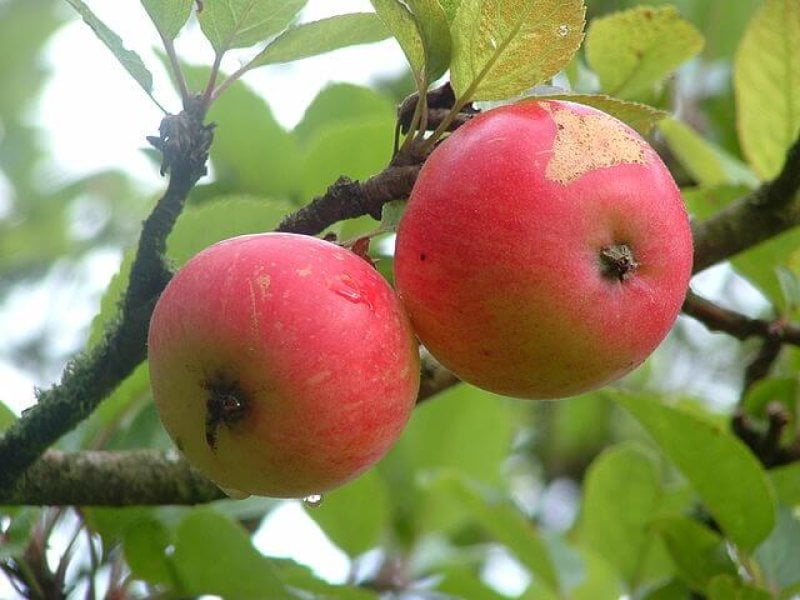
px Discovery apples
(Credit: Bob Balmer, via Wikimedia Commons)

A lot of people buy organic foods because they believe organic means free from chemicals and pesticides. But the truth is much different! There are 5,500 different chemical substances and pesticides for use in organic farming.

Why, might you ask? Pests don’t discriminate. There are some things farmers and growers can do to mitigate pest pressure, but at the end of the day, there are 30,000 species of weeds and 10,000 species of insects that they have to compete with. Bugs don’t just fly into a field and say, “Woah, guys, this field is organic! We can’t go in here!” They’ll do whatever they please to invade your flavorful honeycrisp apple. We think they’re delicious, and those little critters think so, too!

…
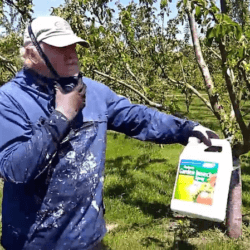
Do we want to eliminate or reduce pest pressure and chemical use in orchards? Of course we do! And the growers do especially. Every time they spray, it’s money out of their pocket. It is exposure, it is stress. But currently, the pest pressure makes it to where the average organic apple orchard must spray their fields 32 times in a growing season, according to the experts …. Thirty-two! This is primarily due to the fact that organic pesticides are naturally derived, so they’re often not as effective.

Read full, original article: What are you really getting from organic apples?

Related Articles

Infographic: Global regulatory and health research agencies on whether glyphosate causes cancer

Infographic: Global regulatory and health research agencies on whether glyphosate causes cancer

Does glyphosate—the world's most heavily-used herbicide—pose serious harm to humans? Is it carcinogenic? Those issues are of both legal and ...

Most Popular

Screenshot-2026-10-19-at-11.09.17-AM
Vaccines, religious freedom, and protecting children’s health: New York Amish appeal to Supreme Court after $118,000 in vaccine fines for blocking shots
Screenshot 2026-10-16 at 11.17
Viewpoint: Latest attack on renewable energy and farmers, new USDA rules could put solar grants out of reach for small producers
ChatGPT-Image-Mar-10-2026-01_39_01-PM
Viewpoint—“Miracle molecule” debunked: Why acemannan supplements don’t work
Serene Mature Woman in Abstract Waves
Testosterone’s growing appeal to women: It anecdotally mildly improves sex life, but are there any other potential benefits—or red flags?
Mifeprex Boxes and Woman Drinking Water
RFK Jr.’s EPA capitulates to anti-abortionists, authorizes study of safe abortion pills which activists falsely claim are “poisoning” our water supply
png_cheese_Raw_milk
100% raw milk, 100% misguided: As MAHA-fueled demand for unpasteurized milk soars, American Academy of Pediatrics renews call for a ban on its sale and distribution
Screenshot 2026-10-16 at 5.38
PFAS in Agriculture: Science, Uncertainty, and Risk Communication
ChatGPT-Image-May-28-2026-12_56_54-PM
Viewpoint: Vaccines' non-specific effects? The ‘shoddy’ Danish couple whose 'research’ inspires RFK, Jr.’s health delusion
Golden-GM-Emblem-with-EU-Stars
As Europe inches forward in its embrace of gene-edited crops, hopes abound that opposition to GMOs might fade
Screenshot 2026-10-19 at 11.19
How the “wellness” movement has turned into a rigid cultural belief system
sorghum farmers in kenya FARMERS TREND
Here are all the ways CRISPR gene editing is transforming Africa’s staple crops—and there’s a lot more innovation to come
Screenshot-2026-10-20-at-10.53.36-AM
World Health Organization calls Kennedy- and CDC-backed Guinea-Bissau hepatitis B vaccine study designed to ‘prove’ the danger of vaccines “unethical”
National Institutes Billboard Portrait 天天中彩票任选
Challenging creation of a ‘vaccine injury clinic,’ NIH research scientists rebuke Kennedy for politicizing and undermining science
glp menu logo outlined

Get news on human & agricultural genetics and biotechnology delivered to your inbox.