The stuff that ‘makes magic mushrooms so magic’ moves closer to FDA approval for treating depression

psilocybin magic mushrooms
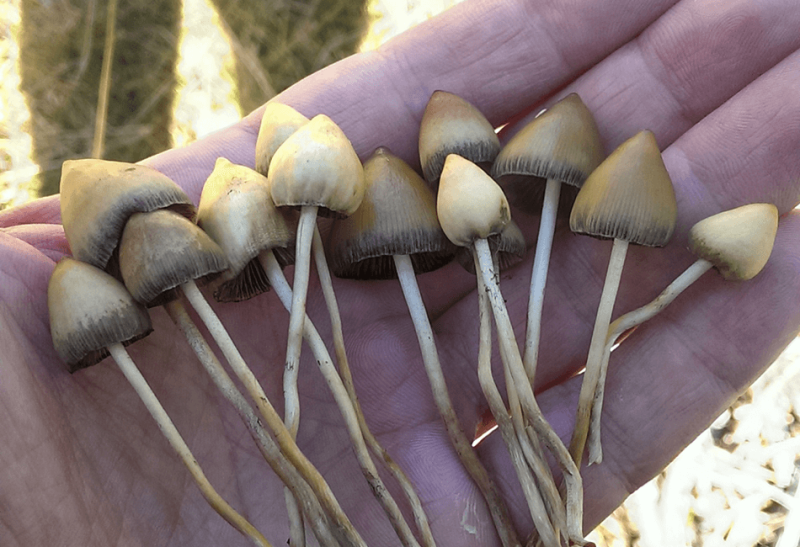
"Liberty cap" psilocybin mushrooms. Image credit: Scienceman71/Wikimedia

The active ingredient that makes magic mushrooms so magic—the psychedelic drug psilocybin—is one step closer to becoming a legal treatment for difficult cases of depression. [October 23] the company Compass Pathways announced that it had received the Food and Drug Administration’s Breakthrough Therapy designation for its psilocybin-based treatment. The designation will fast track the FDA’s review of the treatment for possible approval.

While many people who have recreationally taken psilocybin and other mind-altering drugs can attest to the positive feelings they leave behind, research into these drugs’ possible mental health benefits has been stifled for decades.

[I]n recent years, doctors, patients, and even pharmaceutical companies have slowly begun to convince the government to reconsider its stance, aided by small pilot studies showing that these drugs, usually in “microdoses” smaller than a person would take recreationally, can help treat depression, anxiety, and even drug addiction

[S]tudies in the UK and U.S. have found that it could treat people with depression who haven’t responded well to other treatments. And Compass is set to fund the first large-scale trial of psilocybin that will run in North America and Europe over the next year, according to the company.

“We are excited to be taking this work forward with our clinical trial on psilocybin therapy for treatment-resistant depression,” said [Compass chairman] George Goldsmith.

Read full, original post: The Main Ingredient in Psychedelic Mushrooms Is Closer to Becoming an FDA-Approved Depression Treatment


{{ reviewsTotal }}{{ options.labels.singularReviewCountLabel }}
{{ reviewsTotal }}{{ options.labels.pluralReviewCountLabel }}
{{ options.labels.newReviewButton }}
{{ userData.canReview.message }}

Related Articles

Infographic: Global regulatory and health research agencies on whether glyphosate causes cancer

Infographic: Global regulatory and health research agencies on whether glyphosate causes cancer

Does glyphosate—the world's most heavily-used herbicide—pose serious harm to humans? Is it carcinogenic? Those issues are of both legal and ...

Most Popular

ChatGPT Image Jun 3, 2026, 03_14_43 PM
Viewpoint: How Earthjustice became the poster child for the abuse of special interest activist funding
ChatGPT Image Jun 3, 2026, 03_54_37 PM
Viewpoint: “Turn on, tune in, drop out”—Kennedy embraces the Timothy Leary psychedelic revolution
ChatGPT-Image-Jun-11-2026-01_15_03-PM
Selective Pressure, Selective Silence
Screenshot-2026-06-05-at-2.12.30-PM
Some plants can poison you. So how did humans figure out what is safe to eat?
ChatGPT Image Jun 1, 2026, 11_39_17 AM
Viewpoint: When food myths go viral, farmers pay the price
Screenshot-2026-06-03-at-1.24.46-PM
Challenging anti-GMO disinformation: Why genetically-tweaked crops offer bushels of benefits
ChatGPT Image May 26, 2026, 08_42_17 AM (1)
Viewpoint: Greenpeace and poison: How environmental advocacy groups rely on compliant (and often ignorant) journalists to spread disinformation and spark litigation
artificial intelligence brain think illustration md
Viewpoint — Digital gods and human extinction: Will we be the first species ever to design our own descendants?
ChatGPT Image May 28, 2026, 08_16_38 PM
Viewpoint: Why the EPA mismeasures cancer risk of chemicals and what should be done to fix it

Sorry. No data so far.

glp menu logo outlined

Get news on human & agricultural genetics and biotechnology delivered to your inbox.