Fight against fall armyworm in Africa hindered by ‘anti-GMO sentiment’, scientist argues

bt corn
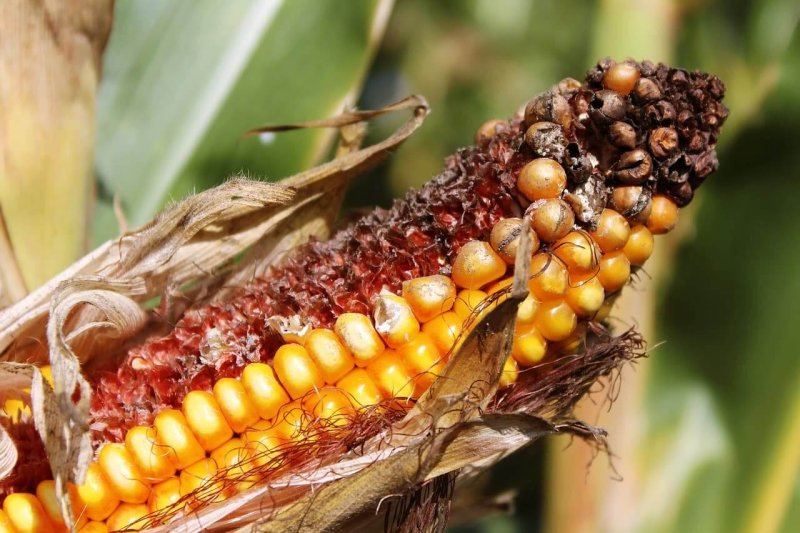
Corn damaged by the fall armyworm.

Though anti-GMO sentiment is restraining agricultural advancement in the developing world, an Iowa State University agronomist hopes his research will clarify the scientific consensus and spark wider acceptance of the technology in Africa.

A paper recently published in the academic journal Global Food Security analyzed dozens of previous scientific studies on the safety of Bt corn, a genetically modified (GM) crop capable of resisting pests. The study upheld the conclusion that the GM crop is safe for humans and the environment. Walter Suza, an adjunct assistant professor of agronomy at Iowa State and a co-author of the study, said Bt corn could help farmers in Africa to combat an emerging pest capable of devastating their crops, but fear of GM crops in Africa has slowed adoption of the technology.

“My hope is that policymakers in Africa will take hold of this paper and implement this technology that’s been tested for many years,” Suza said. “There’s a real need for this in Africa.”

Suza, who grew up in Tanzania and has worked on food security projects in Angola and Zimbabwe, said misunderstanding of GM technology, both globally and specifically in Africa, has held back progress for many African farmers. Suza said 13 African countries are testing GM crops, but only South Africa has approved Bt corn for commercial availability to farmers.

Read full, original article: Tanzanian scientist: Bt corn could help combat fall armyworm in Africa


{{ reviewsTotal }}{{ options.labels.singularReviewCountLabel }}
{{ reviewsTotal }}{{ options.labels.pluralReviewCountLabel }}
{{ options.labels.newReviewButton }}
{{ userData.canReview.message }}

Related Articles

Infographic: Global regulatory and health research agencies on whether glyphosate causes cancer

Infographic: Global regulatory and health research agencies on whether glyphosate causes cancer

Does glyphosate—the world's most heavily-used herbicide—pose serious harm to humans? Is it carcinogenic? Those issues are of both legal and ...

Most Popular

ChatGPT Image Jun 3, 2026, 03_14_43 PM
Viewpoint: How Earthjustice became the poster child for the abuse of special interest activist funding
ChatGPT-Image-Jun-11-2026-01_15_03-PM
Selective Pressure, Selective Silence
ChatGPT Image Jun 3, 2026, 03_54_37 PM
Viewpoint: “Turn on, tune in, drop out”—Kennedy embraces the Timothy Leary psychedelic revolution
Screenshot-2026-06-05-at-2.12.30-PM
Some plants can poison you. So how did humans figure out what is safe to eat?
ChatGPT-Image-Mar-10-2026-01_39_01-PM
Viewpoint—“Miracle molecule” debunked: Why acemannan supplements don’t work
Screenshot 2026-05-26 at 10.15
Viewpoint: Double standard—Why does the wellness industry get a free pass while Big Healthcare is treated as morally suspect?
ChatGPT-Image-May-26-2026-07_51_21-AM-2
Viewpoint: There are more than 1,000 chemicals in a cup of coffee—including many substances that can cause cancer. Why isn’t it banned?
ChatGPT Image May 28, 2026, 08_16_38 PM
Viewpoint: Why the EPA mismeasures cancer risk of chemicals and what should be done to fix it
Picture1
Sounds we can’t hear — the hidden planetary signals behind science, fear, and misinformation
Screenshot-2026-06-03-at-1.24.46-PM
Challenging anti-GMO disinformation: Why genetically-tweaked crops offer bushels of benefits

Sorry. No data so far.

glp menu logo outlined

Get news on human & agricultural genetics and biotechnology delivered to your inbox.