Mining ‘extremely hostile environments’ for keys to new drugs, tech breakthroughs

download
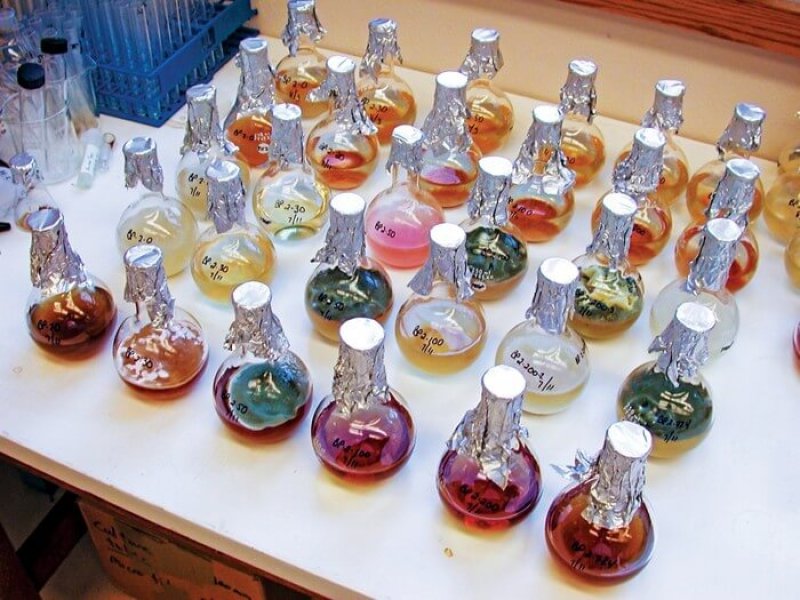
When Andrea and Don Stierle isolate microbes from their Berkeley Pit water samples, they grow each organism in a large flask like these to extract the compounds the microbes are making. Image: University of Montana

Many scientists have been investigating the planet’s countless extreme environments, on the hunt for molecules that will inspire the next blockbuster drug or technological breakthrough. With some scientists estimating that less than 5% of fungal species and 1% of prokaryotic species on Earth are known, a lot of biodiversity remains to be explored.

…

From abandoned copper mines in Montana and Vermont to a coal seam in Kentucky that’s been burning for half a century, natural product chemists have begun to identify potential new pharmaceuticals in the most unlikely of places.

“Extremely hostile environments are an evolutionary playground,” says Tomasz Boruta, a bioprocess engineer at Lodz University of Technology, in Poland. “Organisms need to evolve all sorts of new compounds to adapt to those harsh conditions.”


…

[T]he chances that these tiny survivor organisms will yield useful molecules is high: the compounds they synthesize have to be potent and unique to help keep them alive. Though the work has yet to arrive at a doctor’s prescription pad, experts say that it’s probably only a matter of time until some of humanity’s biggest disasters begin to yield some lifesaving compounds.

Read full, original post: Scientists mine for potential drugs in the Berkeley Pit and other industrial sites


Related Articles

Infographic: Global regulatory and health research agencies on whether glyphosate causes cancer

Infographic: Global regulatory and health research agencies on whether glyphosate causes cancer

Does glyphosate—the world's most heavily-used herbicide—pose serious harm to humans? Is it carcinogenic? Those issues are of both legal and ...

Most Popular

Glossy Plastic Bag of Tokens and Labels
Viewpoint: How CNN got played by environmental activists pushing a plastics scare and litigation agenda
Neon Syringe Portrait with BPC-157
Viewpoint: Peptides and medical freedom: The MAHA obsession that can damage your health
Screenshot-2026-10-21-at-11.30.51-AM
Viewpoint: Yes, our food system stinks, but the attack of ultra-processed foods is often misplaced
ChatGPT-Image-Mar-10-2026-01_39_01-PM
Viewpoint—“Miracle molecule” debunked: Why acemannan supplements don’t work
Screenshot-2026-10-30-at-11.36.40-AM
An Earth-saving benefit of global warming?: How fossil fuel-burning humans stopped the looming Ice Age
Robots in a Futuristic Conference Meeting
Helpful until we’re helpless? Researchers warn AI is gradually eroding human control
Screenshot-2026-10-30-at-11.20.30-AM
‘Silent killer’: Hepatitis B could surge under Trump–RFK Jr. rollback of newborn vaccine recommendations
Screenshot 2026-07-29 at 10.40
The COVID vaccine turbo cancer scare is back. Science still proves it’s wrong.
Screenshot 2026-10-27 at 10.32
“Do your own research”: What Medicare’s annual open enrollment circus teaches us about the seductive trap of DIY health and science
Patriotic Flag in a Glass Flask
Viewpoint: America Last: From the Pentagon to universities, Trump’s corruption of science could inflict lasting, irreversible damage on U.S. research
Screenshot 2026-10-20 at 1.37
Race against food rot: How AI and gene editing could slash fruit and vegetable waste
Screenshot-2026-10-29-at-10.31.49-AM
Solar engineering to cool the planet might well work. Could it touch off a geoengineering arms race?
glp menu logo outlined

Get news on human & agricultural genetics and biotechnology delivered to your inbox.