
Many plants are naturally GMO, research finds

hops cones for beer production
Dozens of plants, including  hops, contain the Agrobacterium microbe — the very same bacterium that scientists typically use to create GM crops.
Though much of the controversy around genetically modified crops is driven by the belief that the process of moving genes from one species to another is “unnatural,” new research shows some 1 in 20 flowering plants are naturally transgenic. Dozens of plants, including bananas, peanuts, Surinam cherries,  hops, cranberries and tea, contain the Agrobacterium microbe — the very same bacterium that scientists typically use to create GM crops. The research follows on the heels of the 2015 discovery that sweet potatoes are naturally transgenic. Agrobacterium DNA also has been found in tobacco plants.The findings were reported in a paper published Sept. 21 in the journal Plant Molecular Biology. Researchers studied the genomes of some 356 dicot species and found 15 naturally occurring transgenic species. “Thus, HGT [horizontal gene transfer] from Agrobacterium to dicots is remarkably widespread,” the abstract stated.

As Michael Le Page wrote in New Scientist:

It has also been discovered that the horticultural process of grafting different plants together can lead to the exchange of genes, meaning humans have inadvertently been creating transgenic plants for millennia. From genome studies, we can see that gene swapping has been going on since the dawn of life.

It was previously believed that Agrobacterium genes were rarely passed on in the wild, and researchers are still unsure how the added genes affect the plants where they are found. They have only recently begun looking for the bacteria in the genomes of flowering plants.

As Le Page noted, the discovery bodes well for European researchers. They apparently can use these natural strains of Agrobacterium to create new plant varieties, without having them fall under the strict regulatory process imposed on transgenic organisms. The European Union last year announced that its regulations exclude organisms modified through “natural” processes.

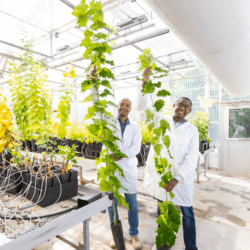
He cited the example of Henrik Lütken at the University of Copenhagen in Denmark, who “has created a compact variety of a house plant called Kalanchoe blossfeldiana, which is now ready for commercial sale. He thinks these plants shouldn’t count as GM and the latest findings will bolster his case.”

Joan Conrow has 35 years of experience as a journalist, editor, and communications consultant. She specializes in environmental issues, biotechnology, and agriculture. Follow her on Twitter @joanconrow

This article originally ran at the Cornell Alliance for Science and has been republished here with permission.

Related Articles

Infographic: Global regulatory and health research agencies on whether glyphosate causes cancer

Infographic: Global regulatory and health research agencies on whether glyphosate causes cancer

Does glyphosate—the world's most heavily-used herbicide—pose serious harm to humans? Is it carcinogenic? Those issues are of both legal and ...

Most Popular

Screenshot 2026-10-16 at 5.38
PFAS in Agriculture: Science, Uncertainty, and Risk Communication
Discarded Green Cap on Public Trash Can
'Blatant slap in the face': MAHA activists turn on RFK Jr. and Trump administration
newborn baby spit up gerd
Vaccine-preventable congenital infections are a leading driver of autism
Screenshot 2026-10-16 at 11.17
Viewpoint: Latest attack on renewable energy and farmers, new USDA rules could put solar grants out of reach for small producers
Government Briefing on Autism Trends
Viewpoint: ‘Statistical murder’: Kennedy’s expanding record of “duplicity and mendacity”
ChatGPT-Image-Mar-10-2026-01_39_01-PM
Viewpoint—“Miracle molecule” debunked: Why acemannan supplements don’t work
FDA Vials and Syringes Flat Lay
Online gold rush of unapproved peptides is outrunning federal regulators
Screenshot-2026-10-12-at-10.44.38-AM
Widely condemned as unethical, hepatitis B vaccine study funded by RFK Jr’s CDC gets a final greenlight
Screenshot-2026-10-15-at-9.51.15-AM
 Viewpoint: Selective pronatalism: The radical “ethical” case challenging parents’ right to end a pregnancy when a fetus has a severe genetic disorder
Screenshot-2026-10-15-at-12.13.33-PM
Ahead of the midterms, Meta has paid at least 29 anti-LGBTQ accounts for their posts
Prescription Capsules Scattered on Twenty-Dollar Bills
Facts & Fallacies podcast: America's health care system is broken. A doctor explains how to fix it, Part 2
Screenshot-2026-10-08-at-10.41.33-AM
Viewpoint: Wellness patches: Most vitamin supplements are useless and sometimes even dangerous, but this craze is even worse
glp menu logo outlined

Get news on human & agricultural genetics and biotechnology delivered to your inbox.