‘Speech-like signature’: Chimpanzees’ lip-smacks rhythm may offer clues about how we learned to talk

skynews chimpanzee lips

The evolution of speech is one of the longest-standing puzzles of evolution. However, inklings of a possible solution started emerging some years ago when monkey signals involving a quick succession of mouth open-close cycles were shown to exhibit the same pace of human spoken language.

In the paper ‘Chimpanzee lip-smacks confirm primate continuity for speech-rhythm evolution’, published [May 27], in the journal Biology Letters, a consortium of researchers, including St Andrews University and the University of York, led by the University of Warwick, have found that the rhythm of chimpanzee lip-smacks also exhibit a speech-like signature—a critical step towards a possible solution to the puzzle of speech evolution.

Just like each and every language in the world, monkey lip-smacks have previously shown a rhythm of about 5 cycles/second (i.e. 5Hz). This exact rhythm had been identified in other primate species, including gibbon song and orangutan consonant-like and vowel-like calls.

However there was no evidence from African apes, such as gorillas, bonobos and chimpanzees—who are closer related to humans, meaning the plausibility of this theory remained on hold.

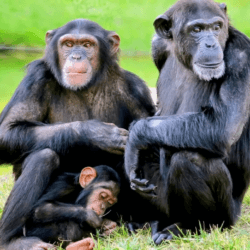
Now, the team of researchers using data from 4 chimpanzee populations have confirmed that they too produce mouth signals at a speech-like rhythm. The findings show there has been most likely a continuous path in the evolution of primate mouth signals with a 5Hz rhythm. Proving that evolution recycled primate mouth signals into the vocal system that one day was to become speech.


Read the original post

Related Articles

Infographic: Global regulatory and health research agencies on whether glyphosate causes cancer

Infographic: Global regulatory and health research agencies on whether glyphosate causes cancer

Does glyphosate—the world's most heavily-used herbicide—pose serious harm to humans? Is it carcinogenic? Those issues are of both legal and ...

Most Popular

Bayer Crop Circle in Golden Wheat
Making fertilizer from thin air: Bayer’s gene-editing innovation could dramatically cut chemical fertilizer use in growing food
Picture1
Viewpoint: How badly is the U.S. food-safety net fraying? FDA’s bungled handling of the tainted lettuce crisis deepens concerns over cuts to disease tracking and response
ChatGPT-Image-Mar-10-2026-01_39_01-PM
Viewpoint—“Miracle molecule” debunked: Why acemannan supplements don’t work
Glossy Plastic Bag of Tokens and Labels
Viewpoint: How CNN got played by environmental activists pushing a plastics scare and litigation agenda
Screenshot-2026-10-30-at-10.55.54-AM
Longevity scandal: The huckster who validates the ‘oldest people in the world’ claims
Screenshot-2026-11-03-at-12.31.18-PM
Gene editing once viewed with suspicion by UK  farmers, upwards of 90% now open to their sustainability benefits
Reaching Through the Woven Sky
Challenging genetic modification rejectionists: Our evolving food system has relied on science for thousands of years
Neon Genome_ Fetal Dreamscape
The race to genetically engineer babies
Smiling-Woman-Over-Teal-Abstract-Shapes
Viewpoint: RFK Jr.’s latest foray into junk science: Even Kennedy’s hand-picked NIH director balks at appointment of crackpot mental health director
ChatGPT-Image-Sep-2-2026-02_03_32-PM
How much of a problem is AI’s water use?
Screenshot-2026-10-28-at-3.00.44-PM
Viewpoint: Activist attacks on corporations increasingly depend on "attribution" science to target oil companies for global climate change
Screenshot 2026-07-29 at 10.40
The COVID vaccine turbo cancer scare is back. Science still proves it’s wrong.
glp menu logo outlined

Get news on human & agricultural genetics and biotechnology delivered to your inbox.