Can we use DNA to sketch the faces of criminals?

shriverclaes figure copy
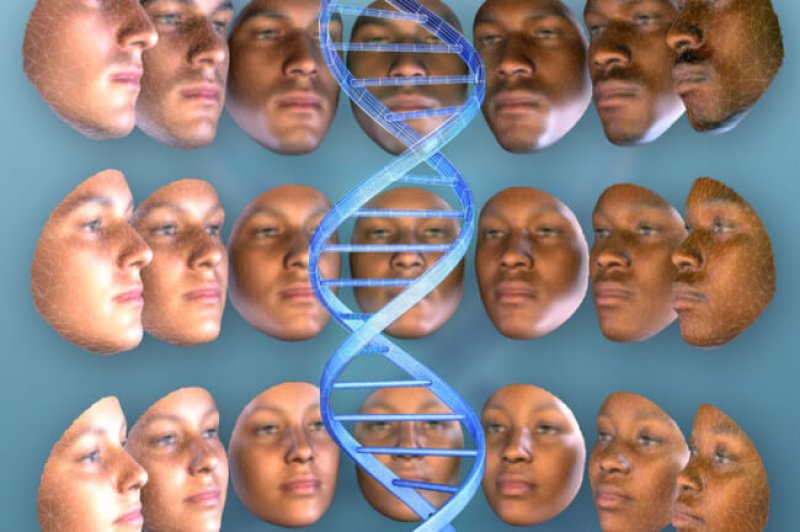
Credit: Shriver Claes/Penn State

Most labs studying DNA phenotyping look for relationships between changes to individual letters of a person’s genetic code, known as single-nucleotide polymorphisms (SNPs), and physical characteristics such as eye or hair colour. But Parabon framed the challenge as a machine-learning exercise. Its plan was to collect a large number of DNA samples and face photographs, and train algorithms to pick out relationships.

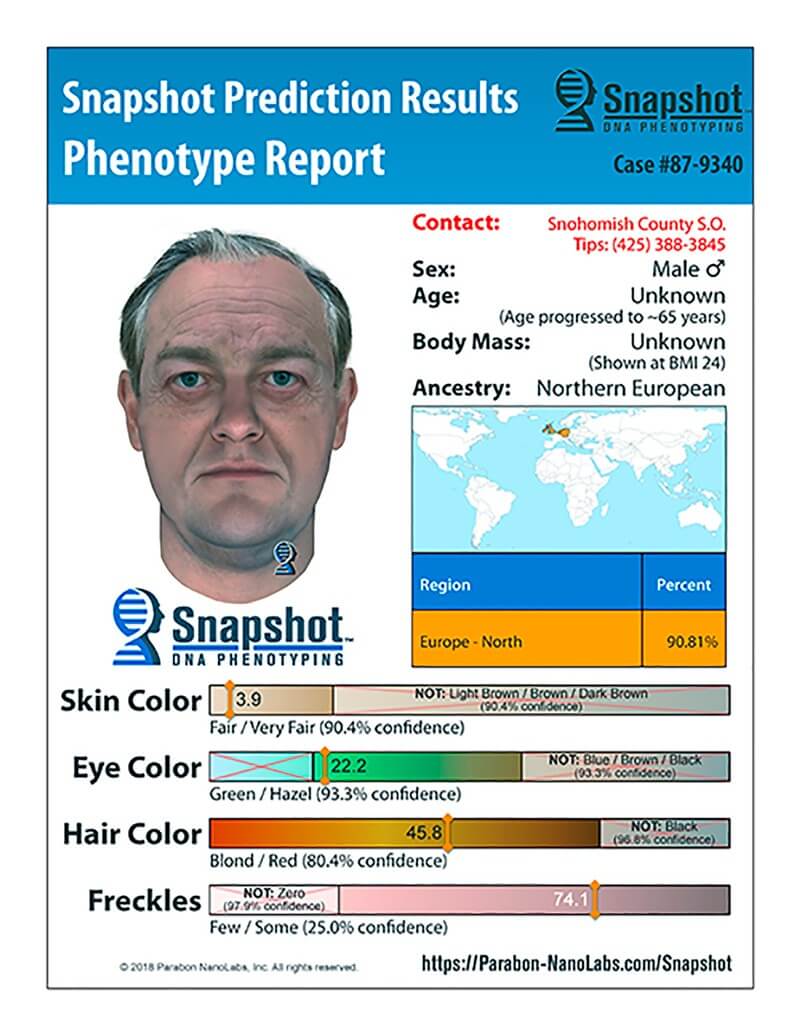
Parabon’s goal was ambitious: rather than just telling police that a suspect had fair hair and green eyes, it wanted to provide a comprehensive analysis of someone’s ancestry and a composite facial sketch from a DNA sample. The procedure, dubbed Snapshot, was released in December 2014. Parabon says that since 2018 the police have solved more than 120 cases with the help of their genetic genealogy and phenotyping methods.
d
Parabon’s Snapshot tool uses DNA to reconstruct faces. This suspect was later convicted of a 1987 murder. Credit: Snohomish County Sheriff’s Office/NYT/Redux/eyevine
Follow the latest news and policy debates on sustainable agriculture, biomedicine, and other ‘disruptive’ innovations. Subscribe to our newsletter.

Both [Parabon founder Steven] Armentrout and [Manfred] Kayser say that DNA technologies could help to reduce police bias by providing concrete evidence to bolster eyewitness accounts, and that DNA phenotyping could decrease racial profiling by providing more details on a potential suspect’s appearance to police.

But sociologist Amade M’charek at the University of Amsterdam says this thinking is naive, especially given the incidence of police brutality against people from racial minorities. “If we don’t know the individual, often all we see is race,” she says.


Read the original post

{{ reviewsTotal }}{{ options.labels.singularReviewCountLabel }}
{{ reviewsTotal }}{{ options.labels.pluralReviewCountLabel }}
{{ options.labels.newReviewButton }}
{{ userData.canReview.message }}

Related Articles

Infographic: Global regulatory and health research agencies on whether glyphosate causes cancer

Infographic: Global regulatory and health research agencies on whether glyphosate causes cancer

Does glyphosate—the world's most heavily-used herbicide—pose serious harm to humans? Is it carcinogenic? Those issues are of both legal and ...

Most Popular

Screenshot 2025-08-25 203032
Mazzenga’s 20-year old muscles: How a still-going-strong 92-year old sprinter wins every race she enters
Screenshot-2026-06-08-at-10.19.30-AM
‘Natural’ wellness supplements linked to liver injury
Credit: ACSH
Viewpoint: Who and what’s to blame for the surge in vaccine-preventable diseases?
ChatGPT-Image-May-28-2026-12_56_54-PM
Viewpoint: Vaccines' non-specific effects? The ‘shoddy’ Danish couple whose 'research’ inspires RFK, Jr.’s health delusion
Screenshot-2026-06-05-at-2.12.30-PM
Some plants can poison you. So how did humans figure out what is safe to eat?
Screen Shot at AM
Facts & Fallacies Podcast: Right-wing politics bad for your health? Separating speculation from science
ChatGPT-Image-Jun-9-2026-03_24_05-PM
Misinformed parents overdosing children with Vitamin A to fight measles
Screenshot 2025-07-30 at 10.48
Can gene editing eliminate Down syndrome? Scientists have done it in lab-grown cells
Screenshot-2026-06-05-at-1.44.09-PM
Viewpoint: Scientists have scrapped the worst-case climate scenario. Is that proof that climate change is a hoax, as Trump claims?
ChatGPT-Image-Mar-10-2026-01_39_01-PM
Viewpoint—“Miracle molecule” debunked: Why acemannan supplements don’t work
ChatGPT Image Jun 3, 2026, 03_14_43 PM
Viewpoint: How Earthjustice became the poster child for the abuse of special interest activist funding
ChatGPT-Image-Jun-9-2026-11_54_59-AM
Why weight-loss drugs might be reducing cancer rates and making treatment more effective
Screenshot-2026-06-08-at-11.05.51-AM
Can vaping lead to cancer? New ‘association study’ raises questions of “links"
glp menu logo outlined

Get news on human & agricultural genetics and biotechnology delivered to your inbox.