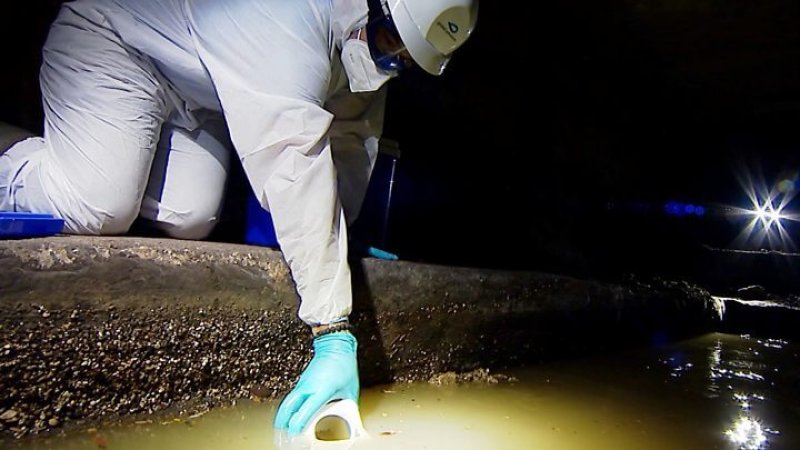
The genetics of poop and how it can help our health – and threaten our privacy

p mfpt
Credit: BBC

Everyone pees and poops. We excrete metabolites, vitamins, microbes, and even our own cells. This information makes its way into a wastewater treatment plant, creating a community-wide stool or urine sample. Wastewater epidemiologists can leverage our waste to detect disease outbreaks, drug use, and more. So what exactly can we detect and how is this information protected?

…

However, using sewage to monitor a community’s lifestyle and general health may seem, to many, more intrusive than monitoring disease outbreaks. At the University of Queensland, scientists were able to predict socioeconomic information using wastewater. This group of researchers used biomarkers from wastewater to predict 37 characteristics from the Australian Census including median age, education, and employment.

…
The Sewage Analysis CORe group Europe put together a set of guidelines addressing ethical research practices for sewage epidemiology noting that there’s historically been little oversight by research ethics committees as wastewater data is not collected on individuals. Some of their mitigation strategies include aggregating samples from multiple sites, and removing names and locations of sampling sites.

Mis- and disinformation are distorting science and public policy. Subscribe to our Daily and Weekly Digests for incisive coverage of ‘disruptive’ innovations in AI, agricultural biotechnology, food, chemicals, nuclear energy, vaccines, and other disruptive innovations.

Wastewater based epidemiology has the potential to gauge the health of our cities, but before reaping the benefits, scientists should also weigh and address the concerns. Sewer data used for research to understand population trends is much different from using the data for policy or punishment.


Read the original post

Related Articles

Infographic: Global regulatory and health research agencies on whether glyphosate causes cancer

Infographic: Global regulatory and health research agencies on whether glyphosate causes cancer

Does glyphosate—the world's most heavily-used herbicide—pose serious harm to humans? Is it carcinogenic? Those issues are of both legal and ...

Most Popular

ChatGPT-Image-Mar-10-2026-01_39_01-PM
Viewpoint—“Miracle molecule” debunked: Why acemannan supplements don’t work
AI Doctor with a Digital Neural Head
Utah becomes first state to empower AI to bypass doctors and prescribe certain drugs
Screenshot-2026-10-07-at-2.00.02-PM
9 wellness myths busted
Screenshot-2026-09-22-at-12.26.15-PM
‘Forever chemical’ concerns: Separating hysteria from reasonable concern in the debate over PFAS danger
Screenshot-2026-10-06-at-11.13.59-AM
RFK Jr.’s plan to curb America’s appetite for ultra-processed foods and artificial dyes blocked by the White House
Screenshot-2026-10-08-at-2.32.00-PM
Abortion rights opponents outraged after FDA says its “safety review” of the already-found-safe mifepristone abortion pill will continue into 2027
AI-Force-Uniform-Insignia-Close-Up
Trump wants an AI Force like Space Force, but that could make AI’s risks harder to manage
glp menu logo outlined

Get news on human & agricultural genetics and biotechnology delivered to your inbox.