As COVID is transmitted via airborne particles, there’s no evidence that sanitizing surfaces lowers risk of infection

Credit: Shutterstock

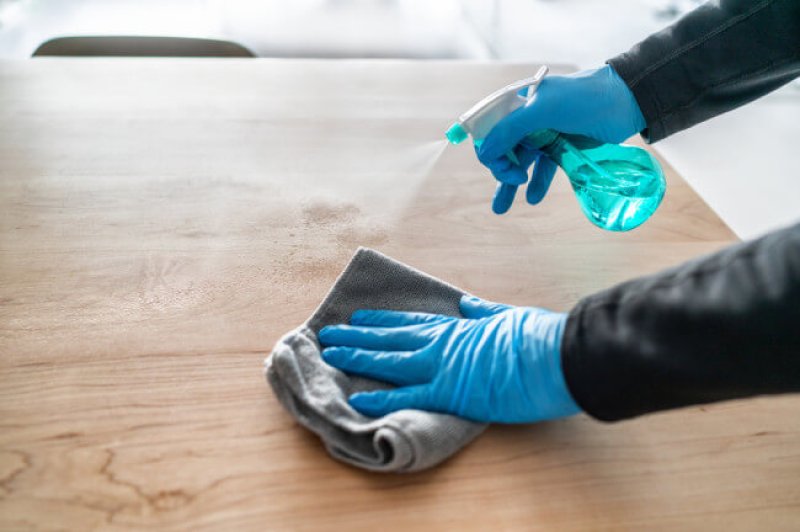
All over the world, workers are soaping, wiping and fumigating surfaces with an urgent sense of purpose: to fight the coronavirus. But scientists increasingly say that there is little to no evidence that contaminated surfaces can spread the virus. In crowded indoor spaces like airports, they say, the virus that is exhaled by infected people and that lingers in the air is a much greater threat.

A range of respiratory ailments, including the common cold and influenza, are caused by germs that can spread from contaminated surfaces. So when the coronavirus outbreak emerged last winter in the Chinese mainland, it seemed logical to assume that these so-called fomites were a primary means for the pathogen to spread.

Follow the latest news and policy debates on sustainable agriculture, biomedicine, and other ‘disruptive’ innovations. Subscribe to our newsletter.

By October, the Centers for Disease Control and Prevention, which had maintained since May that surfaces are “not the primary way the virus spreads,” was saying that transmission of infectious respiratory droplets was the “principal mode” through which it does.

But by then, paranoia about touching anything from handrails to grocery bags had taken off. And the instinct to scrub surfaces as a Covid precaution — “hygiene theater,” as The Atlantic magazine called it — was already deeply ingrained.


Read the original post

{{ reviewsTotal }}{{ options.labels.singularReviewCountLabel }}
{{ reviewsTotal }}{{ options.labels.pluralReviewCountLabel }}
{{ options.labels.newReviewButton }}
{{ userData.canReview.message }}

Related Articles

Infographic: Global regulatory and health research agencies on whether glyphosate causes cancer

Infographic: Global regulatory and health research agencies on whether glyphosate causes cancer

Does glyphosate—the world's most heavily-used herbicide—pose serious harm to humans? Is it carcinogenic? Those issues are of both legal and ...

Most Popular

Screenshot 2025-08-25 203032
Mazzenga’s 20-year old muscles: How a still-going-strong 92-year old sprinter wins every race she enters
Screenshot-2026-06-08-at-10.19.30-AM
‘Natural’ wellness supplements linked to liver injury
ChatGPT-Image-May-28-2026-12_56_54-PM
Viewpoint: Vaccines' non-specific effects? The ‘shoddy’ Danish couple whose 'research’ inspires RFK, Jr.’s health delusion
Screenshot-2026-06-05-at-2.12.30-PM
Some plants can poison you. So how did humans figure out what is safe to eat?
Credit: ACSH
Viewpoint: Who and what’s to blame for the surge in vaccine-preventable diseases?
Screen Shot at AM
Facts & Fallacies Podcast: Right-wing politics bad for your health? Separating speculation from science
Screenshot-2026-06-05-at-1.44.09-PM
Viewpoint: Scientists have scrapped the worst-case climate scenario. Is that proof that climate change is a hoax, as Trump claims?
ChatGPT-Image-Jun-9-2026-03_24_05-PM
Misinformed parents overdosing children with Vitamin A to fight measles
Screenshot 2025-07-30 at 10.48
Can gene editing eliminate Down syndrome? Scientists have done it in lab-grown cells
ChatGPT-Image-Mar-10-2026-01_39_01-PM
Viewpoint—“Miracle molecule” debunked: Why acemannan supplements don’t work
ChatGPT-Image-Jun-9-2026-11_54_59-AM
Why weight-loss drugs might be reducing cancer rates and making treatment more effective
Screenshot-2026-06-08-at-11.05.51-AM
Can vaping lead to cancer? New ‘association study’ raises questions of “links"
glp menu logo outlined

Get news on human & agricultural genetics and biotechnology delivered to your inbox.