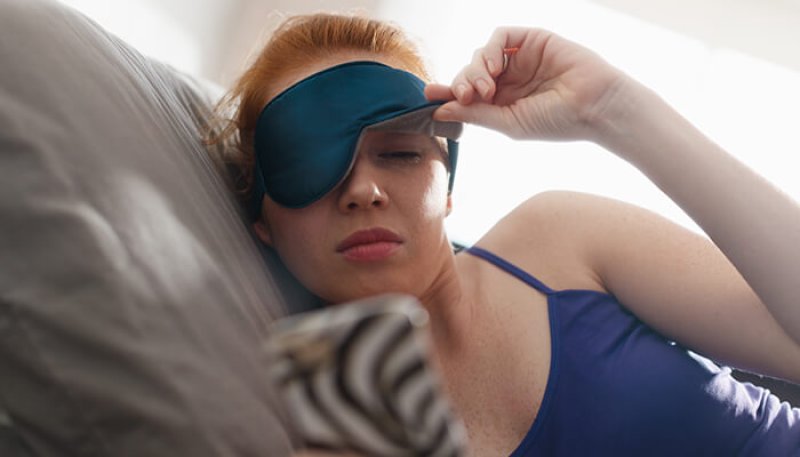
Sleepy during the day? Struggle with sleep apnea? Both are genetically linked to telomeres, parts of your chromosomes that reflect biological age

Credit: Sight On Stress

A predilection for afternoon naps does not necessarily mean you need to worry about your own mortality, but the scientific evidence is increasingly clear: The timing and quality of your sleep play an integral role in your body and brain health. And according to new research, there may be a link between sleep and longevity, too.

The new findings suggest that a condition called Excessive Daytime Sleepiness is linked to one of the most important genetic markers for longevity, a little section of DNA found on the end of chromosomes called a telomere.

…

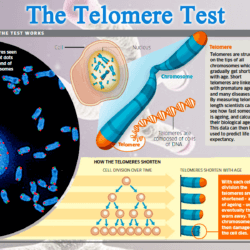
Telomeres are often compared to the little piece of plastic on the end of your shoelace that keeps it from fraying. They sit on the ends of chromosomes and serve to protect the other DNA strands in the chromosomes that replicate each time a cell divides. Every time this happens, the telomeres get a little shorter. In turn, telomeres have been described as an “indicator of biological age,” because shorter telomeres are linked to risk for cardiovascular disease, cognitive decline, and even bone loss. 
Mis- and disinformation are distorting science and public policy. Subscribe to our Daily and Weekly Digests for incisive coverage of ‘disruptive’ innovations in AI, agricultural biotechnology, food, chemicals, nuclear energy, vaccines, and other disruptive innovations.

Though the findings link daytime sleepiness with shorter telomeres, and in turn, with a higher risk of cardiovascular problems, what kind of difference in length translates to effects on “real life” isn’t yet known.


Read the original post

Related Articles

Infographic: Global regulatory and health research agencies on whether glyphosate causes cancer

Infographic: Global regulatory and health research agencies on whether glyphosate causes cancer

Does glyphosate—the world's most heavily-used herbicide—pose serious harm to humans? Is it carcinogenic? Those issues are of both legal and ...

Most Popular

ChatGPT-Image-Mar-10-2026-01_39_01-PM
Viewpoint—“Miracle molecule” debunked: Why acemannan supplements don’t work
ChatGPT-Image-Sep-23-2026-02_36_39-PM
Viewpoint: After firing the entire National Science Board, Trump reshapes funding initiatives. Here’s the good and the bad.
generated-1790707585414
Facts & Fallacies podcast: America's health care system is broken. A doctor explains how to fix it
Screenshot-2026-09-29-at-11.06.43-AM
Astrology, homeopathy, vaccine rejectionism, creationism: Why pseudoscience thrives as science advances
ChatGPT-Image-Sep-30-2026-01_11_07-PM
How U.S. teamed with Russia to block global human AI weapons oversight
ChatGPT-Image-Sep-2-2026-02_03_32-PM
How much of a problem is AI’s water use?
ChatGPT-Image-Sep-22-2026-11_17_31-AM
The exploding controversy over AI’s built-in survival drive
ChatGPT-Image-Sep-28-2026-11_51_41-AM
Energy-sucking data centers are unpopular across the political spectrum. Could moving them into space change the equation?
glp menu logo outlined

Get news on human & agricultural genetics and biotechnology delivered to your inbox.