Viewpoint: National security and agriculture — Why the US needs a forward-thinking farming blueprint that ‘encourages local produce, livestock raising and meat processing’

Credit: Deposit Photos

The COVID-19 pandemic exposed an ignored truth of the American agriculture system: While the U.S. agricultural system is able to produce more than enough calories for all U.S. citizens, the system may be less resilient than the third-world countries receiving aid. The U.S. food system is a fragile and completely overlooked, yet essential, element of the country’s national security.

…

At its base, the industry is dependent on vulnerable workers, monoculture products, and an intricate national distribution system. While this enables consumers nationwide to buy tomatoes from California inexpensively in February, it is a delicately balanced system. From field to fork, each node has proven vulnerable to the COVID-19 pandemic food supply and distribution frailty.

Mis- and disinformation are distorting science and public policy. Subscribe to our Daily and Weekly Digests for incisive coverage of ‘disruptive’ innovations in AI, agricultural biotechnology, food, chemicals, nuclear energy, vaccines, and other disruptive innovations.

Italy provides a unique example as to a hybrid system that incorporates large-scale agriculture and locally sourced products. While hardest hit in Europe, Italy did not have the empty shelves or supply disruptions to the extent experienced in the U.S. This is largely due to town markets and locally sourced butcher shops common across the country… This combination of protectionism and support could be re-created here in the United States.

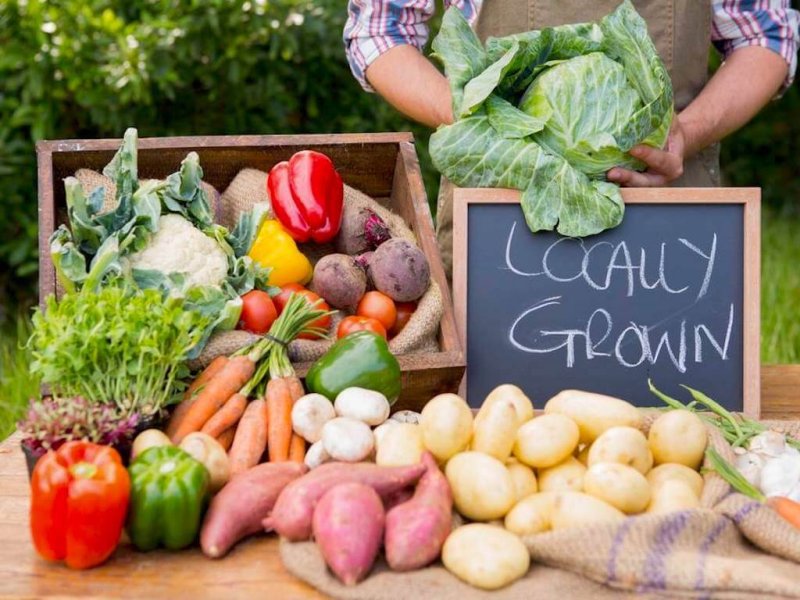
It is imperative for national security to make a deliberate effort to encourage local produce, livestock raising and meat processing.


Read the original post

Related Articles

Infographic: Global regulatory and health research agencies on whether glyphosate causes cancer

Infographic: Global regulatory and health research agencies on whether glyphosate causes cancer

Does glyphosate—the world's most heavily-used herbicide—pose serious harm to humans? Is it carcinogenic? Those issues are of both legal and ...

Most Popular

ChatGPT-Image-Sep-23-2026-02_36_39-PM
Viewpoint: After firing the entire National Science Board, Trump reshapes funding initiatives. Here’s the good and the bad.
ChatGPT-Image-Mar-10-2026-01_39_01-PM
Viewpoint—“Miracle molecule” debunked: Why acemannan supplements don’t work
ChatGPT-Image-Sep-10-2026-10_36_07-AM
Viewpoint: Even lousy scientific articles can shield authors when they hype dubious health claims and products
ChatGPT-Image-Sep-2-2026-02_03_32-PM
How much of a problem is AI’s water use?
sorghum farmers in kenya FARMERS TREND
Here are all the ways CRISPR gene editing is transforming Africa’s staple crops—and there’s a lot more innovation to come
ChatGPT-Image-Sep-30-2026-01_38_36-PM
Viewpoint: Died “with measles” vs. died “from measles”: RFK, Jr.’s dangerously subversive word games
glp menu logo outlined

Get news on human & agricultural genetics and biotechnology delivered to your inbox.