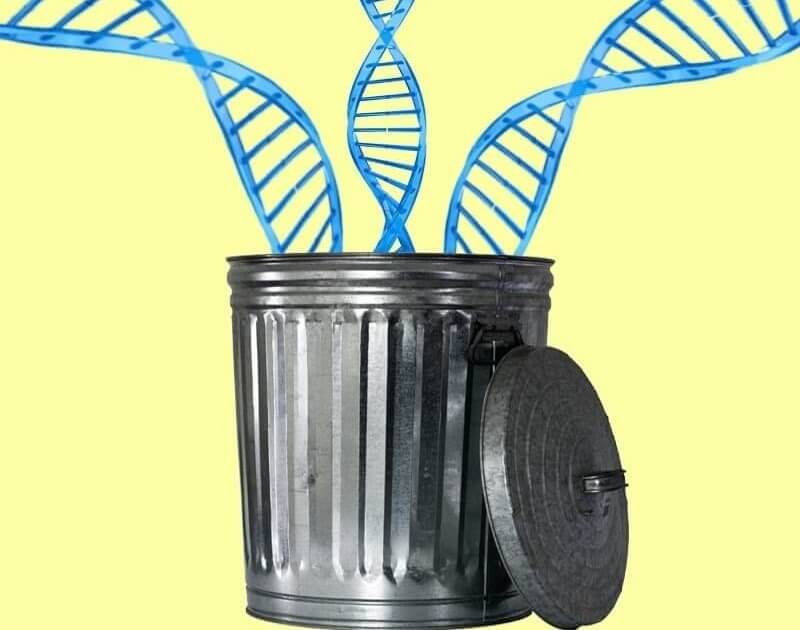
‘Junk DNA’: The 98% of the human genome that does not encode proteins is often called useless — but the reality is more complicated

Credit: Discovery News

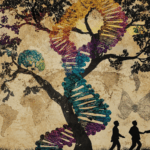
The human genome has three billion base pairs in its DNA, but only about 2% of them encode proteins. The rest seems like pointless bloat, a profusion of sequence duplications and genomic dead ends often labeled “junk DNA.” This stunningly thriftless allocation of genetic material isn’t limited to humans: Even many bacteria seem to devote 20% of their genome to noncoding filler.

Many mysteries still surround the issue of what noncoding DNA is, and whether it really is worthless junk or something more. Portions of it, at least, have turned out to be vitally important biologically. But even beyond the question of its functionality (or lack of it), researchers are beginning to appreciate how noncoding DNA can be a genetic resource for cells and a nursery where new genes can evolve.

“Slowly, slowly, slowly, the terminology of ‘junk DNA’ [has] started to die,” said Cristina Sisu, a geneticist at Brunel University London.

Follow the latest news and policy debates on sustainable agriculture, biomedicine, and other ‘disruptive’ innovations. Subscribe to our newsletter.

In the future, researchers may be less and less inclined to describe any of the noncoding sequences as junk because there are so many other more precise ways of labeling them now. For Sisu, the field’s best way forward is to keep an open mind when assessing the eccentricities of noncoding DNA and RNA and their biological importance. People should “take a step back and realize that one person’s trash is another person’s treasure,” she said.


This is an excerpt. Read the original post here. 

{{ reviewsTotal }}{{ options.labels.singularReviewCountLabel }}
{{ reviewsTotal }}{{ options.labels.pluralReviewCountLabel }}
{{ options.labels.newReviewButton }}
{{ userData.canReview.message }}

Related Articles

Infographic: Global regulatory and health research agencies on whether glyphosate causes cancer

Infographic: Global regulatory and health research agencies on whether glyphosate causes cancer

Does glyphosate—the world's most heavily-used herbicide—pose serious harm to humans? Is it carcinogenic? Those issues are of both legal and ...

Most Popular

Screen Shot at AM
Facts & Fallacies Podcast: Right-wing politics bad for your health? Separating speculation from science
ChatGPT-Image-Jun-13-2026-11_51_39-AM
Viewpoint: COVID lab leak? Misguided backers of the lab leak theory refuse to give up
drug look like ozempic
Six key health insights from taking weight-loss drugs
ChatGPT Image Jun 3, 2026, 03_54_37 PM
Viewpoint: “Turn on, tune in, drop out”—Kennedy embraces the Timothy Leary psychedelic revolution
ChatGPT-Image-Jun-14-2026-09_41_44-AM-2
Viewpoint—‘The gleeful efficiency of an arsonist’: Administration’s health and science research cuts are ‘sabotaging’ America’s future
Screenshot-2026-06-14-at-9.14.26-AM
‘Humanitarian catastrophe’: Trump’s USAID shutdown could help drive nearly 23 million deaths — including 5.4 million children — by 2030, Lancet study warns
ChatGPT-Image-Jun-11-2026-01_15_03-PM
Selective Pressure, Selective Silence
Screenshot-2026-06-14-at-9.53.54-AM
Is the World Cup a perfect storm for the spread of infectious diseases?
ChatGPT Image Jun 3, 2026, 03_14_43 PM
Viewpoint: How Earthjustice became the poster child for the abuse of special interest activist funding
ChatGPT Image Jun 12, 2026, 02_32_14 PM
‘Have you asked your doctor?’: AMA launches campaign to counter health misinformation
ChatGPT-Image-Mar-10-2026-01_39_01-PM
Viewpoint—“Miracle molecule” debunked: Why acemannan supplements don’t work
Screenshot-2026-06-05-at-2.12.30-PM
Some plants can poison you. So how did humans figure out what is safe to eat?
glp menu logo outlined

Get news on human & agricultural genetics and biotechnology delivered to your inbox.