Sex bias in research: Why women are more likely to be misdiagnosed with a host of neurological conditions, ranging from autism to strokes

Credit: CNN
Credit: CNN

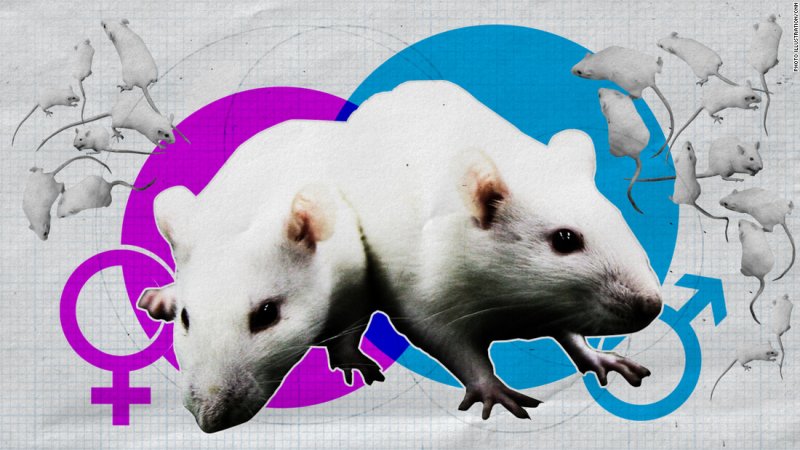
Unfortunately, transitioning to a scientific world where all studies include both sexes is more difficult than it seems. To accurately assess female subjects, we must rethink how we conduct experiments, especially those in the discipline of neuroscience.

Traditional criteria for experimental success and failure are based on male brains and do not accurately reflect the contributions of sex steroid hormones.

For instance, it is considered a well-known fact that male animals learn navigation-based tasks more quickly than females.

However, we now have reason to believe that males simply use a different strategy to navigate, relying more on nearby landmarks than on their own position in space. Because of this, when moving from point A to point B, male rodents tend to reach their destinations faster, but females acquire more information about their environment along the way.

Mis- and disinformation are distorting science and public policy. Subscribe to our Daily and Weekly Digests for incisive coverage of ‘disruptive’ innovations in AI, agricultural biotechnology, food, chemicals, nuclear energy, vaccines, and other disruptive innovations.

Despite these findings, most experimental designs remain engineered toward male physiology. The effects of this disparity are not immaterial.


Women are more likely to be misdiagnosed with a host of neurological conditions, ranging from autism spectrum disorder to stroke.

The generalization of male science onto female bodies is a detriment to both scientific research and public health, yet the path to an equitable scientific future remains poorly defined.


This is a excerpt. Read the original post here. 

Related Articles

Infographic: Global regulatory and health research agencies on whether glyphosate causes cancer

Infographic: Global regulatory and health research agencies on whether glyphosate causes cancer

Does glyphosate—the world's most heavily-used herbicide—pose serious harm to humans? Is it carcinogenic? Those issues are of both legal and ...

Most Popular

ChatGPT-Image-Sep-17-2026-12_28_43-PM
Vitamin D, omega-3 fish oil and glucosamine supplements could cause brain damage 
ChatGPT-Image-Mar-10-2026-01_39_01-PM
Viewpoint—“Miracle molecule” debunked: Why acemannan supplements don’t work
ChatGPT-Image-Sep-17-2026-10_17_15-AM
Viewpoint: Why are the less intelligent more likely to be conservative—and smarter people more socially liberal?
Screenshot-2026-09-10-at-12.20.19-PM
'Jet fuel didn't melt the steel': 9/11 conspiracy theories debunked
Screenshot-2026-08-12-at-11.31.46-AM
AI is helping develop new vaccines
Screenshot-2026-09-17-at-10.24.54-AM
Viewpoint: Dubious environmental fears: Why the AI buildout is critical to America’s ecological future
Screenshot-2026-09-16-at-12.07.47-PM
The heated debate over trans athletes in the WNBA
ChatGPT-Image-Sep-9-2026-02_48_24-PM
Viewpoint: Trump-RFK Jr. report on “Gender Ideology & Left-wing Ideology’ targets LGBTQ community—and science
Screenshot 2026-09-11 at 12.39
Child-monitoring apps: When the cure is worse than the harm—and how the technology could be tweaked
Screenshot-2026-09-10-at-11.50.46-AM
Did COVID vaccines kill 2,500 service members? RFK Jr. hires an investigator who compares vaccine promoters to Nazi doctors
glp menu logo outlined

Get news on human & agricultural genetics and biotechnology delivered to your inbox.