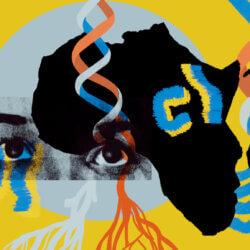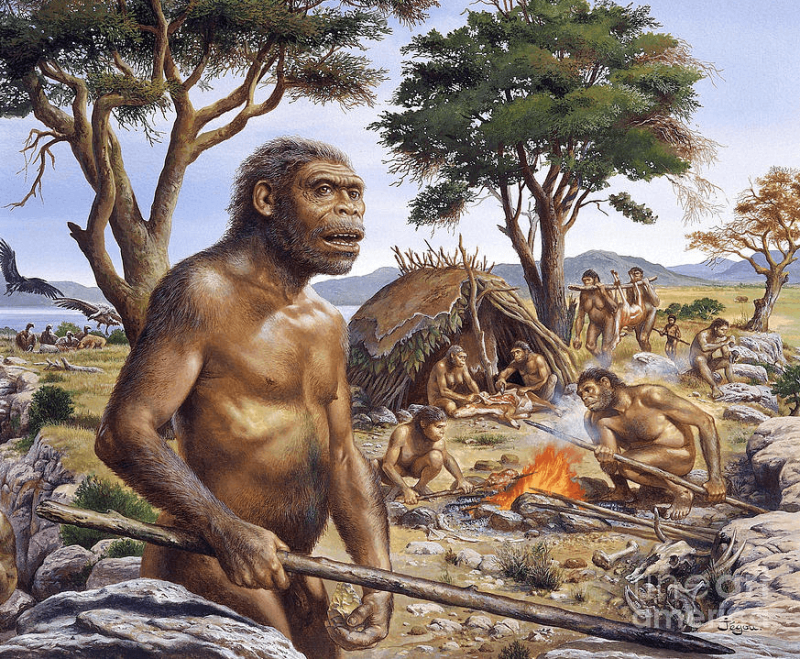
Excavations in Israel have sparked renewed debate over why Homo erectus migrated out of Africa

Credit: Quora
Credit: Quora

What exactly pushedโ€”or pulledโ€”H. erectus out of Africa is a matter of fierce debate.

Was it some innate adaptability, such as social learning, curiosity, a taste for meat, or technological acuity? Did the expansion of grasslands or rapid changes in climate send them on their journey? Or was it some combination of these factors?

H. erectusย was not simply following spreading savanna as the climate changed but rather had the capacity to adjust to a variety of environments.

โ€œThe course of human evolutionary history has been a ratcheting up of different abilities to occupy a variety of environments,โ€ says paleoanthropologistย Rick Potts, the head of the Smithsonian Institutionโ€™s Human Origins Program, โ€œof eating a greater variety of foods, of being able to respond cognitively and socially to a wider variety of situations.โ€

He notes that by around 1.4 to 1.6 million years ago,ย H. erectusย was occupying tropical Southeast Asia and Indonesia. โ€œThat also by itself is an indicator that itโ€™s not just one type of habitat that is being followed.โ€

But Potts believes there was an urgent trigger that spurred adaptations: periods of highly variable climate.


This map lays out what we know so far about the travels of Homo erectus both within and beyond the African continent. Credit: Catherine Gilman/SAPIENS

This is an excerpt. Read the original post here.

{{ reviewsTotal }}{{ options.labels.singularReviewCountLabel }}
{{ reviewsTotal }}{{ options.labels.pluralReviewCountLabel }}
{{ options.labels.newReviewButton }}
{{ userData.canReview.message }}

Related Articles

Infographic: Global regulatory and health research agencies on whether glyphosate causes cancer

Infographic: Global regulatory and health research agencies on whether glyphosate causes cancer

Does glyphosateโ€”the world's most heavily-used herbicideโ€”pose serious harm to humans? Is it carcinogenic? Those issues are of both legal and ...

Most Popular

ChatGPT-Image-Jun-9-2026-01_11_37-PM
Turmeric supplements: More risks than benefits
Screenshot-2026-06-05-at-2.12.30-PM
Some plants can poison you. So how did humans figure out what is safe to eat?
Screenshot-2026-06-17-at-9.44.03-AM
Viewpoint: Embryos are becoming the newest battleground of love, loss, and legal uncertainty
ChatGPT-Image-Mar-10-2026-01_39_01-PM
Viewpointโ€”โ€œMiracle moleculeโ€ debunked: Why acemannan supplements donโ€™t work
ChatGPT-Image-Jun-14-2026-09_41_44-AM-2
Viewpointโ€”โ€˜The gleeful efficiency of an arsonistโ€™: Administrationโ€™s health and science research cuts are โ€˜sabotagingโ€™ Americaโ€™s future
ChatGPT-Image-Jun-11-2026-01_15_03-PM
Selective Pressure, Selective Silence
ChatGPT Image May 26, 2026, 08_42_17 AM (1)
Viewpoint: Greenpeace and poison: How environmental advocacy groups rely on compliant (and often ignorant) journalists to spread disinformation and spark litigation
ChatGPT-Image-Jun-15-2026-11_51_00-AM-4
Viewpoint: As the International Association for Research on Cancer loses influence, activists and trial lawyers scramble to protect a lucrative playbook
wuhan institute of virology main entrance
โ€‹โ€‹COVID lab leak? Making a case that the Wuhan market origins theory is wrong
ChatGPT-Image-May-18-2026-12_06_18-PM-2
Defying death: The immortality movement goes mainstream
glp menu logo outlined

Get news on human & agricultural genetics and biotechnology delivered to your inbox.