The social history of the concept of the mixed-race mestizo

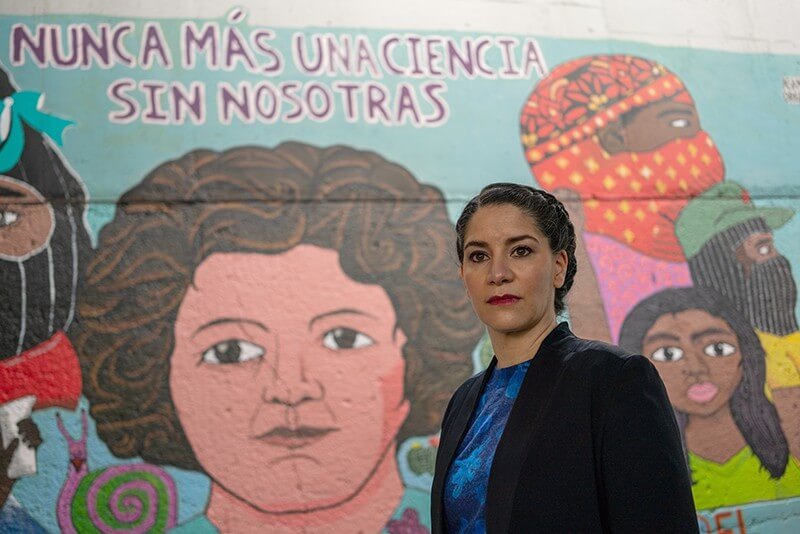
Vivette García Deister is an ethnographer of science at UNAM. The mural says “Never again a science without us” in Spanish. Credit: Stephania Corpi Arnaud for Nature

In Mexico [most people] think of themselves as mestizos, a term that emerged during the colonial period to explain the blend of ethnicities — especially between Indigenous peoples and the Spanish colonizers.

The process of fusion, referred to as mestizaje, has been so intense that a lot of Mexicans say it no longer makes sense to talk about race or racism. The idea of a post-racial society drew important support from early genetic research in the twentieth century and modern human genomic studies, which show that most humans come from a mix of different ancestries.

This unifying vision took hold across Latin America, shaping public policies and conceptions about race. 

But like all other race-based labels, the mestizo is a social construct, not a well-defined scientific category of people who share similar genetic characteristics.


Follow the latest news and policy debates on sustainable agriculture, biomedicine, and other ‘disruptive’ innovations. Subscribe to our newsletter.

Some call for banishing the mestizo label in human genetics and adopting much more specific terms not connected with colonial concepts. Others say that the mestizo idea is not as problematic as critics argue.

One thing is clear, says Vivette García Deister, an ethnographer of science at UNAM, who has studied how mestizo ideology has influenced genetic studies in Mexico. “There’s no easy solution.”


This is an excerpt. Read the original post here. 

{{ reviewsTotal }}{{ options.labels.singularReviewCountLabel }}
{{ reviewsTotal }}{{ options.labels.pluralReviewCountLabel }}
{{ options.labels.newReviewButton }}
{{ userData.canReview.message }}

Related Articles

Infographic: Global regulatory and health research agencies on whether glyphosate causes cancer

Infographic: Global regulatory and health research agencies on whether glyphosate causes cancer

Does glyphosate—the world's most heavily-used herbicide—pose serious harm to humans? Is it carcinogenic? Those issues are of both legal and ...

Most Popular

Screenshot 2025-07-30 at 10.48
Can gene editing eliminate Down syndrome? Scientists have done it in lab-grown cells
ChatGPT-Image-May-26-2026-07_51_21-AM-2
Viewpoint: There are more than 1,000 chemicals in a cup of coffee—including many substances that can cause cancer. Why isn’t it banned?
Screenshot-2026-05-28-at-1.36.28-PM
Viewpoint: Can mRNA research survive the Trump administration?
Screenshot-2026-06-02-at-11.59.11-AM
Magnifica Humanitas: Pope’s encyclical broadside against AI naivete and overreach
ChatGPT Image May 26, 2026, 08_42_17 AM (1)
Viewpoint: Greenpeace and poison: How environmental advocacy groups rely on compliant (and often ignorant) journalists to spread disinformation and spark litigation
Screenshot-2026-05-27-at-10.51.25-AM
Viewpoint: ‘Monsanto’ blues—Planned Netflix movie promises yet another round of anti-glyphosate disinformation
Screenshot 2025-11-18 at 3.45
Viewpoint—GMOs and sustainability: Why buying organic foods is the least environmentally-sensitive food choice—without offering any health benefits
Screenshot-2026-06-01-at-1.35.32-PM
Viewpoint: Swine farmers are under attack for allegedly mistreating their animals. Here are the facts.
Picture1
Sounds we can’t hear — the hidden planetary signals behind science, fear, and misinformation
ChatGPT-Image-Jun-2-2026-11_39_58-AM
Viewpoint: Who is RFK, Jr.’s newly-appointed CDC senior counselor, Sara Brenner — Vaccine skeptic and self-proclaimed “MAHA mom”
ChatGPT Image May 28, 2026, 08_16_38 PM
Viewpoint: Why the EPA mismeasures cancer risk of chemicals and what should be done to fix it
glp menu logo outlined

Get news on human & agricultural genetics and biotechnology delivered to your inbox.