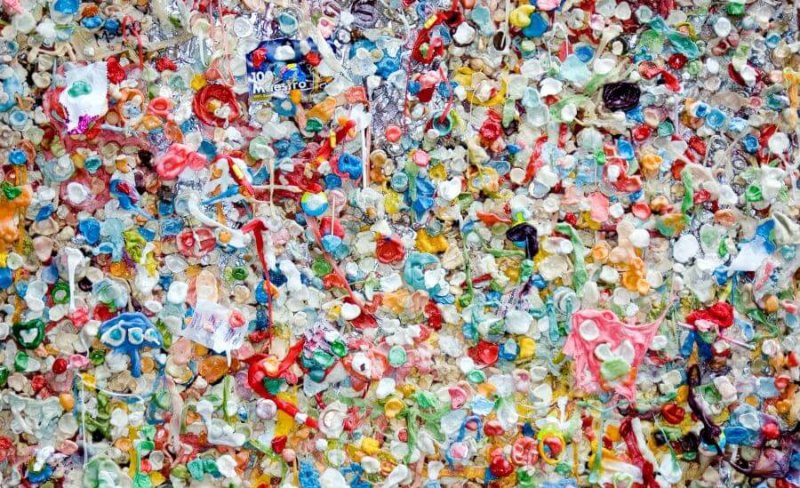
Viewpoint: Here’s why you should be concerned about nanoplastics

Credit: Plastic Free World

Tire particles from the world’s billions of cars, trucks, bikes, tractors, and other vehicles escape into air, soil, and water bodies.

Scientists are just beginning to understand the grave danger: In 2020, Washington State researchers determined that the presence of 6PPD-quinone, a byproduct of rubber-stabilizing chemical 6PPD, is playing a major factor in a mysterious long-term die-off of coho salmon in the U.S. Pacific Northwest.

When Washington’s fall rains herald spawning salmon’s return from sea to stream, the precipitation also washes car tire fragments and other plastic particles into these freshwater ecosystems. 

Mis- and disinformation are distorting science and public policy. Subscribe to our Daily and Weekly Digests for incisive coverage of ‘disruptive’ innovations in AI, agricultural biotechnology, food, chemicals, nuclear energy, vaccines, and other disruptive innovations.

Modern health researchers have yet to systematically search for it in people and comprehensively study how having plastic particles around us and in us at all times might be affecting human health.

[Researcher Alvise] Vianello and Jes Vollertsen, a professor of environmental studies at Aalborg University, explained that they’ve brought their findings to researchers at their university’s hospital for future collaborative research, perhaps searching for plastic inside human cadavers.

“We now have enough evidence that we should start looking for microplastic inside human airways,” Vollertsen said. “Until then, it’s unclear whether or not we should be worried that we are breathing in plastic.”


This is an excerpt. Read the original post here. 

Related Articles

Infographic: Global regulatory and health research agencies on whether glyphosate causes cancer

Infographic: Global regulatory and health research agencies on whether glyphosate causes cancer

Does glyphosate—the world's most heavily-used herbicide—pose serious harm to humans? Is it carcinogenic? Those issues are of both legal and ...

Most Popular

ChatGPT-Image-Mar-10-2026-01_39_01-PM
Viewpoint—“Miracle molecule” debunked: Why acemannan supplements don’t work
ChatGPT-Image-Sep-17-2026-12_28_43-PM
Vitamin D, omega-3 fish oil and glucosamine supplements could cause brain damage 
ChatGPT-Image-Sep-17-2026-10_17_15-AM
Viewpoint: Why are the less intelligent more likely to be conservative—and smarter people more socially liberal?
Screenshot-2026-09-10-at-12.20.19-PM
'Jet fuel didn't melt the steel': 9/11 conspiracy theories debunked
ChatGPT-Image-Aug-28-2026-03_33_46-PM
Viewpoint: Bad science—Five bogus Trump administration claims about vaccines and autism
Screenshot-2026-09-10-at-11.50.46-AM
Did COVID vaccines kill 2,500 service members? RFK Jr. hires an investigator who compares vaccine promoters to Nazi doctors
Screenshot 2026-07-29 at 10.40
The COVID vaccine turbo cancer scare is back. Science still proves it’s wrong.
Screenshot-2026-09-16-at-12.07.47-PM
The heated debate over trans athletes in the WNBA
glp menu logo outlined

Get news on human & agricultural genetics and biotechnology delivered to your inbox.