Future farming to feed 10 billion: Moving from chemical to biological era of agriculture

Is the progression really from mechanical to chemical to biological? Or is it integration? Credit: Natalis Lorenz

”We cannot feed 10 billion people in a sustainable way using the current production systems. We can’t. We need to be much more thrifty with our land, and we need to boost our productivity.” [said Evan Fraser, director of the Arrell Food Institute at the University of Guelph.]

Follow the latest news and policy debates on sustainable agriculture, biomedicine, and other ‘disruptive’ innovations. Subscribe to our newsletter.

That’s where science and experimentation… are increasingly playing a role.

“We’re working with nature’s biological ecological processes,” Entz said in an interview with Quirks & Quarks. “In nature, things are diverse. In nature, nutrients are recycled, carbon is recycled. And in nature, perennial plants are the dominant plant species as opposed to annual plants.”

Entz says agriculture — at least across much of the Western world — is in a period of transition away from a reliance on “command and control” systems that seek to dominate nature to maximize yields.

“We’ve gone from the mechanical to the chemical era, and now, we’re entering the biological era of agriculture where we’re, you know, looking at the limits of, especially, the chemicals,” he said. “And we’re thinking, how can we do this the way nature does it? How can we mimic nature to create a solution to a problem?”

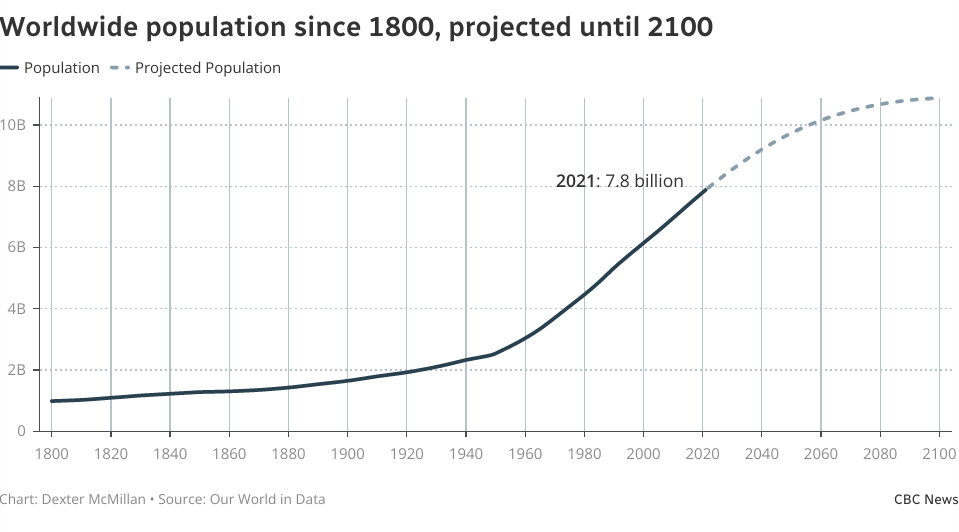
screenshot am

This is an excerpt. Read the original post here.

{{ reviewsTotal }}{{ options.labels.singularReviewCountLabel }}
{{ reviewsTotal }}{{ options.labels.pluralReviewCountLabel }}
{{ options.labels.newReviewButton }}
{{ userData.canReview.message }}

Related Articles

Infographic: Global regulatory and health research agencies on whether glyphosate causes cancer

Infographic: Global regulatory and health research agencies on whether glyphosate causes cancer

Does glyphosate—the world's most heavily-used herbicide—pose serious harm to humans? Is it carcinogenic? Those issues are of both legal and ...

Most Popular

ChatGPT-Image-May-28-2026-12_56_54-PM
Viewpoint: Vaccines' non-specific effects? The ‘shoddy’ Danish couple whose 'research’ inspires RFK, Jr.’s health delusion
Credit: ACSH
Viewpoint: Who and what’s to blame for the surge in vaccine-preventable diseases?
ChatGPT Image Jun 3, 2026, 03_14_43 PM
Viewpoint: How Earthjustice became the poster child for the abuse of special interest activist funding
Screenshot-2026-06-08-at-10.19.30-AM
‘Natural’ wellness supplements linked to liver injury
Screenshot-2026-06-05-at-2.12.30-PM
Some plants can poison you. So how did humans figure out what is safe to eat?
Screenshot-2026-06-08-at-11.05.51-AM
Can vaping lead to cancer? New ‘association study’ raises questions of “links"
Screenshot-2026-06-05-at-3.30.20-PM
Republican lawmakers spread misinformation claiming solar farms permanently destroy potato farms
Organic-Produce
Viewpoint: Why you should ignore organic food advocates’ advice to avoid ‘pesticide soaked’ conventional fruits and vegetables
edb7f6d7-2370-418f-9578-74e29678e35c
Facts & Fallacies Podcast: Nicotine vaping—public health miracle, or risk to children? Professor Cliff Douglas
Screenshot 2025-07-30 at 10.48
Can gene editing eliminate Down syndrome? Scientists have done it in lab-grown cells
ChatGPT-Image-Jun-5-2026-02_48_23-PM
Viewpoint: How Dr.TikTok (falsely) convinced me that cortisol was running my health
ChatGPT-Image-Jun-5-2026-01_17_48-PM
GLP-1 weight-loss drugs may reshape our desires and emotions
glp menu logo outlined

Get news on human & agricultural genetics and biotechnology delivered to your inbox.