When most people hear about oil, as in petroleum, they think of what gets refined to produce gasoline. But it’s more. Much more. From clothes to dentures to lipstick and even toothpaste, the number of household products made from chemicals based on fossil fuels numbers in the thousands.
We all know that reducing fossil fuel emissions is a critical step to reducing our carbon footprint and, in response, our car-purchasing preferences are shifting to electric or hybrid vehicles; our energy systems to renewables such as wind or solar; and even our food systems to (supposedly) greener processes. Without the availability of oil to make petrochemicals, our everyday lives would be much more austere, and many products, such as the plastics used in cars and other consumer goods would be sorely missed, or far more expensive.
A possible solution is the manufacturing of products using “green chemistry,” in which production pathways are altered in such a way that carbon emissions are reduced, or even eliminated. Synthetic biology, the convergence of advances in chemistry, biology, computer science, and engineering that enables us to go from idea to product faster, cheaper, and with greater precision, is one such approach. If the thousands of chemicals derived from petroleum, natural gas and coal— including fuels, plastics and industrial chemicals — could be synthesized instead using microorganisms, the annual savings in global greenhouse gas emissions could be substantial, and it could lead the way to a more sustainable manufacturing sector.
Employing bacteria and other microorganisms to synthesize new chemicals to be used in manufacturing has been achievable for some time, but often at an undesirable carbon cost. Microorganisms such as E. coli and yeast produce a few commodity chemicals such as isobutanol and lactic acid, but they use sugar as their starting material and thus emit substantial amounts of CO2 waste. Generating chemicals for household products with this approach involves increased use of both land and energy to produce the sugar feedstocks, which further increases the carbon footprint.
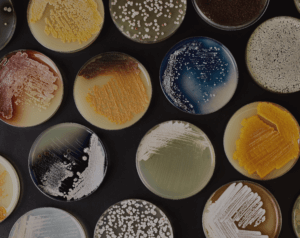
However, this trend may be ripe for change. A study recently published in Nature Biotechnology describes how a specific class of bacteria, known as acetogens, can be used for the large-scale production of important industrial chemicals using a process that is actually carbon-negative. Unlike traditional production processes, which result in release of greenhouse gases, their fermentation process actually fixes carbon. Acetogens can live on one-carbon molecules such as CO2, the prototypic greenhouse gas, and can incorporate them into more-complex and desirable molecules required for the manufacturing of myriad products.
In the past, acetogens have proven to be extremely difficult to genetically engineer. The authors of this new study have overcome this hurdle, as well as others such as the need for sugar feedstocks, and at manufacturing-scale. They produce the commodity chemicals acetone and isopropanol (IPA) in a carbon-negative fashion, and as such, provide a roadmap for the production of other industrially relevant chemicals used using sustainable feedstocks. Acetone and IPA alone have a global market of over $10 billion.
The authors concluded that “engineered acetogens enable sustainable, high-efficiency, high-selectivity chemicals production,” and best of all, they “expect that [their] approach can be readily adapted to a wide range of commodity chemicals.”

This approach is an important portent for an increasingly warming planet, especially as other potential feedstock sources beyond fossilized carbon are employed. These could include gasification of forest and agricultural residues, for example, as well as non-recyclable municipal solid waste. Using such carbon sources, an array of other products, such as jet fuel or diesel, could be amenable to similar methods of production.





What if we were to produce all petrochemicals through acetogens using synthetic biology? The statistics are striking. Globally, chemical manufacturing emits a half a billion tons of CO2 each year and is the third largest CO2 emitting industrial sector (behind cement and steel and iron mills). These sectors have been notoriously difficult to decarbonize. Microorganisms that render chemical manufacturing greener by creating a circular economy that uses waste instead of sugar as feedstocks could be a critical advance.
The synergy of disciplines like microbiology and molecular genetic engineering is the essence of “green” synthetic biology. Other recent examples include bacteria engineered to fix nitrogen for plants, thus eliminating excess fertilizer and its environmental costs, and plants engineered to make chemical production greener and more sustainable.
Recently, scientists at Rothamsted Research genetically engineered camelina plants to produce chemicals known as vinyl phenols, which are needed to make a variety of household products such as plastic for the LCD screens of TVs and cellphones, and which have traditionally been made from fossil fuels. Camelina plants are grown for their oilseed; in this instance, they were metabolically engineered to produce the desired chemicals, then grown and harvested from the field. The materials produced in these plants could both lower the carbon footprint of chemical production and reduce our dependence on fossil fuels.

Breaking the link between fossil fuels and manufacturing in a way that doesn’t negatively affect the global economy is a pivotal step toward achieving carbon neutrality. We predict that genetically engineered bacteria and plants that produce the substrates for our household products in a way that is carbon neutral (or negative) are the future.
Kathleen Hefferon, Ph.D., teaches microbiology at Cornell University. Find Kathleen on Twitter @KHefferon
Henry Miller, a physician and molecular biologist, is a senior fellow at the Pacific Research Institute. He was a Research Associate at the NIH and the founding director of the FDA’s Office of Biotechnology. Find Henry on Twitter @henryimiller
A version of this article was posted at European Scientist and is used here with permission. You can check out European Scientist on Twitter @EuropeScientist