China’s new bioethics rules: Foreign companies prohibited from collecting human genetic resources inside China

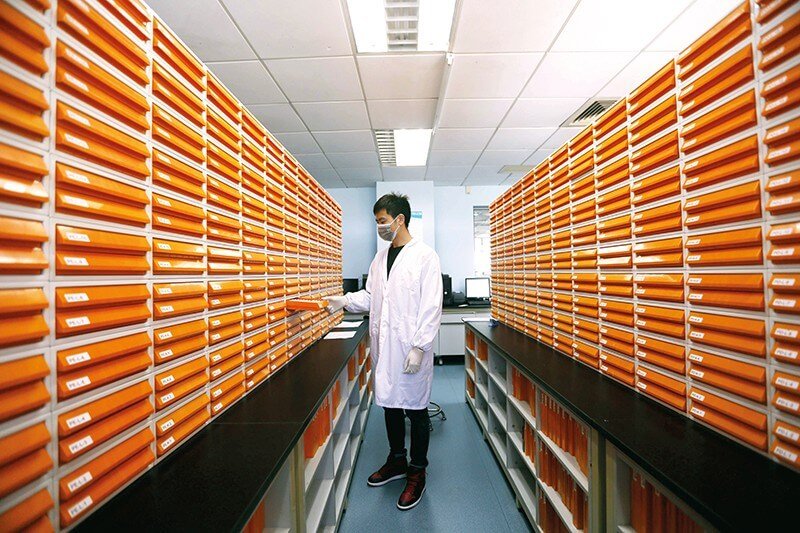
China’s largest biobank at Zhangjiang High-Tech Park, Shanghai. Credit: Imaginechina/REX/Shutterstock

China’s new rules in the pipeline on human genetic resources will clarify jurisdictions of regulatory bodies and enhance supervision related to biopharmaceutical research, and will have a lasting impact on international cooperation regarding the nation’s biomaterials, experts said.

Follow the latest news and policy debates on sustainable agriculture, biomedicine, and other ‘disruptive’ innovations. Subscribe to our newsletter.

In recent decades, the United States, Brazil, Japan and many European countries have strengthened their management of human genetic resources. “This subject has gradually become a field with global strategic importance,” [former director of the Institute of Medical Biology of the Chinese Academy of Medical Sciences Chu Jiayou] added.

China’s new rules define human genetic resources as genetic materials, including organs, tissues and cells, as well as genetic information, such as the human genome and genes.

The new rules state that foreign organizations and individuals, as well as entities formed or controlled by foreign stakeholders, are prohibited from collecting and preserving Chinese human genetic resources inside China or taking them outside of the country.

The collection, storage and supply of Chinese human genetic resources must be carried out by Chinese scientific research institutions, universities, medical institutions and enterprises, it added.


This is an excerpt. Read the original post here

{{ reviewsTotal }}{{ options.labels.singularReviewCountLabel }}
{{ reviewsTotal }}{{ options.labels.pluralReviewCountLabel }}
{{ options.labels.noReviewsLabel }}
{{ options.labels.newReviewButton }}
{{ userData.canReview.message }}

Related Articles

Infographic: Global regulatory and health research agencies on whether glyphosate causes cancer

Infographic: Global regulatory and health research agencies on whether glyphosate causes cancer

Does glyphosate—the world's most heavily-used herbicide—pose serious harm to humans? Is it carcinogenic? Those issues are of both legal and ...

Most Popular

Screenshot-2026-07-30-at-3.07.42-PM
Controversy over WNBA star Sophie Cunningham’s comment opposing trans females in women’s sports reinvigorates the culture wars
Picture1
Hiroshima at 81: America’s new nuclear bomb, a buried Iranian target, and a question no one wants to ask
leeteam
How Kennedy and his family could pocket millions from Merck’s $50 million vaccine injury settlement that he oversaw
ChatGPT-Image-Mar-10-2026-01_39_01-PM
Viewpoint—“Miracle molecule” debunked: Why acemannan supplements don’t work
ChatGPT-Image-Jul-10-2026-12_21_03-PM
Viewpoint: Is there new evidence that the animal deworming drug ivermectin decreases the risk of Covid and cancer? Don’t waste your money.
Screenshot-2026-07-30-at-2.30.35-PM
Climate scientists claim conservative activists are promoting ‘lies’ that Europe’s summer heatwaves are far from unusual
Screenshot-2026-07-09-at-1.09.25-PM
Anti-vaccine myths rattle health care
ChatGPT Image Jul 29, 2026, 05_50_04 PM
Fear, science, and the law: If talc powder is unlikely to cause cancer and J&J was winning in court, why did it pay more than $5.5 billion to settle?
ChatGPT Image Jul 29, 2026, 06_26_01 PM 2
Facts & Fallacies podcast: Organic food myths make a comeback on Instagram, with Dr. Kevin Folta
ChatGPT Image Jul 29, 2026, 12_05_21 PM
AI-generated physicians promoting bogus cures and worthless supplements surge on social media
ChatGPT Image Jul 29, 2026, 10_14_27 PM
After muzzling RFK, Jr. over autism-vaccine conspiracy theories, Trump defies aides to push scares again
Screenshot 2026-07-22 at 1.38
Viewpoint: Are the U.S. and Europe headed towards a repudiation of agricultural biotechnology red tape?
organic scaled
Facts & Fallacies podcast: Organic food cuts pesticide exposure? A response to Dr. Rhonda Patrick
glp menu logo outlined

Get news on human & agricultural genetics and biotechnology delivered to your inbox.