Solving pollution problem? AI-designed enzyme devours plastic at industrial scale

Credit: Royal Society of Chemistry

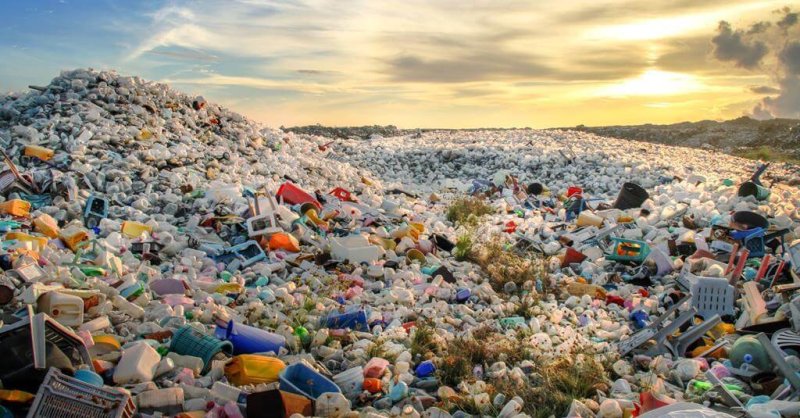
Of the almost 400 million metric tons of plastic that the world produces every year, most ends up in landfills or the natural environment, where it could sit around for centuries before decomposing.

Now researchers have harnessed the power of artificial intelligence to design an enzyme that can degrade a commonly used plastic in just a day or two. The enzyme, reported in the journal Nature, breaks down polyethylene terephthalate, or PET—commonly used to make fabrics and food and beverage packaging—into its chemical building blocks.

The researchers show that those molecules can be recycled back into PET plastic. The results demonstrate a viable route for enzymatic plastic recycling at the industrial scale, they write. “We hope that this work start to establish methods for creating a plastic circular economy,” says Hal Alper, a chemical engineering professor at the University of Texas at Austin and a co-author of the study.


Mis- and disinformation are distorting science and public policy. Subscribe to our Daily and Weekly Digests for incisive coverage of ‘disruptive’ innovations in AI, agricultural biotechnology, food, chemicals, nuclear energy, vaccines, and other disruptive innovations.

Alper says that they are now “evaluating how to scale this process into more industrial conditions, and how to apply this same type of approach to other plastic sources. A few companies around the world are starting to look at large-scale enzyme depolymerization, so I think there is quite a lot of promise with this work.”


This is an excerpt. Read the original post here

Related Articles

Infographic: Global regulatory and health research agencies on whether glyphosate causes cancer

Infographic: Global regulatory and health research agencies on whether glyphosate causes cancer

Does glyphosate—the world's most heavily-used herbicide—pose serious harm to humans? Is it carcinogenic? Those issues are of both legal and ...

Most Popular

ChatGPT-Image-Mar-10-2026-01_39_01-PM
Viewpoint—“Miracle molecule” debunked: Why acemannan supplements don’t work
Screenshot-2026-09-22-at-12.26.15-PM
‘Forever chemical’ concerns: Separating hysteria from reasonable concern in the debate over PFAS danger
Screenshot-2026-10-06-at-11.13.59-AM
RFK Jr.’s plan to curb America’s appetite for ultra-processed foods and artificial dyes blocked by the White House
Screenshot 2026-10-08 at 1.34
Hooked on kratom: The unregulated, natural, alcohol-free “social tonic” that is destroying lives 
Screenshot-2026-10-06-at-2.36.47-PM
Is organic farming really more sustainable? 100 recent studies say ‘no’
Resolute-Portrait-with-Injured-Teddy-Bear
Anti-vax Texas Senate candidate Ken Paxton alleges conspiracy by doctors, drugmakers, and insurers to push childhood vaccination for profit
Screenshot-2026-09-28-at-11.26.17-AM
Viewpoint: Wellness movement activists reposition nicotine from a killer addictive drug into a cure-all for brain ills
No-Data-Center-Farm-Protest-Sign-2
Rural revival or corporate windfall? Trump’s One Big Beautiful Bill tax law opens the door to big breaks for data centers—but tech giants aren’t cashing in
Radioactive-Americana-Collage-2
The kooky logic behind the raft of spurious cancer claims from Harvard’s T.H. Chan School of Public Health
ChatGPT-Image-Sep-21-2026-11_21_39-AM
Viewpoint: Food cults: Online ‘nutrition communities’ can pose unique dangers
Supreme-Court-Amid-Climate-Crisis
Should fossil fuel companies be shielded from lawsuits over climate change damage? The Supreme Court takes up the question
strand of dna genetics
No, GMO foods do not “damage genes, natural disposition and hormones, or decrease physical health and intelligence”
glp menu logo outlined

Get news on human & agricultural genetics and biotechnology delivered to your inbox.