The plant-based food companies Beyond Meat and Impossible Foods—two household names in America’s now-substantial faux-meat market—contend that their burgers use significantly less land and water and generate less greenhouse gases than beef-burger equivalents, as the New York Times has reported.
A far smaller but just as motivated cohort of plant-based food entrepreneurs aim to do them one better by spotlighting and advancing an ingredient that requires no land or water and has, they argue, just as much potential to please Western palates. Consider, if you will, the possibility that we left our most promising resource behind in the ocean. Will you swap meat for seaweed?
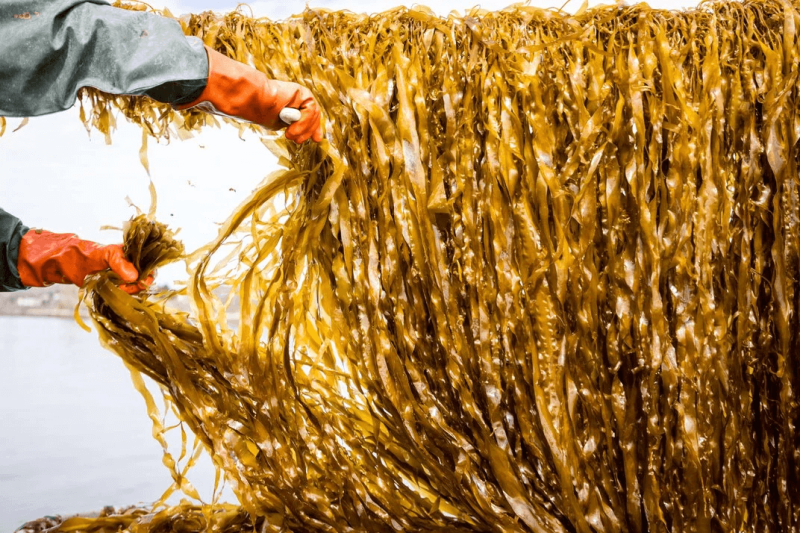
Royal kombu (aka sugar kelp) harvested from the Netherlands’ first organic seaweed farm enriches and flavors the Dutch Weed Burger’s soy-chip-based patty, which is served on a bun tinted green with microalgae and garnished with sauce featuring sea lettuce. [Co-founder of Dutch Weed Burger Mark] Kulsdom describes the burger as having a briny character with roasted notes. “It’s a mix between familiar and new flavors, and that really works well,” he says. “People don’t associate it therefore with a meat replacer but [approach it as] a standalone plant-based burger.”