10 years into the lab grown meat revolution yet there are few approved foods. What are the barriers to scaling cell meat into blockbusters?

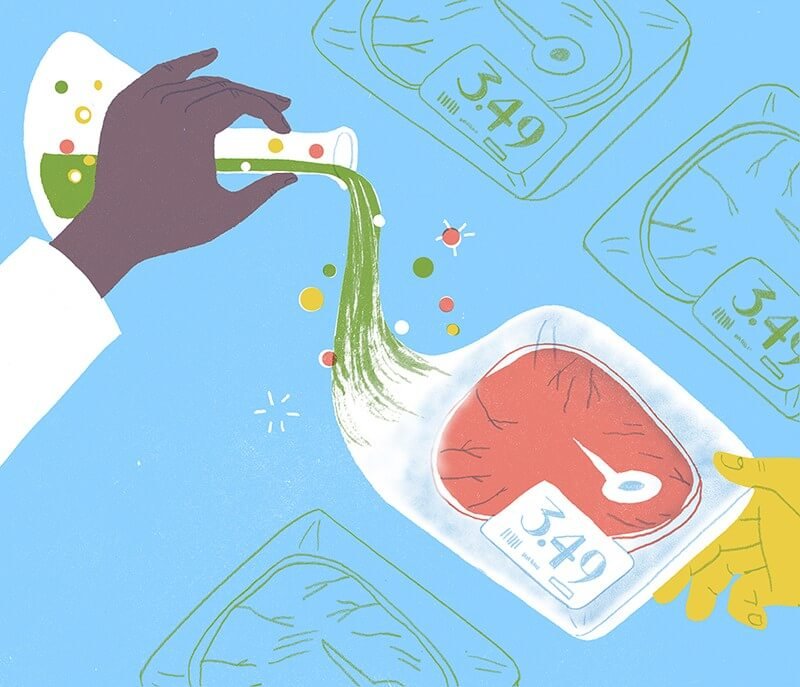
Credit: Sophie Casson

2021 saw USD 1.4 billion invested in cultured meat businesses and 107 new start-up businesses. 25 countries have at least one company that grows meat, according to the American Good Food Institute.

But cultured meat is still a long way from finding its way into shops and onto our dinner tables.

Why is it taking so long? And is it really possible to grow meat?

Mis- and disinformation are distorting science and public policy. Subscribe to our Daily and Weekly Digests for incisive coverage of ‘disruptive’ innovations in AI, agricultural biotechnology, food, chemicals, nuclear energy, vaccines, and other disruptive innovations.

“The optimistic forecasts probably also have to do with marketing and the need for investors and capital,” says Rob Burton of the Ruralis, Institute for Rural and Regional Research.

The methods are in place, and scientists are making meat in the laboratory. But the companies only manage to produce a few kilos each day, according to Burton.

The challenge now is to get the meat out of the lab and into large-scale production. No one has managed to achieve that yet.


Most of the development takes place in the private business sector, so we don’t have a lot of insight into what’s going on, Burton says.

Results are kept secret rather than being published.

“The research results and reports on how far we’ve actually come are few and far between,” says Sissel Beate Rønning from Nofima. She is heading the new project.

Rønning believes that the public financing of research on lab meat is therefore a positive step.

[Editor’s note: This article has been translated from Norweigan and edited for clarity.]

This is an excerpt. Read the original post here

Related Articles

Infographic: Global regulatory and health research agencies on whether glyphosate causes cancer

Infographic: Global regulatory and health research agencies on whether glyphosate causes cancer

Does glyphosate—the world's most heavily-used herbicide—pose serious harm to humans? Is it carcinogenic? Those issues are of both legal and ...

Most Popular

Screenshot-2026-09-20-at-9.03.54-AM
From Malaysia to the world: A pioneering science communicator reimagines global science communication for a digital age
Screenshot-2026-09-16-at-2.26.42-PM
Viewpoint: How to ecologically damage America’s forests: Ban glyphosate
ChatGPT-Image-Mar-10-2026-01_39_01-PM
Viewpoint—“Miracle molecule” debunked: Why acemannan supplements don’t work
ChatGPT-Image-Sep-17-2026-12_28_43-PM
Vitamin D, omega-3 fish oil and glucosamine supplements could cause brain damage 
Screenshot-2026-09-20-at-4.31.28-PM
White House drafting executive order to control what OMB Director Vought claims are “woke” NIH science grants
ChatGPT-Image-Sep-20-2026-04_22_32-PM
What’s Trump’s ‘AI Force’? Administration rushes to announce ill-defined watchdog agency and czar amid criticism of its resistance to curb AI acceleration
Screenshot-2026-08-12-at-11.31.46-AM
AI is helping develop new vaccines
Screenshot-2026-09-14-at-4.31.14-PM
Viewpoint: What’s the likely impact when the EPA loosens rules limiting methane pollution from oil and gas wells?
Screenshot-2026-08-19-at-6.19.42-PM
Facts & Fallacies podcast: 'Regenerative farming'? RFK Jr.’s federal push romanticizes the past and risks food security
ChatGPT-Image-Aug-28-2026-03_33_46-PM
Viewpoint: Bad science—Five bogus Trump administration claims about vaccines and autism
ChatGPT-Image-Sep-18-2026-10_49_24-AM
‘Symptom borrowing’: Young people are copying health problems they see on TikTok
ChatGPT-Image-Sep-9-2026-02_48_24-PM
Viewpoint: Trump-RFK Jr. report on “Gender Ideology & Left-wing Ideology’ targets LGBTQ community—and science
glp menu logo outlined

Get news on human & agricultural genetics and biotechnology delivered to your inbox.