Viewpoint: Facing unprecedented drought, Europe debates embracing sustainable, climate-flexible, insecticide-reducing genetically modified crops

Credit: EuroNews
Credit: EuroNews

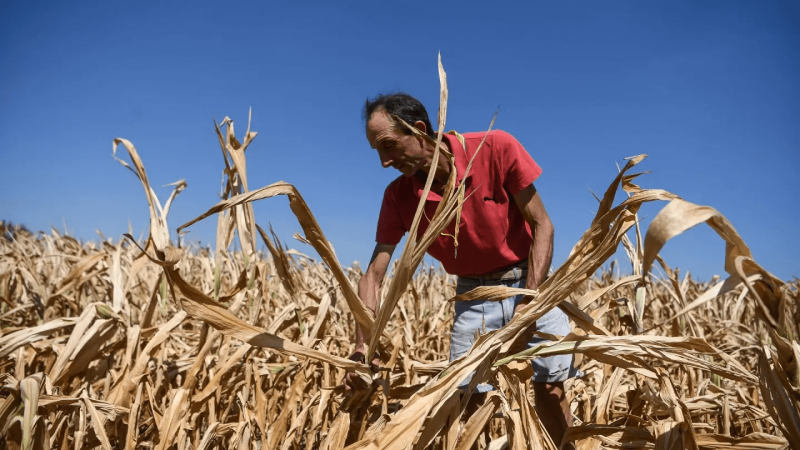
Europe’s summer of drought has been impossible to ignore. Rivers dried up, exposing the skeletons of warships and ancient buildings. Images captured by satellite show swathes of the continent’s normally verdant fields turned to parched dust bowls.

…

In response, some European politicians are starting to rethink the European Union’s long-standing opposition to genetically modified (GMO) and gene-edited crops.  In July, an Italian member of the European Parliament called for a loosening of the rules that restrict crop varieties created using new gene-editing techniques like CRISPR from being grown and sold within the EU. “New agricultural biotechnology can provide experimentation for more drought- and pest-resistant plants,” member Antonio Tajani said in a meeting at the European Parliament. Other Italian politicians have joined him in calling for similar changes to gene-editing regulations.


Mis- and disinformation are distorting science and public policy. Subscribe to our Daily and Weekly Digests for incisive coverage of ‘disruptive’ innovations in AI, agricultural biotechnology, food, chemicals, nuclear energy, vaccines, and other disruptive innovations.

The European Commission is responsible for creating new legislation in the EU, and in April 2021 published a study outlining its desire to loosen regulations on gene-edited crops. “The commission realized that the European Court of Justice decision was not science-based. It was legally based but it wasn’t science-based,” says Cathie Martin, a professor of plant science at the John Innes Centre in the UK. The European Commission’s study concluded that the EU’s existing GMO rules aren’t suitable for regulating crops made using gene editing.


This is an excerpt. Read the original post here

Related Articles

Infographic: Global regulatory and health research agencies on whether glyphosate causes cancer

Infographic: Global regulatory and health research agencies on whether glyphosate causes cancer

Does glyphosate—the world's most heavily-used herbicide—pose serious harm to humans? Is it carcinogenic? Those issues are of both legal and ...

Most Popular

ChatGPT-Image-Mar-10-2026-01_39_01-PM
Viewpoint—“Miracle molecule” debunked: Why acemannan supplements don’t work
Screenshot-2026-09-17-at-1.07.08-PM
'We are dangerously addicted to antidepressants': Should we heed RFK Jr.’s sobering warning?
ChatGPT-Image-Sep-2-2026-02_03_32-PM
How much of a problem is AI’s water use?
Screenshot-2026-09-03-at-10.51.20-AM
Viewpoint: Why do online health lies outlive the evidence that debunks them? Read "Everyone Else Is Lying to You"
Screenshot-2026-09-10-at-12.20.19-PM
'Jet fuel didn't melt the steel': 9/11 conspiracy theories debunked
Screenshot-2026-09-23-at-3.15.09-PM
Anti-GMO activists in Pakistan rev up their campaign of dire warnings
Screenshot-2026-09-22-at-11.40.28-AM
After Idaho criminalized abortion providers in 2022, one-third of obstetricians fled. Health care advocates are making rural health the case for repealing the ban
ChatGPT-Image-Sep-23-2026-01_52_03-PM
Viewpoint: 4 very real AI doomsday scenarios
glp menu logo outlined

Get news on human & agricultural genetics and biotechnology delivered to your inbox.