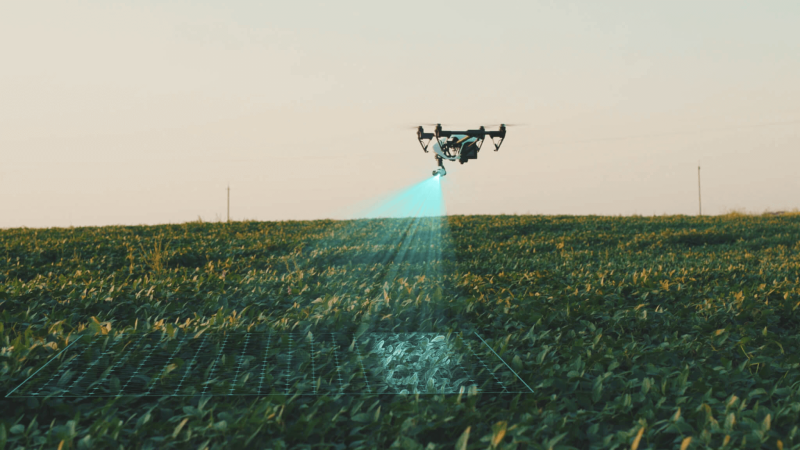
With soaring costs and rising inflation, 50% of small US farmers plan to use new technologies like robotics to boost crop yields

Credit: Iris Automation

With US inflation worsening, the research found that 80 percent of farmers now cite rising input costs as the biggest risk to profitability. These pressures are driving the adoption of new products and technologies to squeeze the most value from each acre. Fifty percent of small farmers are planning to use new yield increase products, and half of large farms, with more than 5,000 acres, are already using precision agriculture hardware such as drones.

Soaring supply chain costs are also weakening loyalties to traditional suppliers in a previously conservative industry, with one third of large farmers reporting brand loyalty is now a lower priority when selecting farm equipment.

Mis- and disinformation are distorting science and public policy. Subscribe to our Daily and Weekly Digests for incisive coverage of ‘disruptive’ innovations in AI, agricultural biotechnology, food, chemicals, nuclear energy, vaccines, and other disruptive innovations.

Yet despite acceptance of agtech rising since the last survey, there are still barriers to adoption. Unclear returns on investment and poor experiences for growers continue to hinder farmers from scaling agtech. When it comes to buying new products and services, over 50 percent of farmers pinpoint customization of recommendations and adequate customer service as the biggest barriers to online purchasing.


David Fiocco, Partner at McKinsey, says:

The farming sector is being buffeted by inflation, climate change and geopolitical conflict and is increasingly turning to new products and technologies to squeeze more value from every acre. Large farmers are spearheading the sector’s technological transformation from robotics to electrification, but they are increasingly being followed by small farmers.


This is an excerpt. Read the original post here

Related Articles

Infographic: Global regulatory and health research agencies on whether glyphosate causes cancer

Infographic: Global regulatory and health research agencies on whether glyphosate causes cancer

Does glyphosate—the world's most heavily-used herbicide—pose serious harm to humans? Is it carcinogenic? Those issues are of both legal and ...

Most Popular

ChatGPT-Image-Sep-23-2026-02_36_39-PM
Viewpoint: After firing the entire National Science Board, Trump reshapes funding initiatives. Here’s the good and the bad.
ChatGPT-Image-Mar-10-2026-01_39_01-PM
Viewpoint—“Miracle molecule” debunked: Why acemannan supplements don’t work
sorghum farmers in kenya FARMERS TREND
Here are all the ways CRISPR gene editing is transforming Africa’s staple crops—and there’s a lot more innovation to come
ChatGPT-Image-Sep-10-2026-10_36_07-AM
Viewpoint: Even lousy scientific articles can shield authors when they hype dubious health claims and products
ChatGPT-Image-Sep-30-2026-01_38_36-PM
Viewpoint: Died “with measles” vs. died “from measles”: RFK, Jr.’s dangerously subversive word games
ChatGPT-Image-Sep-30-2026-01_25_34-PM
Blood tests for Alzheimer’s? The latest grifter, social media scam.
ChatGPT-Image-Sep-21-2026-03_15_09-PM
Viewpoint: Chipotle-inspired lesson: 10,000 sick customers suggest that processed foods can be safer than fresh ones
glp menu logo outlined

Get news on human & agricultural genetics and biotechnology delivered to your inbox.