Viewpoint: ‘25 years of proof that GM foods are safe for the environment and humans’ – Nobel Prize winning geneticist makes case for embracing gene editing

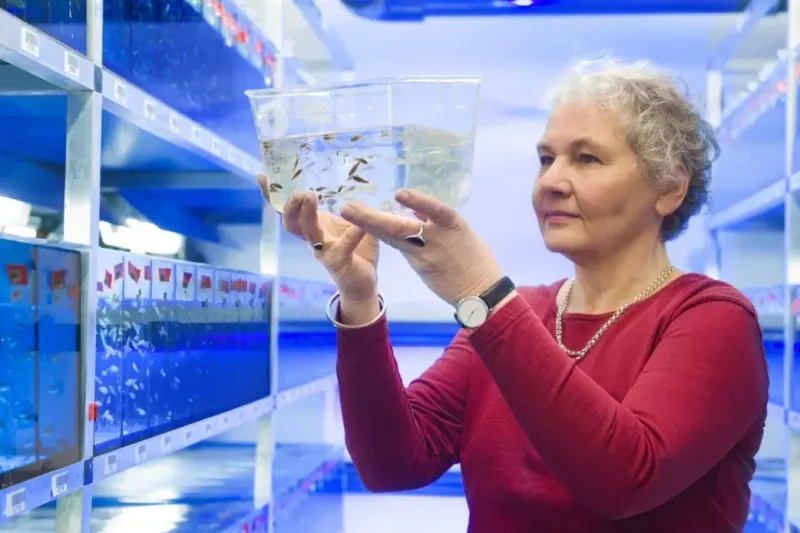
Christiane Nüsslein-Volhard with zebrafish at the Max-Planck Institute. Credit: Nobel Prize Museum

Genetically modified plants are not cultivated in Europe, the regulatory requirements are too strict and the reservations of the population are too great. Nobel Prize winner Christiane Nüsslein-Volhard has long criticized this as anti-scientific and ideology-driven.

Mis- and disinformation are distorting science and public policy. Subscribe to our Daily and Weekly Digests for incisive coverage of ‘disruptive’ innovations in AI, agricultural biotechnology, food, chemicals, nuclear energy, vaccines, and other disruptive innovations.
[Nüsslein-Volhard:] For twenty-five years, genetically modified plants have been cultivated in huge fields in many countries, and no harm to people, nature or the environment has been proven to date. There was once a claim that genetically engineered corn outcrossed into wild species, but that was a fake.

…

Anything that people don’t like about modern agriculture is often blamed on genetic engineering. Even in Germany, although there is no genetic engineering in agriculture here.

…
Genome-edited plant varieties should be excluded from the scope of application of genetic engineering law. This would also allow for field trials, which are necessary to test a new variety. Otherwise they will be destroyed immediately by radical opponents. In the long term, the European genetic engineering law of 2001 should be thoroughly revised in order to take into account the positive experiences of “classic” genetic engineering that have since been collected.

[Editor’s note: This article has been translated from German and edited for clarity.]

This is an excerpt. Read the original post here

Related Articles

Infographic: Global regulatory and health research agencies on whether glyphosate causes cancer

Infographic: Global regulatory and health research agencies on whether glyphosate causes cancer

Does glyphosate—the world's most heavily-used herbicide—pose serious harm to humans? Is it carcinogenic? Those issues are of both legal and ...

Most Popular

ChatGPT-Image-Mar-10-2026-01_39_01-PM
Viewpoint—“Miracle molecule” debunked: Why acemannan supplements don’t work
Screenshot-2026-09-17-at-1.07.08-PM
'We are dangerously addicted to antidepressants': Should we heed RFK Jr.’s sobering warning?
ChatGPT-Image-Sep-2-2026-02_03_32-PM
How much of a problem is AI’s water use?
ChatGPT-Image-Sep-22-2026-10_32_46-AM
There has been a slew of recent reports of food recalls and foodborne outbreaks. Do we face an escalating problem?
Screenshot-2026-09-10-at-12.20.19-PM
'Jet fuel didn't melt the steel': 9/11 conspiracy theories debunked
Screenshot-2026-09-03-at-10.51.20-AM
Viewpoint: Why do online health lies outlive the evidence that debunks them? Read "Everyone Else Is Lying to You"
eaeb d b
Viewpoint: The organic food industry is a $180 billion marketing fraud
ChatGPT-Image-Sep-23-2026-01_52_03-PM
Viewpoint: 4 very real AI doomsday scenarios
glp menu logo outlined

Get news on human & agricultural genetics and biotechnology delivered to your inbox.