Epigenetics: How environment impacts health of you, your child — and possibly their children as well

Epigenetics: How the environment impacts the health of you and your child — and possibly their children as well
Credit: Pixabay/ Miroslaw Miras

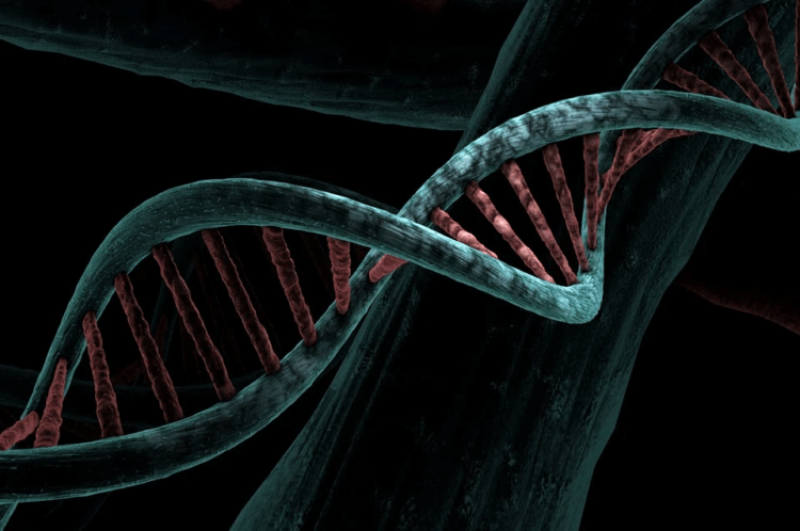
Suppose our genomes were sheet music, the DNA that makes each gene would be the notes. They get all of the attention and largely dictate how our genomes are “performed” by our cells. But if you’ve ever spent time looking at sheet music, you know there are other notations—symbols that tell how fast to play, in which key, and when to cut to the chorus. Epigenetic marks are like those extra notations. They ride along with the genes but aren’t part of them, and they govern how the DNA is packaged up, when and how it’s read, and which parts get skipped over.

Mis- and disinformation are distorting science and public policy. Subscribe to our Daily and Weekly Digests for incisive coverage of ‘disruptive’ innovations in AI, agricultural biotechnology, food, chemicals, nuclear energy, vaccines, and other disruptive innovations.

Conventional wisdom says epigenetic marks get wiped clean at conception when sperm and egg cells meet. But scientists have learned that these tags can be inherited and persist from parent to child and across many generations. Epigenetic marks triggered by trauma, such as famine or violence, can be found generations later in a family—where they continue to influence a person’s health.

Epigenetic changes have been found in the adult children of Holocaust survivors; these changes influence how their bodies respond to stress, including the production of the stress hormone known as cortisol. A study of women who developed PTSD after 9/11 showed similar effects in their children, whose lower cortisol levels make them more vulnerable to PTSD.


This is an excerpt. Read the full article here

Related Articles

Infographic: Global regulatory and health research agencies on whether glyphosate causes cancer

Infographic: Global regulatory and health research agencies on whether glyphosate causes cancer

Does glyphosate—the world's most heavily-used herbicide—pose serious harm to humans? Is it carcinogenic? Those issues are of both legal and ...

Most Popular

Screenshot-2026-09-16-at-2.26.42-PM
Viewpoint: How to ecologically damage America’s forests: Ban glyphosate
Screenshot-2026-09-20-at-9.03.54-AM
From Malaysia to the world: A pioneering science communicator reimagines global science communication for a digital age
ChatGPT-Image-Sep-17-2026-12_28_43-PM
Vitamin D, omega-3 fish oil and glucosamine supplements could cause brain damage 
ChatGPT-Image-Mar-10-2026-01_39_01-PM
Viewpoint—“Miracle molecule” debunked: Why acemannan supplements don’t work
Screenshot-2026-09-20-at-4.31.28-PM
White House drafting executive order to control what OMB Director Vought claims are “woke” NIH science grants
ChatGPT-Image-Sep-20-2026-04_22_32-PM
What’s Trump’s ‘AI Force’? Administration rushes to announce ill-defined watchdog agency and czar amid criticism of its resistance to curb AI acceleration
Screenshot-2026-08-12-at-11.31.46-AM
AI is helping develop new vaccines
Screenshot-2026-09-14-at-4.31.14-PM
Viewpoint: What’s the likely impact when the EPA loosens rules limiting methane pollution from oil and gas wells?
Screenshot-2026-08-19-at-6.19.42-PM
Facts & Fallacies podcast: 'Regenerative farming'? RFK Jr.’s federal push romanticizes the past and risks food security
ChatGPT-Image-Sep-18-2026-10_49_24-AM
‘Symptom borrowing’: Young people are copying health problems they see on TikTok
ChatGPT-Image-Aug-28-2026-03_33_46-PM
Viewpoint: Bad science—Five bogus Trump administration claims about vaccines and autism
ChatGPT-Image-Sep-11-2026-01_53_42-PM
Should doctors engage in social media to counter misinformation?
ChatGPT-Image-Sep-9-2026-02_48_24-PM
Viewpoint: Trump-RFK Jr. report on “Gender Ideology & Left-wing Ideology’ targets LGBTQ community—and science
glp menu logo outlined

Get news on human & agricultural genetics and biotechnology delivered to your inbox.